

If your house smells like sewer gas, do not ignore it or try to cover it with air freshener. The odor may come from a dry drain trap, a damaged toilet seal, a blocked vent, or a drain or sewer-line problem. Start with the safe checks below, and leave the area if the smell is strong or anyone feels sick.
Schedule a plumbing inspection with Mend Services when a sewer odor persists or returns.
What does a sewer gas smell mean?
A sewer gas smell usually means gases from a drain or waste system are entering the living space instead of staying contained in the plumbing. A rotten-egg odor can be associated with hydrogen sulfide, one component that may be present in sewer gas, but odor alone cannot identify the source or measure the risk. A persistent smell deserves a careful plumbing evaluation.
In a properly working drainage system, water-filled traps and connected vent piping help keep sewer odors out of the home. When a trap dries out, a seal fails, a vent becomes obstructed, or a pipe is damaged, the barrier can stop working. The source may be a single bathroom fixture or a larger issue affecting several drains.
The Agency for Toxic Substances and Disease Registry explains that hydrogen sulfide is flammable, smells like rotten eggs, and can be more hazardous in enclosed spaces at high concentrations. The safest approach is to avoid guessing based on odor strength. If the smell is intense or causes symptoms, move outside and seek help. Read the ATSDR information about hydrogen sulfide.
Why does my house smell like sewer gas?
The most common causes are a dry P-trap, a leaking or damaged seal, a blocked plumbing vent, or a drain and sewer-line problem. The location of the odor, what happens when fixtures run, and whether multiple fixtures are affected can help point to the right next step. These clues are useful, but they do not replace a professional diagnosis.
1. A dry P-trap
A P-trap is the curved section of drain piping beneath a sink or another plumbing fixture. It is designed to hold a small amount of water that helps block odors from the drain system. A trap can dry out when a sink, shower, tub, laundry drain, or floor drain is rarely used. This is especially common in a guest bathroom, basement, utility room, or vacant part of a home.
If the odor is clearly coming from an infrequently used drain and there are no other warning signs, slowly pour water into that fixture or floor drain. Run the faucet long enough to refill a sink trap. Then leave the room and see whether the odor improves. If it returns quickly, the trap may be siphoning, damaged, improperly installed, or affected by a vent problem.
2. A toilet seal or drain connection is leaking
A toilet should have a sealed connection to the drain. If that seal fails, sewer odors may escape around the toilet base, especially after flushing. A loose connection, damaged drain fitting, or visible moisture can point to a plumbing leak. Do not caulk over an active leak or remove the toilet yourself just to investigate. Water damage can spread below the floor even when the visible symptom is mainly an odor.
3. A blocked or damaged plumbing vent
Plumbing vents help balance air pressure in the drainage system and route sewer gases above the roof. A blockage, damaged vent pipe, or venting defect can cause gurgling, slow drainage, bubbling in a toilet, or odors that come and go when another fixture runs. Do not climb onto the roof to inspect or clear a vent. A plumber can assess the vent system safely and determine whether the problem is above or below the fixture.
4. A clogged drain or partial main-line blockage
A partial blockage can trap organic material and create a foul drain odor before a full backup happens. Look for slow drainage, recurring clogs, gurgling, or water rising in another fixture when a sink, toilet, washer, or shower is used. If more than one fixture is affected, the issue may be farther down the branch drain or main line rather than inside one sink.
Do not keep adding chemical drain cleaner when the cause is unclear. These products may not remove the underlying problem, and leftover chemicals can create a hazard for anyone who later opens or repairs the pipe. Mend Services drain cleaning can help identify and clear the obstruction with the right method for the plumbing system.
5. A damaged sewer line, cleanout, or connection
A cracked, separated, or shifted sewer line can allow odor to escape. Warning signs can include repeated backups, several slow drains, sewage odors near the yard or cleanout, wet spots, unusually lush growth over a line, or wastewater that does not drain normally. Those symptoms call for a plumbing inspection rather than repeated plunging.
A missing or loose cleanout cap can also allow odors out of the drainage system. Look only at accessible, above-ground components. Do not open a cleanout if wastewater is standing nearby, if pressure may be present, or if you are unsure what you are seeing.
What can I safely check myself?
Safe homeowner checks are limited to visible, accessible areas and simple observations. They should help you describe the problem to a plumber, not turn you into your own sewer-line technician. Stop the inspection if the odor is strong, the area is contaminated, or anyone develops a headache, dizziness, nausea, breathing difficulty, or eye irritation.
- Step away and assess the strength. Do not put your face over a drain to smell it. If the odor is intense, leave first and decide what to do from outside.
- Note where and when it happens. Write down the room, fixture, time, weather, and whether the smell starts after flushing, showering, laundry, or running a fan.
- Refill a suspected dry trap. Add water to a rarely used sink, shower, tub, or floor drain only when the odor is mild and the fixture is safe to approach.
- Check for visible moisture. Look under sinks and around the toilet base without taking plumbing apart. Moisture, staining, or swelling can indicate a leak.
- Watch other fixtures. If a toilet bubbles, a drain gurgles, or water rises in a second fixture, stop using water and call a plumber.
- Keep children and pets away. Do not allow anyone to enter a crawlspace, basement area, or standing wastewater to locate the odor.
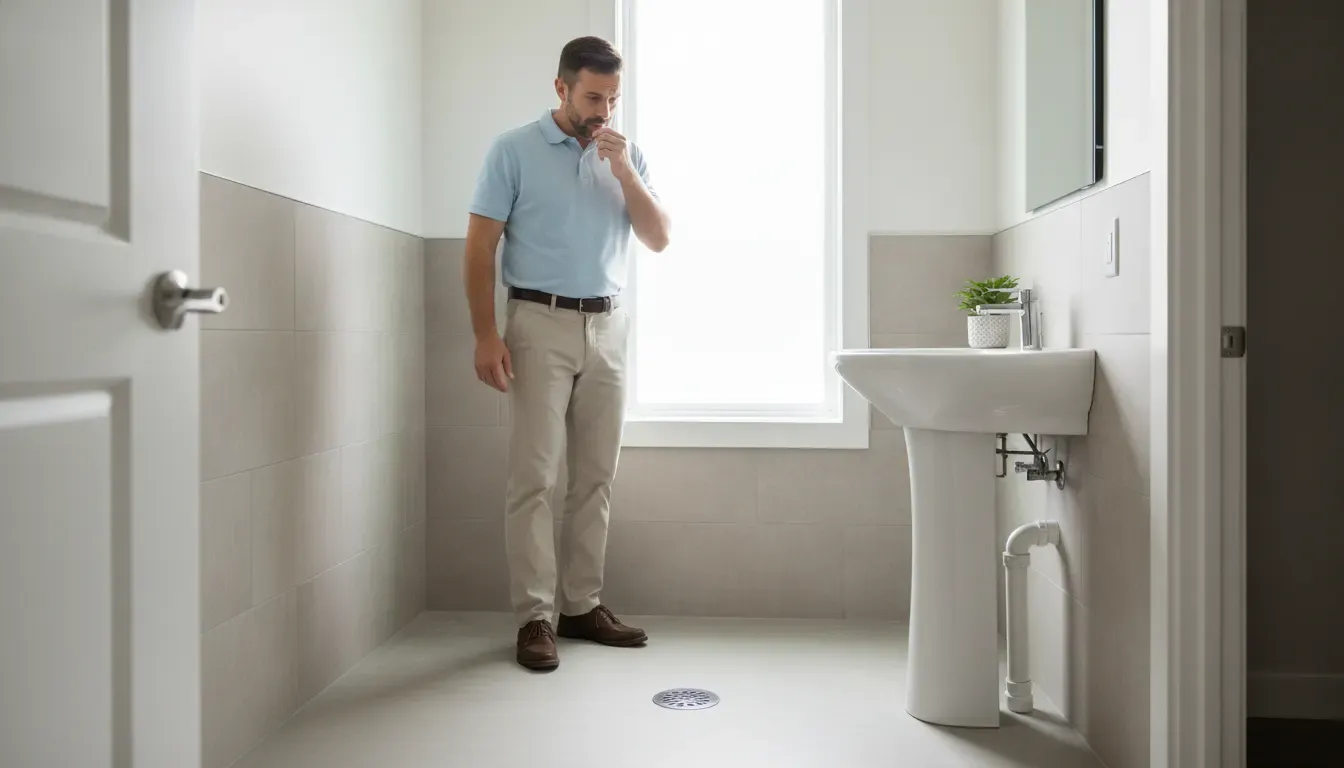
Never mix bleach, drain opener, ammonia, or other cleaning products while trying to remove an odor. Do not use an open flame to search for a leak. Do not climb on the roof or enter a confined space. Those steps can create more danger than the original plumbing problem.
When is a sewer gas smell an emergency?
Leave the area and get help when the odor is strong, sudden, spreading, or accompanied by physical symptoms. Sewer gas can contain more than one type of gas, and a person cannot safely judge the concentration by smell. Avoid matches, smoking, candles, and anything that could create a spark. If you suspect a dangerous gas buildup or cannot safely leave, call 911 or the local fire department from outside the home.
- Anyone has dizziness, headache, nausea, eye irritation, unusual drowsiness, breathing trouble, or confusion.
- The odor is overwhelming, is strongest in a basement or enclosed room, or makes it hard to remain inside.
- There is sewage, wastewater, or contaminated water on the floor.
- Several fixtures back up, drain slowly, or react when another fixture is used.
- A toilet overflows, a sewer cleanout is leaking, or wastewater is entering the home.
- You are not sure whether the smell is sewer gas, natural gas, or another fuel-related odor.
If you are unsure about the source, treat the situation cautiously. Get outside without operating switches or appliances in the affected area, and contact the appropriate emergency service or utility from a safe location. Once immediate safety is addressed, a plumber can investigate the drainage system.
How can a plumber find the source?
A plumber starts by confirming the pattern and checking the fixtures, traps, visible connections, and venting. Depending on the symptoms, the evaluation may include a drain inspection, camera inspection, smoke or pressure testing, or a check of the sewer line and cleanouts. The right test depends on where the odor appears and whether water-flow symptoms are present.
| What you notice | Possible source | Why professional help may be needed |
|---|---|---|
| Odor from one rarely used drain | Dry trap or trap problem | The trap may need repair if water does not solve the odor. |
| Odor around a toilet base | Failed seal or drain connection | The toilet and floor connection may need inspection for leaks. |
| Gurgling or bubbling fixtures | Vent issue or partial blockage | The restriction may be beyond a single fixture. |
| Several slow drains or recurring backups | Branch drain or main sewer-line trouble | Camera inspection or targeted drain work may be necessary. |
| Outdoor sewer odor or wet ground | Cleanout, lateral, or sewer-line issue | The source may be underground or connected to the public sewer. |
The goal is not simply to make the smell disappear for a few hours. A good diagnosis identifies where the odor enters, whether wastewater is moving correctly, and whether a failed seal, vent, drain, or sewer line needs repair. Mend Services provides plumbing and drain services for homeowners across Greater Austin and Central Texas.
Get help from a Mend Services plumber for a sewer odor, drain problem, or possible backup.
What should you do next?
If refilling a clearly dry trap solves a mild odor and the smell does not return, continue to monitor the fixture. If the odor persists, comes back, affects more than one drain, or appears with slow drainage or gurgling, schedule a plumbing inspection. If there is a backup, active leak, wastewater, or a strong odor, do not wait for the problem to become more severe.
Mend Services can help with drain cleaning, sewer-related plumbing problems, and urgent plumbing needs. For an immediate problem such as an active backup or wastewater in the home, use the Mend Services emergency plumbing page and describe the symptoms when you schedule. Clear details help the team prepare for the right kind of evaluation.
When you call, be ready to share which fixtures are affected, whether the smell is inside or outside, whether water is backing up, and whether anyone experienced symptoms. Do not take risks to gather more information. Your safety matters more than pinpointing the source before help arrives.
Schedule sewer odor and drain help with Mend Services today.
Frequently asked questions
Can a dry P-trap make my house smell like sewer gas?
Yes. A dry P-trap can remove the water barrier that normally helps block drain odors. This often happens in rarely used sinks, tubs, showers, laundry drains, or floor drains. Add water only when the odor is mild and the area is safe to approach. If the smell returns, another trap, vent, seal, or drain problem may be involved.
Does a sewer gas smell always mean the sewer line is broken?
No. A dry trap or failed toilet seal can cause an odor without a broken sewer line. However, several affected fixtures, repeated backups, gurgling, outdoor odors, or wet ground can point to a larger drainage or sewer-line problem. A persistent odor should be diagnosed instead of assumed to be a simple dry trap.
Can I pour bleach down the drain to remove the smell?
Do not use bleach or a chemical drain opener as a substitute for finding the source, and never mix cleaning products. Chemicals may create a hazard and may not correct a dry trap, vent issue, failed seal, or damaged pipe. Ask a plumber about a safe solution based on the actual cause.
How do I know if the smell is sewer gas or natural gas?
You may not be able to tell by odor alone. If the smell could be natural gas, propane, sewer gas, or another fuel-related gas, leave the area without creating sparks and call 911 or the appropriate utility from outside. Once the area is safe, a plumber can investigate the drainage system if plumbing is the likely source.
Should I climb onto the roof to check a plumbing vent?
No. Roof work is hazardous, and a vent can be blocked or damaged in ways that are not safe to diagnose from a ladder. If odors, gurgling, or slow drainage suggest a vent issue, have a qualified plumber inspect the system.
When should I call an emergency plumber for a sewer smell?
Call for urgent help when the odor is strong or sudden, someone feels sick, wastewater is present, a toilet or drain is backing up, or several fixtures are affected. Move people and pets away from the area. For a possible dangerous gas buildup, call 911 or the fire department from outside first, then arrange plumbing service after the immediate hazard is addressed.
Plain-language safety note: A sewer smell may be a small dry-trap issue, but it can also signal a leak, blocked vent, backup, or damaged sewer line. If the odor is strong or anyone feels sick, leave the area and get help before troubleshooting.


