

Austin homes can feel muggy even when the thermostat says 75 degrees. High humidity makes indoor air feel warmer, and lowering the AC setting may use more energy without solving the moisture problem. Research from the University of North Texas found perceived air temperature can vary by 11 degrees at a 75-degree set point as humidity changes.
Whole house dehumidifier installation austin tx adds dedicated moisture control to your home’s HVAC system, helping maintain more comfortable humidity independently from temperature. A properly sized unit can support steadier comfort when the AC does not run long enough to remove enough moisture.
Schedule a whole-house dehumidifier consultation today
For Austin homeowners, the right approach depends on how the equipment works, how air moves through the home, and whether a portable unit is enough. This guide explains the basics alongside Austin electrical and smart home services, starting with what a whole-house system actually does.
What Is a Whole-House Dehumidifier?
A whole-house dehumidifier is a dedicated HVAC component that removes excess moisture from indoor air throughout the home, independently of your cooling set point. In Austin’s hot, humid climate, that separation matters because an air conditioner may reach its temperature target before it removes enough moisture. A properly designed system can improve comfort while helping reduce utility costs, according to a University of North Texas study.
How a whole-house dehumidifier works
The unit uses a vapor-compression process similar to an air conditioner. However, it is designed to focus on the latent load, meaning the moisture carried in the air, rather than only lowering temperature. It pulls humid air across a cold coil, condenses water from that air, and returns drier air to the home.
Whole-house models operate at lower airflow than a typical cooling cycle. That slower airstream spends more time across the coil, allowing more moisture to shed as condensate. The system can therefore manage humidity even when the air conditioner does not need to run for a long cooling cycle.
This can change how a room feels. A comfortable indoor environment is generally maintained below 60% relative humidity, the threshold used in the study cited above.
In practice, the dehumidifier handles more of the moisture removal while the air conditioner focuses on sensible cooling. That approach can make the home feel less muggy without forcing the thermostat lower than necessary.
Ductwork integration, sizing, and drainage
A whole-house unit connects to the home’s HVAC ductwork so treated air can circulate across multiple rooms. The installation design must account for the existing system, the home’s size, airflow requirements, and the areas that experience the greatest moisture load. A unit that is too small may not control humidity adequately, while an improperly integrated unit can disrupt airflow.
Condensation collected during operation also needs a reliable drainage path. Professional planning coordinates the duct connections, electrical requirements, controls, and drain line so the equipment can operate safely and consistently. These details are why whole-house systems are not simply larger portable appliances.
If you are evaluating options for an Austin home, review Mend’s whole-house dehumidifier installation service to understand how a professional team can assess your HVAC setup and moisture-control needs.
Signs Your Austin Home Needs a Dehumidifier
High indoor humidity often shows up in the way your home feels and smells before it appears on a humidity monitor. Watch for these signs:
- Condensation collecting on windows or glass doors.
- Damp, stale, or musty smells that return after cleaning.
- Visible mold or dark spotting in corners, closets, or around registers.
- Air that feels muggy or heavy even while the air conditioner is running.
Common signs of high indoor humidity
These symptoms can indicate that the air conditioner is cooling the room without removing enough moisture. An AC system primarily responds to temperature, while humidity is a separate part of indoor comfort. Research on hot-humid homes defines comfortable conditions as relative humidity below 60 percent, although many homeowners prefer a tighter range for daily comfort.
Persistent moisture deserves attention beyond comfort. Excess humidity can increase the risk of mold growth, pest activity, and degradation of building components. The EPA’s mold and moisture guidance recommends controlling moisture and addressing water problems promptly, rather than treating visible mold as an isolated cleaning issue.
Why Austin humidity is different
Austin’s hot, humid conditions create a difficult balance for conventional cooling. Outdoor moisture enters through normal air exchange, doors, and small envelope leaks. Spring and summer weather can keep the latent moisture load high even when the indoor temperature seems reasonable.
Many Austin homeowners respond by dropping the AC set point. That may make the room colder, but it does not necessarily solve the underlying moisture problem. It can also increase energy use while asking the air conditioner to handle temperature and humidity with one control.
A whole-house approach separates those jobs more effectively. If you are comparing moisture-control options, our guide to humidifier vs dehumidifier explains when each system fits. For broader indoor-air planning, see our guidance on controlling home humidity levels alongside filtration.
When these signs keep returning, a professional evaluation can determine whether the issue is humidity control, equipment performance, airflow, or another home-comfort problem.
Portable vs. Whole-House Dehumidifier: Which Is Better?
The better choice depends on whether moisture is isolated to one area or spread throughout your home. Portable units can address a single room or basement, while a whole-house system connects to the HVAC ductwork for coordinated control.
| Factor | Portable dehumidifier | Whole-house dehumidifier |
|---|---|---|
| Coverage | Best for one room, a basement, or another contained area. | Designed to manage moisture across the whole home through the HVAC system. |
| Emptying and maintenance | Requires regular manual tank dumping unless a suitable drain arrangement is available. | Uses a permanent drain line, reducing routine tank handling. Filters and drainage still need periodic attention. |
| Integration | Operates as a standalone floor unit with its own controls. | Is ducted into the HVAC system and installed as part of the home’s comfort equipment. |
| Humidity control | Provides localized control near the unit, with limited effect on distant rooms. | Provides whole-home control. A practical Austin target is commonly about 35% to 50% relative humidity. |
| Cost | Lower upfront investment, but coverage is limited to the area being treated. | Higher equipment and labor investment because the system must be sized, drained, and integrated with ductwork. |
| Energy and comfort | Removes moisture at room level and may not resolve humidity elsewhere. | Supports whole-home moisture removal. Low airflow gives the airstream more time to remove moisture as condensate. |
That low-airflow operation is important in a hot, humid climate. A whole-house unit uses a vapor-compression process similar to an air conditioner, but it is designed to focus more directly on latent moisture removal. Research from the University of North Texas describes how separating humidity control from temperature control can improve comfort in hot-humid conditions. Read the UNT dehumidification study.
A: A whole-house dehumidifier is usually better when several rooms feel muggy, moisture returns despite air conditioning, or you want automatic drainage and centralized control. A portable unit may be appropriate when only one enclosed area needs treatment.
Choosing the right system also affects your broader indoor air quality services plan. A professional can evaluate the home’s moisture pattern, HVAC configuration, and drainage needs before recommending the whole-home approach that fits your house.
How Much Does Whole-House Dehumidifier Installation Cost in Austin TX?
The cost of whole-house dehumidifier installation in Austin depends on the equipment, the labor, and how well the system fits your existing HVAC setup. A professional evaluation is the only reliable way to produce a quote tailored to your home’s layout, moisture load, and installation requirements.
What determines the installation cost?
Equipment and professional labor are the two primary parts of the investment. The unit itself must be sized for the home, while the installation must connect it safely and effectively to the existing system. Home size and HVAC configuration are key variables in that calculation.
Several site conditions can change the scope of work:
- Home square footage: A larger home may require greater moisture-removal capacity or a different system configuration.
- Existing ductwork: The condition, accessibility, and layout of the duct system affect how the dehumidifier can be integrated.
- Drainage routing: Condensate must have a suitable drainage path. The distance and accessibility of that route can affect labor.
- Unit class and efficiency rating: Equipment choices vary in capacity, controls, and energy performance.
- Electrical requirements: Some installations may need electrical work to provide the appropriate connection for the equipment.
Those factors make a generic online price less useful than an inspection of the actual home. The evaluation should identify the moisture-control capacity needed, the best connection point, drainage requirements, and any electrical or ductwork concerns before the quote is prepared.
Why efficiency matters in the long-term cost
Dehumidification is an additional energy consumer, even when it improves comfort and reduces the need to lower the AC thermostat. Research from the Florida Solar Energy Center notes that added moisture control can create higher-than-expected building energy use, making efficient equipment selection important. Read the FSEC research on dehumidifier energy use.
When comparing equipment, review the efficiency information rather than focusing only on the initial installation amount. ENERGY STAR’s dehumidifier guidance provides efficiency context, while the U.S. Department of Energy’s consumer guidance explains what homeowners should consider when evaluating dehumidifiers. A qualified HVAC professional can help match those specifications to Austin’s hot, humid conditions.
Get a whole-house dehumidifier assessment for your Austin home
Who Handles Whole House Dehumidifier Installation in Austin, TX?
Whole house dehumidifier installation requires an HVAC professional who can evaluate the existing system, match the equipment to the home, and connect every component safely. In Austin’s humid climate, the goal is usually to maintain indoor relative humidity around 35% to 50%, without forcing the air conditioner to run colder than necessary.
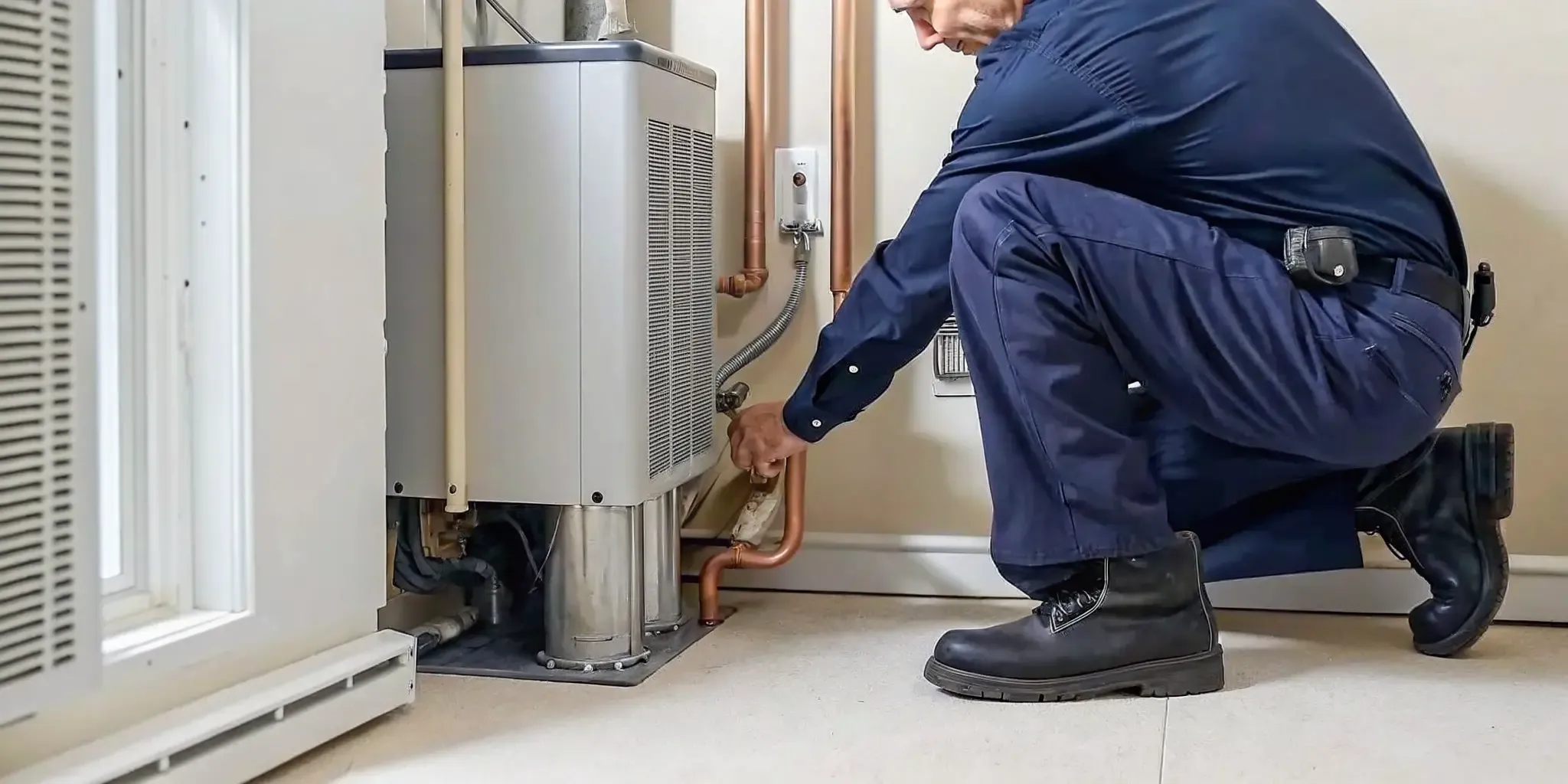
Mend Services uses licensed HVAC technicians for this work. A properly installed unit integrates with the ductwork, removes moisture as condensate, and works alongside the central AC. By reducing the latent load, the dehumidifier allows the AC to focus more on sensible cooling, which can reduce wear and help the system last longer.
The installation process typically includes these steps:
- Assessment and sizing. The technician reviews the home’s size, layout, insulation, current humidity conditions, and HVAC configuration. Sizing matters because an undersized unit may struggle to control moisture, while an oversized unit may cycle too quickly for consistent removal.
- Ductwork integration. The unit is connected to the appropriate supply or return-air path so it can treat air throughout the home. The technician considers airflow, access, and the existing system design rather than placing equipment where it cannot circulate moisture-controlled air effectively.
- Drainage setup. Moisture removed from the air becomes condensate. The installation must provide a reliable drain path and verify that water can leave the system without backing up, leaking, or creating another indoor moisture problem.
- Commissioning and walkthrough. After connections are complete, the technician checks operation, airflow, controls, and humidity settings. The homeowner receives a walkthrough of the system and the maintenance points that support dependable performance.
Maintenance keeps the equipment working efficiently after installation. Regular filter checks and replacement prevent restricted airflow, while drain-line care helps keep condensate moving properly. These simple service points should be included in a broader HVAC maintenance plan, especially before Austin’s humid seasons.
Mend provides whole-house dehumidifier service in Austin and nearby communities, including Bastrop, Bee Cave, Buda, Cedar Park, Del Valle, Driftwood. Dripping Springs, Georgetown, Hutto, Kyle, Lakeway, Leander, Liberty Hill, Lockhart, Manchaca, Manor, New Braunfels, Pflugerville, Round Rock, San Marcos, and Wimberley. The team also offers 24/7 emergency service. Schedule a whole-house dehumidifier installation assessment to determine what your home needs.
Frequently Asked Questions
What are the benefits of a whole-house dehumidifier in Austin?
A whole-house unit controls moisture separately from temperature, helping your air conditioner focus on cooling. Better humidity control can improve comfort and reduce conditions associated with mold, pests, and building-component damage. Research supports separating humidity control from temperature control in hot-humid homes: UNT study.
How does a whole-house dehumidifier work with my AC?
The unit connects to the HVAC ductwork and removes moisture at a lower airflow rate than normal cooling. That gives the system more time to collect condensate while the air conditioner handles more of the temperature load. Proper sizing and drainage require professional installation.
How can I tell if my Austin home needs a dehumidifier?
Watch for condensation on windows, musty odors, visible mold, or air that feels muggy even while the AC runs. If you keep lowering the thermostat to fight dampness, the problem may be humidity control rather than temperature. A qualified HVAC professional can measure conditions and evaluate the system.
What is the typical cost for whole-house dehumidifier installation in Austin?
There is no reliable one-price estimate because the total depends on equipment selection, home size, ductwork, drainage, and the existing HVAC configuration. Ask for a quote based on your home rather than choosing from a generic price range. Remember that dehumidification also adds an energy load, so efficiency matters: ENERGY STAR guidance.
Is a whole-home unit better than a portable dehumidifier?
A portable unit can make sense for one room or a small contained area, but it provides limited coverage and usually requires manual emptying. A whole-house model integrates with the HVAC system for broader, more consistent moisture control. The right choice depends on the area affected, your ductwork, and the level of control you need.
Ready to Schedule Your Dehumidifier Consultation?
Better humidity control can make your Austin home feel more comfortable while helping your HVAC system manage moisture more effectively. Mend Services can review your home’s needs and explain whether a whole-house system fits your existing setup.
Schedule a whole-house dehumidifier consultation with Mend Services to discuss the right next step for your home.


