

An emergency plumber in Austin who answers at night is not the same thing as a plumber who can come sometime this week. Water on the floor, sewage coming back into the house, or a water heater dumping onto the slab needs someone now. A slow drip under the sink, a toilet that runs, or a drain that is only sluggish can usually wait for a regular appointment. The hard part is knowing which problem you have before the damage spreads.
What counts as an emergency plumber Austin call
A true plumbing emergency is active water, sewage, or a loss of water that you cannot stop with a shutoff. Those problems get worse by the minute. They can soak drywall, flooring, and insulation, and sewage adds a health risk on top of the mess.
Call now for any of these:
- A burst or split pipe that keeps running after you turn the fixture off.
- Sewage backing up into a tub, shower, floor drain, toilet, or yard cleanout.
- A toilet, sink, or tub that is overflowing and will not stop.
- A water heater that is leaking from the tank, not from a small fitting you can tighten.
- No water at all, and the city supply to your street still looks normal.
- A sewer smell you cannot trace to one unused drain, with no gas odor mixed in.
Mend’s emergency plumbing in Austin covers burst pipes, sewage backups, severe leaks, and overflowing toilets around the clock. The service page explains that visit. This guide is the decision that comes first: is this that kind of call, or can it wait?
These can usually wait for a scheduled visit if the water is off or the flow is slow:
- A faucet drip, a running toilet, or a supply line you have already shut off.
- One slow drain, with no sewage odor and no water rising in other fixtures.
- Low pressure in one faucet, while the rest of the house is fine.
- A water heater that is lukewarm but not leaking.
If you are unsure, shut the water off and describe what you see. A dispatcher can tell you whether the visit needs to be tonight.
A gas smell is not a plumber call
Do not group a gas odor with a sewer smell. Natural gas is often described as smelling like rotten eggs, and that overlap is exactly why people call the wrong number. A sewer odor in one bathroom can be a dry trap or a drain problem. A gas-like odor through the house, a hissing sound near a gas appliance, or dirt blowing near a buried line is a gas emergency.
If you smell gas, leave the area immediately. Do not turn lights or appliances on or off, and do not use a phone inside the house, even a cordless one. Once you are outside and away from the building, call your gas utility from a neighbor’s phone. If you cannot reach the utility, or if anyone feels sick, call 911. The Texas Railroad Commission’s gas leak public guidance says to leave first and use a neighbor’s phone, not a phone inside the building.
A plumber does not clear a gas leak. Stay out until the gas company says the building is safe. After that, a sewer odor that remains is a plumbing question, and that is the call described below. Until the gas utility clears the building, do not book a plumbing visit and do not go back in to shut off water.
City water problem or a problem inside your house
Not every wet street or dry faucet is a job for a plumber. Austin Water draws a clear line. The utility maintains the water mains. You own the service line past the meter and the plumbing inside the house. A leak in the street, a missing meter lid, or water bubbling from the curb is a utility call, not a home plumbing call.
Use this split before you book anyone.
| What you see | Who handles it | What to do first |
|---|---|---|
| Water in the street, at the curb, or at the meter | Austin Water | Check the leak map. Call 512-972-1000 if it is not already reported. That line is open 24/7. |
| Bees in a meter, a taste or odor complaint, a sewer odor outside, or a loose manhole lid | Austin 3-1-1 | Call 3-1-1 or 512-974-2000, 7 a.m. to 9 p.m. daily. These are not same-hour plumbing jobs. |
| A rotten-egg or gas odor indoors, or a hiss near a gas line | Your gas utility, then 911 if needed | Leave immediately. Do not use lights, appliances, or a phone inside. Call from outside. |
| No water only at your house, and neighbors still have water | Your plumber | Check the main shutoff. If it is open and you still have no water, schedule a visit. |
| Sewage coming up inside the home | Your plumber first | Keep people and pets out of the water. Austin Water covers overflows from the public sewer, not a clog in your private line. |
| A burst pipe, tank leak, or overflow inside the house | Your plumber | Shut off the water that feeds it, then call. |
Austin Water explains that split on its water leaks page. If sewage is in the house, do not wait on a 3-1-1 ticket. Those requests are investigated in one to three business days. That is the right pace for an odor at a manhole. It is the wrong pace for wastewater on a bathroom floor.
What to do in the first few minutes
Stop the water before you start looking for a phone number. Most Austin homes have a main shutoff where the line enters the house, often in a garage, a utility closet, or a meter box near the street. Turn it clockwise until it stops. If only one fixture is involved, the valve on the supply line under that fixture is enough.
- Shut off the main, or the valve at the fixture that is leaking.
- If a toilet is overflowing, close the valve on the wall or floor behind the tank. Then take the lid off and lift the float or push the flapper down so the tank stops filling.
- Move people, pets, and plugged-in items away from standing water. Do not step into water that is near an outlet or an appliance.
- If sewage is involved, keep the room closed off. Do not run more water or flush another toilet. That only pushes more waste back in.
- Note the time, the room, and whether the water is clean, rusty, or dirty. A photo of the leak and of the shutoff you used helps the technician arrive with the right parts.
For a pipe that has already split, the shutoff is the whole job until help arrives. The step-by-step for that specific failure is in what to do before burst pipe help arrives. Do not cut into a wall or try to glue a pressurized line while it is still wet.
A small leak that you have contained is still worth fixing soon. The EPA’s Fix a Leak Week guidance notes that household leaks waste a lot of water nationwide, and a drip you can hear is already adding to the bill. Contained does not mean ignored. It means you can book a daytime visit instead of an after-hours one.
How to tell a clog from a backup
One slow bathroom sink is usually a local clog. Sewage in more than one fixture, a gurgling toilet when the washer drains, or water rising in a floor drain is a line problem. That second pattern is the one that should not wait overnight.
Austin Water’s sanitary sewer overflow guidance says backups happen when fats, oils, grease, or items flushed down the toilet block the pipe. Wipes labeled flushable are a common cause. Wastewater then comes out of a cleanout, a floor drain, or a fixture. Inside the house, that is a health issue, not a cleaning issue. Keep children and pets away, and skip the store-bought chemical opener. Those products can splash back and make the line harder to clear.
If only one fixture is slow and there is no odor, a scheduled drain cleaning visit is the better fit. If the backup returns after a simple clear, or if you hear gurgling through the house, ask about a camera inspection rather than another round of plunging. The tracking list for that visit lives in the sewer line repair notes for Austin homeowners. Use that page when the question shifts from stopping the water to finding what is wrong with the line.
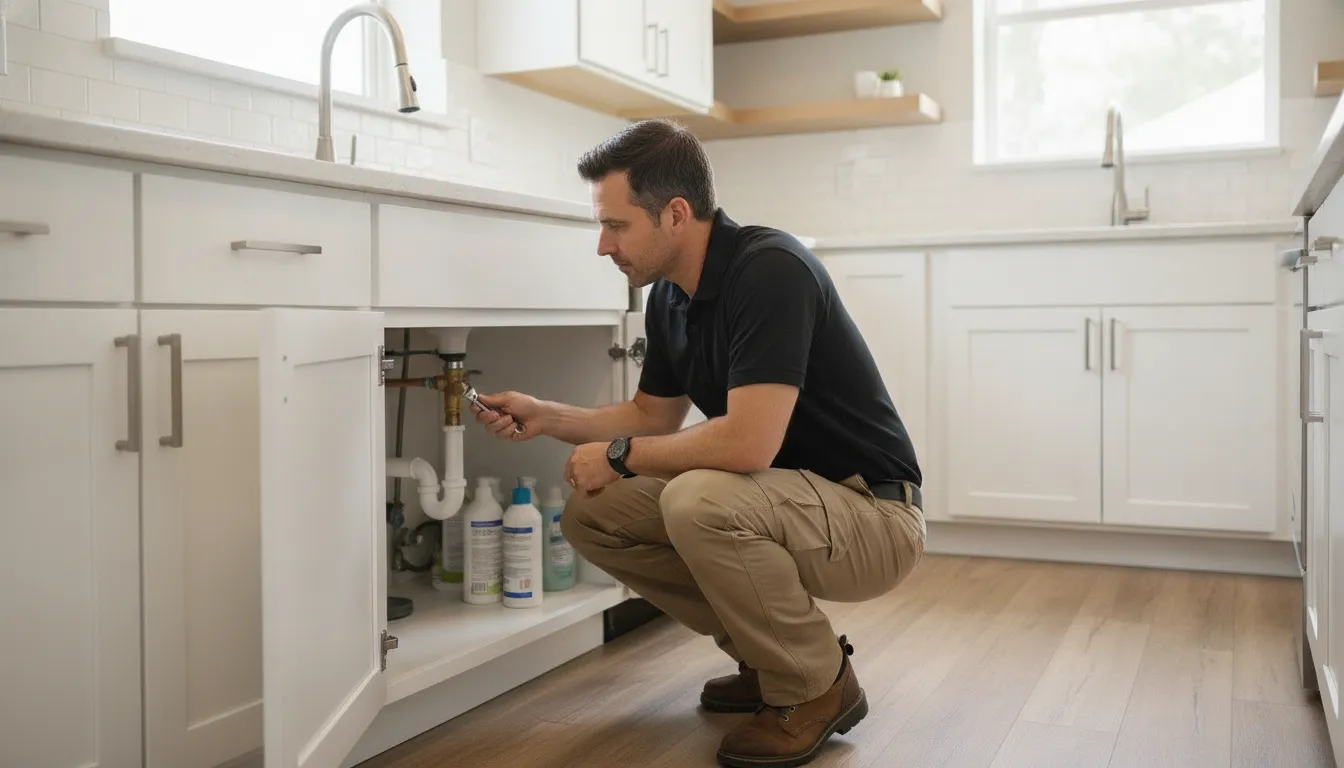
What an emergency plumber Austin visit looks like
Once you call, the useful details are simple. Say whether water is still running, whether you smell sewage, which rooms are affected, and whether you already closed the main. Those four facts decide how fast the visit needs to be and what the technician loads on the truck.
Mend serves Greater Austin and the surrounding communities with on-call plumbers day and night. Technicians are full-time employees, not subcontractors picked up for the night, and a Texas master plumber (license M-46376) supervises the plumbing work. You get the price before any repair starts. Mend does not publish an after-hours rate, so this article will not quote a flat emergency fee. Ask for the upfront estimate on your visit. The price depends on what is actually leaking, what time it is, and what parts the repair needs.
Workmanship and the parts installed on that visit are covered for one year. That warranty is the same one described on the Mend Services about page. It is not a promise that every old pipe in the house is now covered, and it is not a guaranteed arrival time. Travel time changes with weather, traffic, and how many calls are already out.
A water heater that is leaking from the tank is one of the calls that should not wait until morning. A heater that is only short on hot water can often wait. If the tank itself is wet, use the shutoff on the cold inlet and the breaker or gas valve, then use the water heater repair guide only after the leak is contained. Active water on the floor comes first.
What to ask before the work starts
You can ask these questions without slowing the shutoff down. The technician should be able to answer them before opening a wall or replacing a fixture.
- Is the water fully off, or is something still feeding this leak?
- Is this a repair of the failed piece, or does the pipe around it need to be replaced?
- What will this visit cost if we stop at making it safe, and what will it cost to finish the repair tonight?
- Will the repair be covered by the one-year parts and labor warranty?
- Do you need a camera, a permit, or a return trip to finish?
If the answer is that the line itself is failing in more than one spot, the next conversation is pipe repair and replacement, not another emergency patch. Patching a single split is the right move at midnight. Replacing a run of old pipe is a planned job, with materials and access talked through in daylight.
You should also see a marked truck and a technician who walks you through the price before tools come out of the bag. That conversation is the point of calling a company you can check, instead of the first ad that promises a fixed arrival time.
How to be ready before the next one
The calmest emergency call is the one where someone in the house already knows the shutoffs. Find the main valve this week, while nothing is leaking. Label it. Find the valve behind the toilet and the one above the water heater. If the main is stuck, that is its own appointment, not something to discover at 11 p.m.
A few habits prevent the calls we see most often. Let grease cool and throw it away instead of washing it down the sink. Flush only toilet paper. Know which drains have been slow, because a slow drain that starts gurgling is often the warning before a backup. If several fixtures have been off for months, a plumbing repair visit is a planned job, not an overflow on a holiday weekend.
Mend’s coverage is Greater Austin and nearby communities, not a promise of the same drive time to every address in Central Texas. If you are outside Austin proper, the service area map shows whether your city is on the regular routes. Homes that already have a maintenance plan are easier to schedule, because we already know the equipment. The plan does not replace an emergency shutoff. It just means the next visit starts with a history instead of a guess.
FAQ: calling an emergency plumber in Austin
What counts as emergency plumbing?
Active water you cannot stop, sewage inside the home, an overflowing fixture, a leaking water heater tank, or a total loss of water at your house. A drip, a running toilet, or one slow drain can wait if you have shut the water off.
What should I do before the plumber gets here?
Close the main or the valve at the leaking fixture. Keep people and pets out of standing water, especially if it is near an outlet. If the water is dirty, do not use other fixtures, and do not pour chemical opener into the line.
Should I call Austin 3-1-1 or a plumber?
Call Austin Water at 512-972-1000 for a leak in the street or at the meter. Call 3-1-1 for a non-urgent odor outside, a manhole issue, or a meter problem that is not an active home leak. Call a plumber when the failure is on your side of the meter or inside the house.
What if I smell gas?
Leave the building immediately. Do not flip switches or use a phone inside. From outside, call your gas utility, and call 911 if you cannot reach them or anyone feels sick. A plumber is the wrong first call for a gas odor.
How much does an emergency plumber charge in Austin?
Mend does not publish a flat after-hours fee. You get the price before work begins, based on the repair, the time of day, and the parts. Confirm that upfront estimate before you approve the work. This article will not guess which job costs less.
What should I ask when I call?
Say what is leaking, whether the water is clean or sewage, which rooms are wet, and whether the shutoff is closed. Ask what the safe-for-tonight option costs versus a full repair, and ask whether the work is covered for a year.


