

Water softener installation Austin homeowners consider should begin with a question: what water issue are you trying to solve? A softener is designed to reduce minerals that cause hardness, but it is not a universal water purifier. A good project starts with understanding the water, the home’s plumbing, and the household’s priorities. The visit then gives you a chance to compare suitable equipment and learn what the work would involve before deciding what to do.
Schedule a plumbing visit to discuss water softening options for your home.
What happens during water softener installation in Austin?
A typical project moves through a few clear stages: discuss the symptoms, assess the plumbing and installation area, choose a system that fits the home, complete the plumbing work, and check the setup. The exact plan depends on the home. A house with an accessible utility area may present different choices from one with limited space or unusual piping.
Water hardness describes the presence of dissolved minerals, commonly calcium and magnesium. A softener is one type of water treatment equipment intended to address hardness. That is different from a filter, which is selected for particular substances or taste and odor concerns. If you are still sorting out what you notice, Mend’s guide to hard water signs and treatment options in Austin can help you frame the questions to ask.
The goal of a home visit is not to assume that every scale mark calls for a softener. It is to understand the symptoms and the plumbing conditions, then explain which options may be relevant. You should be able to discuss what a proposed system is intended to address, what it does not address, and what routine care it will need.
What should you identify before choosing a softener?
Start with the practical reasons you are considering a system. You might have noticed spots on dishes, residue on fixtures, a feeling that soap is difficult to rinse, or scale around plumbing fixtures. These clues can prompt an investigation, but they do not, on their own, establish the water’s mineral level or prove that a softener is the right solution.
- Where do you notice the issue? Note whether it appears throughout the home or mainly at one tap or appliance.
- When did it begin? A new change may point to a different question than a long-standing pattern.
- What matters most to your household? You may care about spots, cleaning routines, plumbing fixtures, or the feel of water.
- Are there other water concerns? Taste, odor, or visible particles may call for a separate assessment rather than a softener alone.
- How much room is available? The equipment needs a practical location and access for upkeep.
Water characteristics can vary by source and over time, so avoid choosing equipment solely from a neighbor’s experience or a broad claim about the area. Ask what information is being used to recommend a system. If the concern is more about a specific water quality issue than hardness, a different treatment approach may be more appropriate. Mend’s overview of water filtration system choices explains how filtration questions differ from softening questions.
How does a plumber assess the home and plumbing?
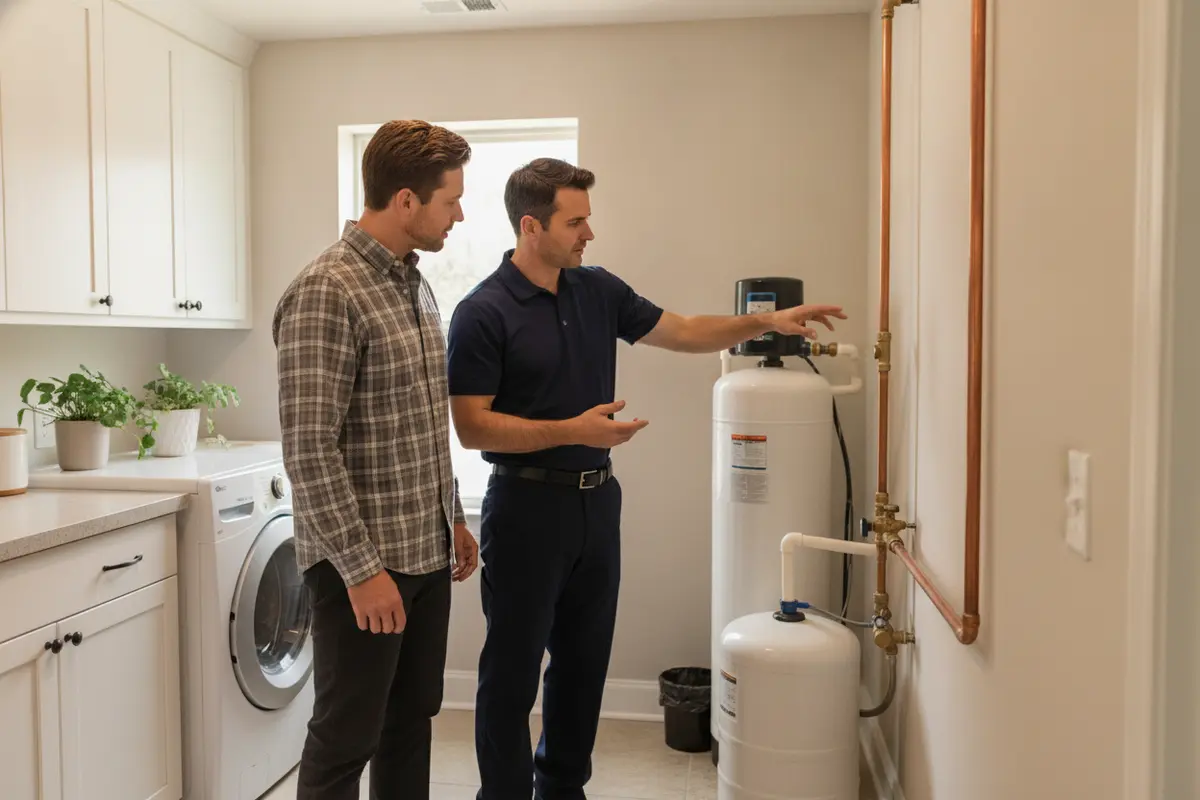
The assessment connects the household’s concerns to the home’s layout. A plumbing professional may review the available supply line, nearby drains and power access when relevant to the selected equipment, and the amount of room for the unit and future maintenance. They may also ask about the number of people in the home and how water is typically used. These details help determine which system sizes or configurations are worth considering.
The placement matters for daily use. The unit should be reachable for routine checks and replenishment, and it needs to fit the plumbing plan. The professional should explain where the system would sit, how water will be routed through it, and whether any bypass arrangement is part of the design. Ask what parts of the home would receive treated water and whether any separate taps or uses should be considered.
Before work is proposed, talk through constraints. These might include a crowded utility area, a finished wall that limits access, an existing treatment device, or a drain location that affects the layout. Do not move or disconnect plumbing yourself to make room. A clear conversation up front can reduce surprises and help you understand any alternatives.
How do the main water treatment options compare?
There is no single best choice for every home. The right comparison starts with the problem each option is meant to address, then considers installation needs and ongoing care. This table is a conversation guide, not a substitute for evaluating the water and plumbing in your house.
| Option | Primary purpose | Questions to ask | Ongoing considerations |
|---|---|---|---|
| Water softener | Addresses water hardness through a softening process | What evidence supports softening, and where would the unit go? | Ask about the specific model’s operating needs and routine care. |
| Water filter | Targets particular substances, taste, or odor depending on the filter | What is the filter designed to reduce, and how is that need identified? | Filter replacement and upkeep depend on the equipment selected. |
| Combined or staged treatment | Pairs treatment methods when a home has more than one identified concern | Which component addresses each concern, and are both necessary? | More than one component can mean separate maintenance tasks. |
| No new equipment yet | Leaves the existing setup in place while you gather information | Can the concern be tested or clarified before choosing equipment? | Keep notes on where symptoms appear and revisit if they change. |
A softener and a filter are not interchangeable just because both connect to plumbing. If you are unsure which category fits your concern, ask the professional to explain the difference in plain language. Mend’s plumbing services overview is a useful starting point for understanding its plumbing work, while the separate plumbing installation information can help you prepare for a project conversation.
What does the installation work usually involve?
Once you approve a plan, the work generally involves preparing the chosen location, making the required connections, setting the equipment in place, and checking that the system operates as intended. The details depend on the selected unit and the home’s existing plumbing. Your plumber should explain the scope before beginning and identify any changes needed if the actual conditions differ from what was visible during the initial assessment.
Before the visit, ask whether water will need to be shut off and for how long, whether anyone should clear the work area, and whether there are household routines to plan around. Keep the area around the plumbing accessible. If the work is near stored items, move them out of the way rather than stacking them against the pipes or equipment.
During the job, you can ask the technician to walk you through the equipment location, controls, bypass features if present, and the basic operating instructions. The aim is to leave knowing what the system does and how to notice when routine attention is due. If any part of the proposed setup is unclear, pause and ask before the work proceeds.
Licensing requirements for water treatment equipment can depend on the work and applicable rules. The Texas Commission on Environmental Quality’s information for water treatment specialist licensing is a relevant place to review the state’s licensing context. You can also ask the company who will perform the plumbing work and what qualifications apply to the specific project.
What should you ask before approving a quote?
Compare proposals by scope and fit, not only by the equipment name. A useful estimate should make clear what system is proposed, where it will be placed, what plumbing work is included, and what is not included. Ask how the recommendation relates to the water concern you described and whether there are other viable options.
- What water issue is this system designed to address?
- What information or assessment supports the recommendation?
- What does the project include, and are there possible additional plumbing changes?
- Where will the unit be located, and how will it be accessed later?
- What routine upkeep does this specific equipment require?
- What should I expect during the work, including any water interruption?
- What warranty applies to the work and the equipment, and who handles each part?
Ask for clear, upfront pricing before work begins. Mend describes its process as a diagnostic or service visit with pricing presented up front, and planned projects may involve an estimate. If payment options are relevant to your decision, review the details on the home service financing page and confirm current terms directly. Do not assume every project or household qualifies for the same option.
How should you prepare for water softener installation in Austin?
A little preparation makes it easier to have a useful visit and to protect access to the work area. You do not need to diagnose the water yourself. Collect observations and questions, then let the assessment help establish which path makes sense.
- Write down what you have noticed. Include the locations, frequency, and any changes over time.
- Take a few photos. A picture of the utility area or visible residue can help explain what you mean, though it does not replace testing or an on-site review.
- Make the work area accessible. Clear stored items from around the plumbing and keep pets or children away from the work zone.
- Gather equipment details. If another treatment system is already present, note its model or maintenance history if available.
- List your priorities. Consider which concerns matter most and how much ongoing maintenance you are comfortable doing.
- Confirm who can approve the work. The person arranging a project should be the homeowner or an authorized decision-maker.
Mend serves communities across Greater Austin. Its service area page lists locations to help you check whether your home is within its coverage. If you want to learn more about the local team before arranging a visit, see about Mend Services.
What upkeep should you expect after the project?
Maintenance depends on the particular equipment, how it is set up, and household water use. Follow the manufacturer’s instructions for the chosen system rather than relying on a generic schedule. Depending on the model, upkeep may involve checking settings, replenishing a treatment material, replacing a filter in a combined setup, or arranging an occasional inspection.
Ask the installer to show you the routine tasks before wrapping up. Make sure you know what normal operation looks like, how to use any bypass control, and whom to contact if you see a leak or the system behaves differently. Keep the product information and maintenance notes somewhere easy to find. If you are not comfortable handling a routine task, ask whether it can be reviewed during a future plumbing visit.
Keep an eye on the original concern, too. If the system is intended to address hardness-related residue, notice whether the pattern changes after the equipment is operating. A continuing or new issue may need a separate explanation; it does not automatically mean the softener is defective. A clear record helps a plumber distinguish between an adjustment question, maintenance, and a different water concern.
How can you tell whether the recommendation fits your home?
A recommendation is easier to evaluate when it connects the equipment to a specific concern and explains the reasoning. Ask the plumber to walk through the path from observation to proposed solution: what was noticed, how hardness or another issue was assessed, why this treatment type fits, and what alternatives were considered. You should not need to rely on a vague promise that a system will make water better.
Look for a scope that is specific to your home. The quote should identify the equipment or system approach, the planned location, the plumbing connections involved, and any work that may be excluded. If two proposals differ, compare those details before comparing totals. A lower or higher quote may reflect different equipment, different work, or different assumptions about the plumbing. Ask each provider to clarify rather than guessing.
Also consider the day-to-day tradeoffs. Find out what routine attention the system needs, where treatment materials or replacement components are obtained, and what signs indicate that the equipment needs attention. Ask whether a household member can safely handle ordinary upkeep or whether you should call for help. The answer may influence which option feels practical for your family.
Finally, make sure the proposed installation location works for the long term. The unit should not make other plumbing controls difficult to reach or turn a storage space into an obstacle course. Ask how access will be maintained and whether the layout leaves room for the routine care described. Careful planning accounts for both the plumbing and the way you use the home.
Request a plumbing evaluation and get a clear next step for your Austin home.
Frequently Asked Questions
Does every Austin home need a water softener?
No. A home should not be fitted with one just because another homeowner has one. First identify the concern, establish whether hardness is involved, and compare that with the home’s plumbing and the treatment options available.
Will a softener also filter drinking water?
A softener is selected to address hardness. It should not be assumed to remove every substance or resolve taste and odor issues. If you have a specific drinking-water concern, ask what kind of testing or treatment is appropriate for that concern.
How long does water softener installation take?
Timing varies with the equipment, access, and plumbing changes required. Ask for an expected work window after the proposed layout and scope have been reviewed. A simple-looking utility space does not guarantee that every home has the same project conditions.
Can I choose a system based on a neighbor’s recommendation?
A neighbor’s experience can give you questions to ask, but it cannot confirm what your home needs. Water conditions, household use, available space, and plumbing layouts differ. Use the recommendation as a starting point for an assessment, not as a final specification.
What is the next step if I am still unsure?
Describe what you have noticed and ask for an evaluation that explains the options without assuming a particular system. A clear conversation can help you decide whether to proceed, gather more information, or leave the current setup as it is.
Request a plumbing evaluation and get a clear next step for your Austin home.
When you understand the concern, the installation plan, and the routine care involved, it is easier to choose a water treatment approach that fits your home rather than simply following someone else’s recommendation.


