

Trying to decide between water heater replacement vs repair Austin homeowners often face? The right answer depends on more than one symptom. The unit’s age, the type of problem, its repair history, and your household’s hot-water needs all matter. A focused evaluation can help you understand whether a repair makes sense now or whether it is time to plan for a replacement.
Talk with a plumbing professional
What is the practical difference between repair and replacement?
A repair addresses a problem with the water heater you already have. Depending on what a technician finds, the work may involve correcting a failed component, a connection issue, or another specific fault. A replacement means removing the existing unit and selecting a new water heater suited to the home.
Neither choice is automatically better. A repair may be reasonable when the problem is limited, the heater has otherwise been dependable, and the expected useful life still fits your plans. Replacement may deserve consideration when problems keep returning, the unit is deteriorating, or a repair would leave you with little confidence in the equipment afterward.
Think of the decision like keeping an older car on the road: one fix does not automatically mean it is time to replace the whole vehicle, but repeated trouble changes the conversation. The comparison still needs to be specific to the water heater. Ask what the recommended work addresses today and what the technician observed about the rest of the unit. Mend also outlines its approach to plumbing repair in Austin, though a water heater evaluation should account for the equipment and symptoms in your home.
The goal is not to guess from one clue. It is to connect the symptoms to the condition of the whole system, then compare the options in plain language. A plumber can inspect the unit, explain what can be repaired, and outline replacement choices when appropriate. Mend provides plumbing services in Texas, including water heater repair and installation work.
Which clues can help you weigh water heater replacement vs repair in Austin?
Start by noting what changed and when. A short, clear description is often more useful than trying to diagnose the heater yourself. These clues can help shape the conversation:
- One isolated change: If the water heater has generally worked reliably and a new problem appeared suddenly, ask whether a specific repair can address it.
- Repeated trouble: If similar symptoms return after repairs, ask what is causing the recurrence and whether further repair is likely to be worthwhile.
- Visible deterioration or leaking: Water around the unit deserves prompt attention. The source and extent matter; do not assume a leak can be fixed without an inspection.
- Hot water no longer meets household needs: Track when the shortage happens, how many people are using hot water, and whether the pattern is new. The issue could be equipment condition or a mismatch between capacity and demand.
- Changes in the water: Note unusual appearance, odor, or sound, and when it occurs. Those observations are useful, but they do not identify a cause on their own.
- Age and repair history: Find the unit’s label if it is accessible without moving equipment, and collect prior repair records if you have them. Age is one factor, not a stand-alone verdict.
One symptom rarely settles the decision. For example, a heater that is not producing enough hot water could have several explanations. A professional should assess the equipment and the home’s setup before recommending a fix or a new unit.
How do your household’s routines affect the choice?
The right comparison starts with the way hot water is actually used, not an abstract idea of what a household should need. Think through an ordinary weekday and a busy weekend. Does the shortage happen after showers overlap, after laundry, or at a different time? Is the change recent, or has the heater never kept up with the home’s routine? A simple timeline can help distinguish a new equipment symptom from a long-standing mismatch between demand and the current setup.
Also consider who relies on the system and whether household routines are likely to change. A growing family, more frequent guests, or a new work-from-home schedule may affect when hot water is needed. These details do not prove that a larger unit is necessary. They give the technician context when discussing whether the existing configuration still suits the home and what replacement choices might be considered.
Write down a few concrete examples rather than saying only that the heater “doesn’t work well.” For instance: “Two showers used to be fine, but the water turns cool during the second one,” or “The problem happens at the kitchen sink too, not just in one bathroom.” Those observations make the conversation more useful and help keep the focus on the actual need.
When should you stop checking and get help?
Keep your checks simple and safe. You can note whether the issue affects every hot-water tap or only one, look for water near the heater without touching wet equipment, and record when the symptoms occur. Avoid taking apart the unit, reaching into electrical components, or attempting gas-related work.
If you see active leaking, water near electrical equipment, or signs that make you concerned about immediate safety, keep people away from the area and seek qualified help. If you smell gas, leave the area and contact the appropriate emergency or utility provider from a safe location. Do not try to locate the source yourself.
For a less urgent issue, arrange an evaluation rather than waiting for the problem to become disruptive. If water is escaping, the heater has stopped working, or the issue is affecting daily use, explain that when you contact a plumber. Mend offers emergency plumbing in Austin for urgent plumbing needs.
While you wait, avoid treating a temporary change as a repair. Do not cover the heater or block access to it, and do not adjust controls you are unfamiliar with. If there is no immediate safety concern, keep a brief note of new symptoms and whether they change. If the situation worsens, share that update when seeking help so the urgency is clear.
What happens during a water heater evaluation?
A useful visit should begin with your observations. Tell the technician what the heater is doing, when it started, whether the problem is constant or intermittent, and what repairs have already been made. Mention changes in household use too, such as a new routine that means more hot water is needed.
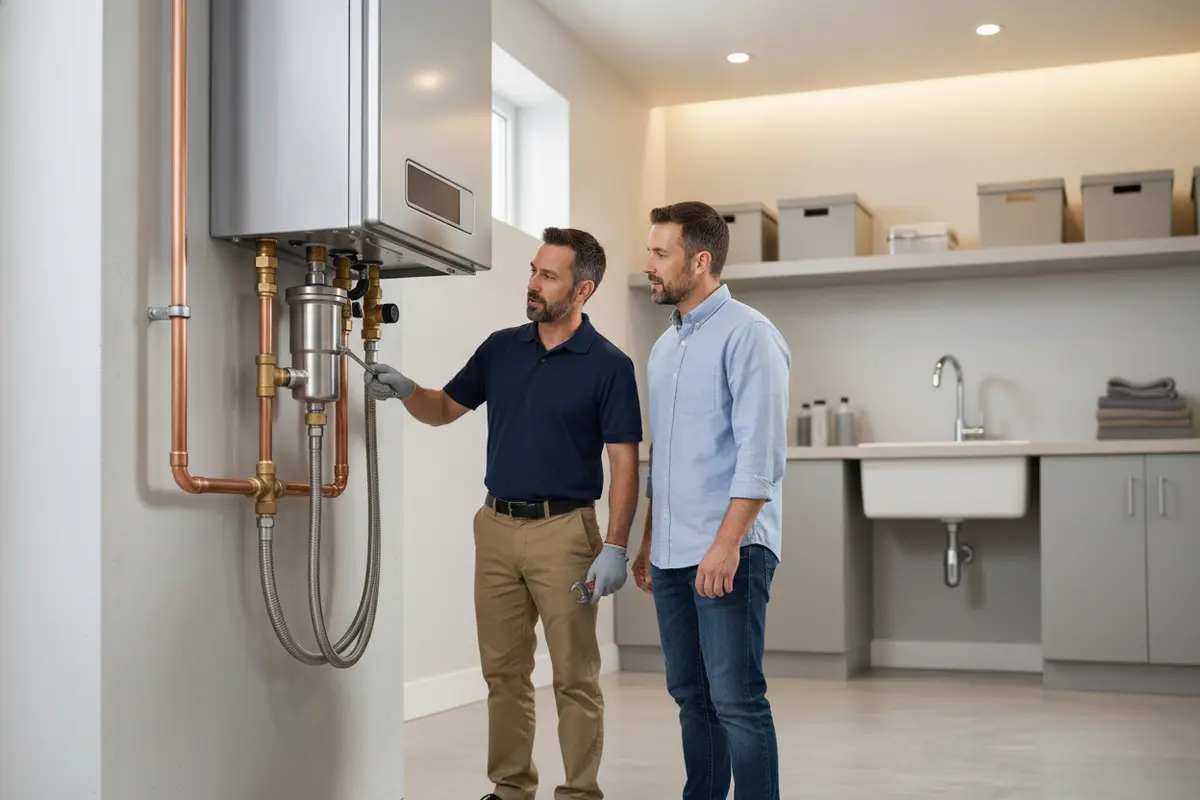
The technician can inspect the water heater and relevant connections, then discuss what the findings mean. Ask for a clear explanation of the problem, what each proposed option is intended to address, and what may remain uncertain. Mend’s process includes a diagnostic or service visit with upfront pricing presented before work begins.
If repair is recommended, ask what part or condition is being addressed and whether the work is expected to resolve the reported symptom. If replacement is on the table, ask what size and type are being considered, what needs to change around the existing unit, and what the estimate covers. A good conversation should leave you knowing what is included and what decisions are still yours.
It can help to separate observations from conclusions. “There is water on the floor beside the heater” is an observation; “the tank has failed” is a diagnosis that requires inspection. Similarly, “the water turns cool after two consecutive showers” is useful context, but it does not by itself establish whether the cause is a component, operating condition, or capacity concern. Let the evaluation connect the symptom to a cause before you choose work.
For a broader look at home energy topics, the U.S. Department of Energy is a starting point for official energy information. Use general guidance as background, not a substitute for matching equipment to your home and its existing connections.
How can you compare repair and replacement options?
Compare the choices side by side rather than focusing on a single number. Ask what the repair is expected to solve, how the proposed replacement fits your needs, and whether either option requires additional work. The details of your unit and home determine the right comparison.
| Decision point | Repair may fit when… | Replacement may fit when… |
|---|---|---|
| Condition | The evaluation finds a specific, addressable problem and the rest of the unit appears suitable to keep using. | The unit shows broader deterioration or the technician finds concerns beyond one repairable issue. |
| Repair pattern | This is a new or isolated issue, with no pattern of similar problems. | Problems have returned, or the repair history raises questions about continued reliability. |
| Household needs | The current heater generally meets demand once the identified problem is addressed. | Your household’s hot-water needs have changed, and a different configuration should be considered. |
| Planning | You want to address a defined problem and the repair estimate makes sense for the unit’s condition. | You prefer to consider the full scope of a new unit and plan the work before another failure disrupts your routine. |
| Next question | What does this repair correct, and what should I watch for afterward? | What does the replacement estimate include, and how was the proposed unit selected? |
These are discussion points, not a substitute for an inspection. Ask the technician to explain the reasoning in terms of your heater rather than relying on a broad rule that every unit of a certain age should be replaced or repaired.
How can you compare estimates fairly?
A repair estimate and a replacement estimate cover different scopes, so comparing only their totals can leave out important details. First, make sure you understand what each option includes. For a repair, ask which problem it addresses, which parts or labor are included, and whether any other observed condition is excluded. For a replacement, ask what equipment is proposed, what removal and installation work is included, and whether changes to connections or the surrounding setup are anticipated.
Then ask what each option is intended to accomplish and what uncertainty remains. A repair may address the present symptom without answering every question about the unit’s future condition. A replacement may resolve concerns about the existing equipment but involve a larger scope of work and choices about the new system. The aim is to compare the realistic outcomes, not to assume either option removes every possible future issue.
Request the estimate in writing and review any assumptions or exclusions. If you do not understand a term, ask for it in everyday language. Mend presents upfront pricing and good, better, and best options where applicable; the exact choices depend on the job. Financing is available, and you can read the home service financing information while considering the proposal. Ask which terms apply to your particular work rather than relying on a general example.
What should you ask before approving the work?
Clear questions make it easier to compare options without feeling rushed. Consider asking:
- What did you find, and how does it explain the symptom I noticed?
- What does the repair correct? Are there other concerns that are not part of the proposed work?
- If you recommend replacement, why is repair not the preferred option in this case?
- What model, capacity, and fuel type are being proposed, and how do those choices fit my household?
- What is included in the written estimate, and are there any conditions that could change the scope?
- What warranty applies to the parts and labor?
- Are financing options available for the work I am considering?
Bring the conversation back to your priorities if the options feel hard to compare. You might need hot water restored as soon as possible, want to understand the longer-term choices, or prefer to plan work around a household schedule. Saying which matters most can help the technician explain tradeoffs clearly without making the decision for you. Mend’s work includes a one-year parts and labor warranty; ask for the details that apply to your specific proposal.
How can you prepare for a water heater visit?
A little preparation helps the visit stay focused. You do not need to investigate the equipment yourself. Instead, gather useful context and leave technical checks to the professional.
- Write down the symptoms. Include when the problem began, whether it happens every time, and which taps or household routines are affected.
- Collect relevant history. If you have service records, product paperwork, or a previous estimate, keep them handy. Do not move the unit to find a label.
- Describe your hot-water use. Note how many people rely on the heater and any recent changes in demand.
- Make the area accessible if safe. Clear ordinary clutter from the path, but do not touch wet surfaces, wiring, controls, or piping that may be hot.
- Decide what matters most. Tell the technician whether your priority is restoring hot water, understanding longer-term choices, or planning around a particular schedule.
Before the appointment, you can also write down the questions you want answered and keep the decision-maker available for the discussion. If another household member has noticed a different symptom, ask them to describe it in their own words or add it to your notes. This avoids relying on memory during a busy visit.
After the technician explains the choices, take a moment to repeat back what you understand: the cause identified, the work being proposed, what it addresses, and what it does not include. That simple check can reveal a misunderstanding before work begins. If you need time to review a planned replacement proposal, ask what can safely wait and what should be addressed promptly.
If the home is outside Austin, you can check Mend’s Greater Austin service areas to see the communities listed. For a repair question or to arrange a conversation, use the contact page.
Request a water heater evaluation
Frequently Asked Questions
Should I replace a water heater as soon as it has a problem?
Not necessarily. A problem may be repairable, but the right choice depends on the unit’s overall condition, the cause of the symptom, repair history, and your needs. Ask a plumber to explain both options when replacement is reasonable to consider.
Can a water heater be repaired if it is older?
Age alone does not determine whether a repair is appropriate. The technician should consider what has failed, the general condition of the unit, and whether the proposed repair makes sense compared with replacement.
Does a small leak always mean I need a new water heater?
No single conclusion can be made from the word “leak.” The location and cause matter, so have it evaluated. Treat active leaking as time-sensitive, and keep away from wet electrical equipment.
What information should I have ready when I call?
Describe the symptom, when it started, whether it is constant, any visible water, and prior repairs if known. Also mention changes in household hot-water use. You do not need to diagnose the heater before asking for help.
Get a clear next step for your home
Repair can be a sensible answer when the problem is limited and the rest of the system suits your needs; replacement may be worth discussing when the broader condition, recurring issues, or household demands point toward a fresh start. A careful evaluation and a clear comparison can help you choose the next step with confidence.


