
Water heater repair in Austin starts with separating a symptom you can safely observe from work that needs a plumber. A change in hot-water temperature, a small pool near the tank, or a new sound can have different causes, so note what you see before trying anything. This guide explains safe first checks, warning signs, and what to expect when you arrange a visit.
Schedule a water heater evaluation and get clear next steps
What should you do first when the water heater acts differently?
Start with observation, not disassembly. Check whether the issue affects one faucet or several, whether it happens every time or only occasionally, and whether the water heater is electric or gas if you already know. Write down when the problem began and whether anyone noticed a leak, odor, breaker trip, or change in the pilot or display.
If water is actively spreading, keep people away from the wet area and avoid touching electrical equipment or standing water. If you can reach the water heater’s shutoff valve without stepping into water or touching hot surfaces, you may turn off the water supply. Do not remove access panels, handle wiring, or attempt to work on gas controls. If there is a gas odor, leave the area and contact the appropriate emergency utility or emergency services from a safe location.
For a limited drip, take a photo and note whether the water seems to come from a pipe connection, a valve, or underneath the tank. A photo can help explain what changed, but it cannot confirm the source. A leak from the tank itself can call for a different plan than moisture from a nearby pipe or fitting.
It also helps to describe the timing. Did the hot water stop suddenly, or has it become less dependable over several days? Does the issue show up after several people shower, during one particular use, or even when the household has used little hot water? Those details may help a technician understand the pattern. They are clues to report, not a way to identify a failed part on your own.
Which water heater symptoms deserve attention?
Common reasons to seek an evaluation include water that turns cold sooner than usual, no hot water, temperature that varies from one use to the next, visible moisture, unusual popping or rumbling, and discolored hot water. One clue alone does not identify the cause. A technician needs to inspect the equipment and conditions at the home before recommending repair or replacement.
| What you notice | What it may point to | Safe next step | When to call |
|---|---|---|---|
| No hot water | A power, control, burner, or equipment problem | Check whether other fixtures have the same issue. Note any display message; do not open panels. | Arrange an evaluation if the issue persists or you see a warning sign. |
| Hot water runs out sooner | A change in demand, settings, or heater performance | Note how many people used hot water and how long it lasted. | Call if the change is new, recurring, or disruptive. |
| Water temperature varies | A control or system issue, or a condition at a particular fixture | Compare more than one faucet and record when the change happens. | Seek help if several fixtures are affected or temperatures are unpredictable. |
| Moisture or a puddle | A connection, valve, drainage, or tank leak | Keep clear of wet electrical areas; photograph the location from a safe spot. | Call promptly for active or growing water. Treat water from the tank as urgent. |
| Popping or rumbling | A change inside the heater or another operating condition | Note when the sound occurs and whether performance changed. | Arrange an inspection for persistent or worsening noise. |
| Rust-colored or unusual hot water | A water-quality or plumbing condition that needs investigation | Compare hot and cold water at more than one fixture; avoid assuming the source. | Call if it continues, affects multiple fixtures, or comes with a leak. |
This comparison is a way to organize what you observe, not a diagnosis. If you are unsure whether a condition is safe, leave the equipment alone and ask a qualified professional.
Consider whether anything changed around the time the symptom began. A household may have more guests, a different daily routine, or several hot-water uses close together. That can make the supply seem shorter without proving the heater has a fault. On the other hand, if the same routine now produces a different result, or if performance changed without an obvious change in use, mention that when you call. A useful description compares like with like: for example, “two showers used to be comfortable, but the second one has been turning cool this week.”
For temperature concerns, note whether the water is consistently lukewarm, starts hot and cools, or swings between hot and cold. Avoid repeatedly adjusting the temperature control to test it. A record of what happened under normal use is more useful and avoids introducing another variable.
What can you safely check before calling?
A few simple observations can make a service conversation more useful. You do not need to take the heater apart or test electrical or gas components.
- Check more than one faucet. If only one tap is affected, the issue may be local to that fixture. If several are affected, say so when you call.
- Look for visible water from a safe position. Note whether it is a drip, a steady flow, or a puddle that is growing. Do not touch wet wiring or equipment.
- Read an accessible display. Record any visible error message or indicator without removing a cover.
- Recall recent changes. Mention a change in household hot-water use, a recent plumbing project, or a power interruption if relevant.
- Identify the equipment only if you can do so easily. A photo of the unit label taken without moving equipment or removing a panel can help, but it is not required.
If you have a gas heater, do not relight a pilot or adjust a gas control unless the manufacturer specifically directs a safe user step and you are comfortable following it. Stop if you smell gas, hear a hissing sound, or feel uncertain. For electrical models, do not remove covers or handle wires. Water and electricity are a dangerous combination.
When noting moisture, take care not to move the heater, reach behind it, or touch a pipe to trace a drip. From a dry location, you can note whether water is appearing beneath the tank, near a visible connection, or elsewhere in the room. Look at the area again after a short interval only if it is safe, and record whether the wet area is growing. If you cannot see the source clearly, say that rather than guessing. The distinction matters because water may travel along a floor or pipe before it becomes visible.
Keep the notes brief and factual. “There is water on the floor near the unit” is more useful than a guess about which part failed. If you record a sound, describe whether it is a brief pop, a steady hum, or a rumble and when it occurs. Do not stand close to the equipment to make a recording if the area feels unsafe.
For a leak elsewhere in the home, Mend’s plumbing services page describes the broader plumbing work available. If you already know the problem needs attention, share the location and what you have observed when you reach out.
When should you stop troubleshooting and call?
Call for professional help when there is active leaking, no hot water that does not resolve, repeated temperature swings, a persistent new sound, or a recurring problem. Do not wait for a small leak to become a large one if water is continuing to spread. Keep children and pets away from the equipment and wet area.
Stop immediately if you notice a gas odor, smoke, scorching, sparks, a burning smell, water near electrical equipment, or a leak from the tank. Leave the area when there may be a gas hazard and contact emergency help from a safe location. Do not try to diagnose the source yourself.
Do not attempt a temporary repair with tape, sealant, or a container placed against hot equipment. These steps can hide the extent of a leak or put you too close to a hazard. If there is a safe route, move belongings away from the wet area without touching the heater. If not, leave the area undisturbed and tell the person taking your call what you can see from a safe place.
Austin homeowners can also review the City’s water-leak guidance for information about identifying a leak on the municipal water system. That resource does not diagnose a water heater, but it can be useful if you suspect a separate water-service leak.
What happens during a water heater repair visit?
A diagnostic visit begins with understanding the symptoms and checking the equipment. The technician may ask when the issue started, how often it happens, what fixtures are affected, and whether you noticed a leak, noise, or warning indicator. Sharing your notes and photos can help focus the conversation.
The technician will inspect the relevant parts of the system and explain what they find. The next step depends on the equipment, the observed condition, and whether repair is appropriate. Ask what is confirmed, what remains uncertain, and whether the proposed work addresses the cause of the symptom rather than only its visible effect.
Before work begins, ask for the recommended options and pricing. Mend presents upfront pricing with good, better, and best options where applicable; the right choice depends on the specific diagnosis and your priorities. Work includes a one-year parts and labor warranty. Do not assume every issue can be repaired or that replacement is necessary until the equipment has been assessed.
You can make the conversation clearer by asking the technician to walk you through the findings before deciding. For example: What did the inspection confirm? Which part or condition is causing the symptom? What will each option change? Is there any work that is recommended for safety, and what can be planned for later? Ask for the scope in plain language, including whether the price covers the recommended work and any related parts or labor. If the explanation is unclear, it is reasonable to ask for a simpler description before approving work.
Also ask how the result will be checked after the work is complete and what signs should prompt you to call again. The answer depends on the repair, so get instructions tied to the actual work rather than relying on a general online checklist. Keep any written estimate or work summary with your household records so you can refer to what was inspected and completed.
If the evaluation indicates a larger plumbing issue, a plumber may explain how it relates to the home’s piping. Mend’s pipe repair and replacement information can help you understand that separate category of work. If the discussion turns to replacement rather than a repair, ask what factors led to that recommendation and what the available options include. The plumbing installation page covers installation work, but a site page cannot determine what your home needs.
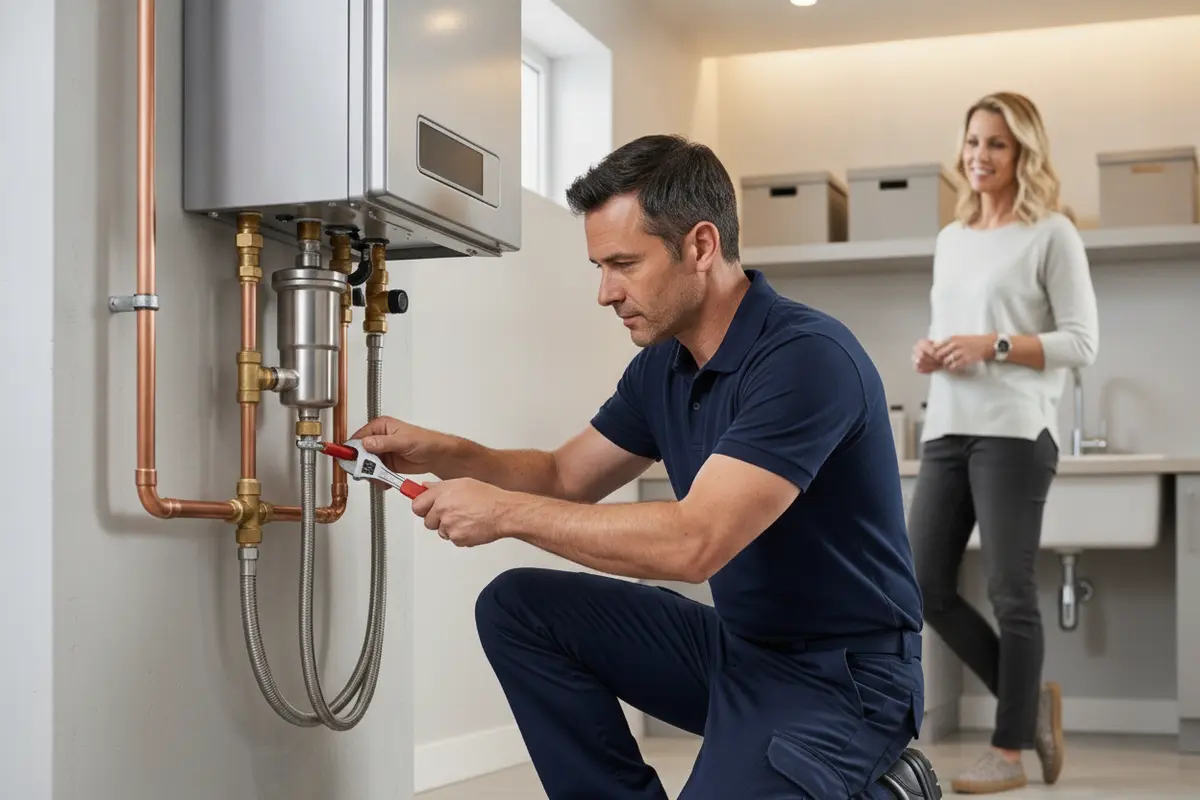
Note: The checks in this guide are for observation only. Leave repairs, wiring, gas controls, and equipment disassembly to a qualified professional.
How can you prepare for a clear repair conversation?
Before the visit, gather details that help explain the problem without taking risks. You can share:
- When the symptom began and whether it is constant or intermittent.
- Which fixtures are affected and how long hot water lasts.
- Whether you have seen water, unusual sounds, or a display message.
- Photos or video taken from a dry, safe position.
- Any recent change in the home’s hot-water use or plumbing.
Make the path to the heater accessible if it is safe to do so. Do not move a heavy appliance or clear an area by stepping through standing water. If you need emergency plumbing help, Mend lists emergency plumbing service information. Homeowners in the service area can also check the Greater Austin service-area page.
When you contact a plumber, lead with the condition that affects safety or household use most. For example, say first if water is actively spreading or if there is a gas odor. Then give the timeline, whether other fixtures are affected, and what you have already observed. You can mention whether the equipment is gas or electric if you know, but do not delay a call to look for a label. These details help the service team understand the situation and decide what information is needed next.
If the problem is intermittent, describe a recent example instead of saying only that it “comes and goes.” Include the time of day, how much hot water had been used, which tap showed the change, and whether the symptom happened again. If it has not happened while someone else is home, say that too. A straightforward timeline can help the technician ask focused follow-up questions without turning your notes into a do-it-yourself diagnosis.
How should you compare repair options?
Good decisions come from understanding the diagnosis and the trade-offs, not from guessing based on a symptom or choosing the first proposed fix. Ask the technician to explain the part or condition involved, the expected result of each option, and what may happen if you defer work. If a recommendation includes equipment replacement, ask why repair is not the preferred option and what is included in the proposed scope.
Compare options on the same basis: what work is included, whether any related parts or labor are excluded, how soon it can be completed, and what warranty applies. If financing would help with a planned project, review the available terms directly; Mend has a home-service financing page. Availability and terms should be confirmed for the specific work.
A simple way to compare is to write the choices side by side after the diagnosis. Note the confirmed issue, the repair scope, the expected outcome, the warranty, and any open questions for each option. That keeps the conversation anchored to what the technician actually found rather than a general rule such as “always repair” or “always replace.” It also makes it easier to discuss timing if one option is urgent and another is a future improvement.
Ask whether an option resolves the immediate symptom, addresses a related condition, or changes the equipment more broadly. Those are different goals. You can also ask what maintenance or follow-up, if any, is recommended after the work, and whether that guidance is specific to the condition found. Avoid comparing only the initial number if the work scopes or warranty terms are different; first make sure you understand what each proposal includes.
For information about energy use and home energy topics, the U.S. Department of Energy is a starting point at energy.gov. General energy information is not a substitute for inspecting a particular water heater or deciding whether its repair is safe.
Request a water heater evaluation and review your options with a technician
Frequently Asked Questions
Can I keep using the water heater if it is making noise?
A new or persistent sound deserves attention, especially if hot-water performance has also changed. Do not open the equipment or try to quiet it yourself. Note when the sound happens and arrange an evaluation; stop using the area and call promptly if you also see a leak, smoke, scorching, or another hazard.
Should I turn off the water heater before a plumber arrives?
There is no single safe instruction for every heater or home. Do not touch electrical controls, gas controls, or equipment in a wet area. If water is actively spreading, and the shutoff is safely accessible without entering water or touching hot equipment, you may close the water supply valve. When unsure, keep clear and ask for guidance.
Does a puddle always mean the water heater tank is leaking?
No. Water may come from a nearby pipe, connection, valve, or another source. Observe where it appears from a safe, dry location, but do not assume the source based on the puddle alone. A technician can inspect the area and explain what is causing it.
When is replacement considered instead of repair?
That depends on the heater’s condition, the problem found, and the available repair options. Ask the technician to explain the diagnosis, what a repair would address, why replacement may be recommended, and the scope and warranty of each option. A symptom by itself is not enough to decide.
Schedule a water heater evaluation
If your water heater is leaking, not providing dependable hot water, or showing a recurring change, share the symptoms and ask for a diagnostic visit. Mend Services provides plumbing help in Austin and the Greater Austin area, with upfront pricing presented before work begins. A clear evaluation can help you choose the next step with more confidence.