

A single slow drain can be ordinary. Repeated backups, wastewater returning through more than one fixture. Or a toilet and shower acting up at the same time deserve a closer look at what is happening beyond the individual drain. The goal is not to assume a sewer-line failure. It is to recognize when the pattern is worth documenting and discussing with a plumbing professional.
For homeowners considering sewer line repair Austin services, repeated backups or symptoms affecting multiple fixtures may justify a sewer-line diagnosis rather than another isolated clog treatment. Note when symptoms occur, which fixtures are affected, and any visible overflow or sewage before the visit. A camera inspection may help evaluate the line, but the findings should guide the repair conversation.
Good notes can help separate a recurring main-line concern from a localized blockage and give the technician a clearer starting point. The first step is understanding which symptom patterns carry more weight and which details are most useful to record.
Schedule an inspection with Mend Services to discuss recurring sewer-line symptoms.
When Does a Clog Point to a Larger Sewer-Line Problem?
An isolated sink or shower clog usually affects one fixture. The concern rises when wastewater symptoms spread through the house, return soon after a drain is cleared. Or appear in fixtures that do not share the same small branch drain. Multiple slow drains, slow toilets, an overflowing floor drain, or sewage visible outside can point to a broader wastewater problem rather than one blocked trap or pipe. The CDC lists these as signs that a wastewater system may not be working properly.
Pay attention to the pattern, not just the most dramatic symptom. Toilets that gurgle when a nearby fixture drains, unpleasant odors, and a soggy area in the yard can add useful context. Those signs do not prove that the building sewer is damaged, but they help a plumber decide whether to investigate beyond the individual fixture. You can review the broader early-warning overview in this guide to main-line drain symptoms.
What to document before calling
Write down which fixtures are affected, when the problem began, and whether the symptoms appeared together or one at a time. Note whether a recent rainstorm or flooding event preceded the backup, since heavy rain and flooding can damage sewer systems and contribute to untreated wastewater overflows. If you have safely observed the issue, record whether water rises when a toilet is flushed or another fixture runs. Photos of an affected floor drain or yard area can also help preserve the sequence for the service visit.
Do not keep testing the system if wastewater is backing up. Sewage from plumbing fixtures may contain harmful pathogens, so avoid contact and keep children and pets away from the affected area. Follow the same caution if you see sewage indoors or outside. For a single fixture that is slow but not backing up, clogged drain repair options may help you distinguish routine drain work from a situation that needs broader diagnosis.
Before work begins, ask what the inspection will establish, where the suspected line is located, and what evidence supports the proposed scope. A camera inspection can turn a vague pattern of backups into a clearer discussion about the line’s condition and the next appropriate step.
What to Document Before Calling a Plumber
Good notes can help a plumber understand whether the problem is limited to one fixture or affecting the home’s wastewater system. Before the visit, record what you can observe safely. Do not open a cleanout, handle sewage, or take apart plumbing to gather information.
- List every fixture affected. Note whether the issue involves one sink, a toilet, a shower, or several fixtures. Write down slow drains, slow toilets, overflowing floor drains, or sewage visible outside. Multiple symptoms are useful context because these patterns can indicate a broader wastewater problem, according to the CDC’s wastewater guidance.
- Record when it started and how it changed. Include the date and approximate time, whether the issue is constant or intermittent, and what happened immediately before it appeared. Note whether a toilet flush, washing machine, shower, or other water use seemed to make the symptoms worse.
- Note recent weather and outdoor observations. Record heavy rain or flooding near the time of the problem, since severe weather can damage sewer systems and contribute to untreated wastewater overflows. From a safe location, note soggy areas, unusual pooling, or unpleasant odors in the yard. Do not walk through contaminated water.
- Describe odors and sounds. Write down where you noticed a sewer-like odor and whether toilets gurgled or drains made unusual sounds. A location and timing are more useful than a general note that the house smells bad.
- Document prior attempts. Tell the plumber what you tried, when you tried it, and whether the symptoms improved temporarily. Include any drain-cleaning service, plumbing work, or known history of recurring backups. If you are unsure whether the pattern points to the main line, review these main-line drain signs and inspection considerations.
- Take clear photos or video from a safe position. Photograph visible water, affected fixtures, stains, yard conditions, or an overflow before cleaning if possible. Never photograph at the expense of avoiding contact. Sewage backing up into a home may contain harmful pathogens, so follow the EPA’s safety guidance and keep people and pets away.
Bring these notes and any plumbing records to the appointment. They can help focus the evaluation, while a professional inspection determines what is actually happening inside the line.
What Happens During a Sewer-Line Diagnosis in Austin?
A professional diagnosis is meant to turn a pattern of symptoms into useful information about the line. The exact process depends on the home’s layout, available access, and what the plumber observes. So no inspection should promise a particular finding or repair method before the line is evaluated.
One common approach is a video inspection. A plumber may introduce a push camera through an exterior cleanout, then guide it through the private sewer lateral toward the public sewer connection. Pinellas County describes this type of inspection as starting from a cleanout outside the building and near the foundation. Its guidance also explains that a complete lateral inspection should cover the run from near the building to the public portion of the lateral. Learn more about private sewer-lateral video inspection requirements.
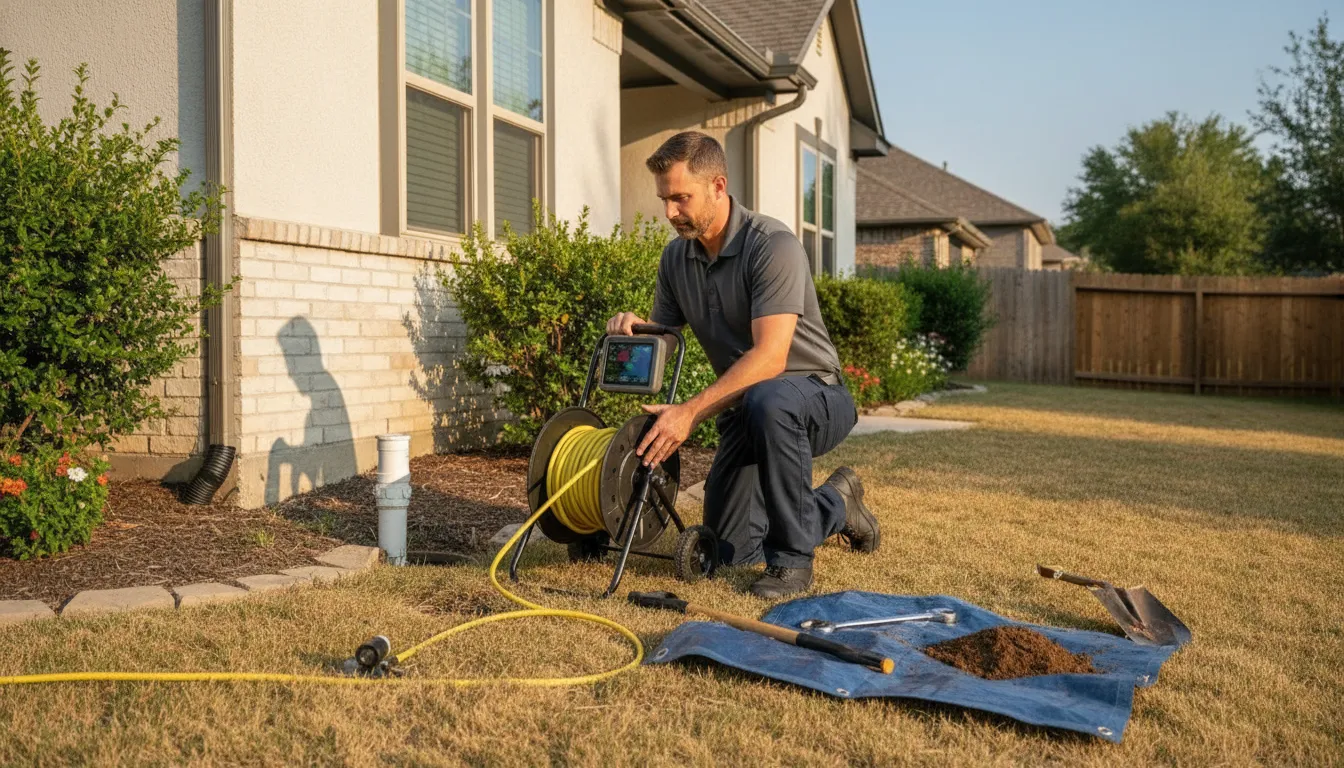
Why the full lateral matters
Looking at only the section closest to the cleanout may not explain recurring backups farther along the line. If a lateral is long and the camera cannot reach the public sewer from the first access point, an intermediate cleanout may be used when one is available. The objective is to inspect the full accessible route, not to assume that the first visible section represents the entire line.
The video can help document the pipe’s condition, including whether the inspected lateral appears to have leaks or structural concerns. It does not replace professional interpretation. The plumber may consider the location of any observed issue, the home’s symptoms, the condition of access points, and whether the camera reached the intended endpoint. A homeowner can ask whether the scope covered the full lateral, where the camera entered, and what the recording shows.
Mend lists camera inspection for drains and main-line drain inspection among its diagnostic offerings. Its professional drain cleaning in Austin page provides related service context, while the company’s main sewer-line plumbing services page covers broader plumbing support. A camera result is one part of the decision. The next step should match the documented condition and the homeowner’s symptoms, rather than being selected before the diagnosis.
How Heavy Rain Can Change the Clues You Notice
Rain can change when a plumbing problem becomes noticeable, but the weather alone does not identify the cause. After a hard storm, note whether a backup, slow drain, gurgling sound, or sewer odor began during the rain, shortly afterward, or without any clear connection. That timing gives a plumber useful context when reviewing the symptoms and deciding what needs to be examined.
Heavy rain and flooding can damage sewer systems and contribute to overflows of untreated wastewater, according to the CDC’s wastewater safety guidance. That does not mean every post-storm toilet backup is a city-system problem, and it does not confirm a break or blockage on your property. A private line, a drain connection, a vent, or another plumbing issue may produce similar clues.
Record the pattern, not just the weather
Write down which fixtures changed and whether they are on the lowest level of the home. Note any standing water, unusual odor, wet area near the yard or cleanout, or sewage contact. Do not open a cleanout or handle contaminated water just to investigate. If wastewater entered the home, keep people and pets away from it and seek prompt guidance.
If the main clue is an odor, review these possible sewer-line odor causes without assuming that rain proves a sewer-line failure. If one drain is affected, clogged drain repair options may be the more relevant starting point. Bring the timeline, photos of safe-to-document conditions, and any recent plumbing history to a professional evaluation. That record helps keep a conversation about sewer line repair Austin grounded in observed evidence rather than a weather-based guess.
Questions to Ask Before Sewer Line Repair in Austin
A clear diagnosis should leave you knowing what was observed, where it was observed, and what decision the evidence supports. Before approving work, ask the plumber to connect the symptoms in your home with the findings in the pipe. Multiple slow drains, slow toilets, an overflowing floor drain, or sewage visible outside can point to a wastewater-system problem. But symptoms alone do not identify the location or condition of the line. CDC guidance lists these patterns as warning signs.
What should the inspection show?
Ask whether the camera traveled from a cleanout near the building toward the public sewer connection. A push camera can be inserted through a cleanout to record the sewer lateral, as described by Pinellas County’s sewer-lateral inspection guidance. Ask whether the inspection covered the full length of the lateral, from near the building to the public portion. If the line is too long for one access point, an intermediate cleanout may allow the inspection to continue.
| Symptom pattern | Camera findings | Likely next discussion | Homeowner question |
|---|---|---|---|
| Several fixtures slow | Restriction or standing water | Locate the affected section | Does it explain the pattern? |
| Backups return after clearing | Restriction or structural concern | Cleaning, monitoring, or repair | What did the camera confirm? |
| Wet yard or sewage odor | Leak or structural concern | Safety and affected section | What evidence shows a leak? |
| Toilet and floor drain together | Shared-lateral findings | Scope for the shared line | Was the full lateral viewed? |
The purpose of a camera inspection is to document the lateral’s condition, including whether it operates without leaks and remains structurally sound. Request the relevant video segment, location markers, and a plain-language explanation of what is confirmed versus suspected. If sewage has backed up indoors, avoid contact because it may contain harmful pathogens, according to EPA guidance. For the service conversation, you can also find a licensed Austin plumber and review pipe repair and replacement considerations before approving a scope.
When Is Sewer-Line Trouble an Emergency?
Some sewer symptoms call for prompt plumbing help rather than a wait-and-see approach. Sewage backing up into a sink, tub, shower, or floor drain is an urgent situation, especially when more than one fixture is affected. An overflowing toilet that will not stop, a severe leak, or sewage visible inside or outside the home also warrants immediate attention. Mend identifies sewage backups, severe pipe leaks, and overflowing toilets as emergency plumbing situations.
Heavy rain or flooding can damage sewer systems and contribute to untreated wastewater overflows, so note whether the problem began after a major storm. Weather alone does not confirm a sewer-line failure, but it is useful information for the plumber. Multiple slow drains, sewage outside, or a backup in the lowest available fixture should be documented and reported when you request service.
Protect people and pets first
Avoid contact with backed-up sewage. The EPA warns that sewage from plumbing fixtures may contain harmful pathogens. Keep children and pets away from the affected area, and do not walk through contaminated water unless there is no safe alternative. If you can do so without entering contaminated water, stop using fixtures that may add to the backup. Do not handle sewage, remove a cleanout cap, or attempt a repair when doing so could expose you to contaminated water.
Take photos from a safe location and tell the plumber which fixtures are affected, whether the flow is continuing, and whether anyone has already attempted a drain treatment. These details can help the technician assess the urgency and choose a safe starting point. Mend’s emergency plumbing team lists round-the-clock emergency availability and can help determine the next step for an active backup or severe leak.
Request a sewer-line evaluation for recurring backups or multiple-fixture symptoms.
Frequently Asked Questions
How many plumbing symptoms suggest I should request a sewer-line diagnosis?
Repeated backups or problems affecting several fixtures deserve more attention than one isolated slow drain. Multiple slow drains, slow toilets, an overflowing floor drain, or sewage visible outside can point to a broader wastewater problem, according to the CDC. These signs do not confirm a damaged sewer line, but they are useful reasons to document the pattern and ask whether a camera inspection is appropriate.
What should I document before the plumbing visit?
Write down which fixtures are affected, when each symptom started, how often it returns, and whether using one fixture changes another. Photos or video can help show water levels, outdoor wet spots, or visible overflow, but avoid contact with sewage. The EPA advises avoiding sewage because it may contain harmful pathogens. Note recent heavy rain or flooding as well, since those events can damage sewer systems and contribute to overflows.
What does a sewer camera inspection usually look for?
A push camera can be inserted through a cleanout to record the sewer lateral toward the public sewer connection. A complete inspection should cover the pipe from near the building to the public portion of the lateral, when access and equipment allow. The video helps document conditions such as leaks and structural soundness. Ask where the camera entered, how much of the line was viewed, and which findings are confirmed versus suspected.
What questions should I ask before approving scoped sewer-line work?
Ask the plumber to identify the observed location and condition, explain what evidence supports the recommendation. And clarify whether the proposed work addresses the confirmed problem or an assumed cause. Request the scope in writing, including access points, affected sections, cleanup responsibilities, and any unresolved limitations in the inspection. This keeps the repair conversation tied to documented findings rather than symptoms alone.
Schedule a Sewer-Line Evaluation
Recurring backups or symptoms affecting more than one fixture can be useful information for a focused plumbing evaluation. Share what you have noticed, including which fixtures are involved and when the problem occurs, so the visit can begin with clear context.
Schedule a sewer-line evaluation with Mend Services for the next step.


