


If you are asking, “how do i protect my plumbing when hosting holiday guests,” start with a few simple habits: keep grease and food scraps out of drains, give the water heater time to recover between heavy uses, and make it easy to spot a leak. Hosting usually means more cooking, showers, toilet use, and laundry than a normal day. A little preparation can help you welcome everyone without turning a small plumbing problem into the main event.
Schedule a plumbing visit if a recurring issue needs a closer look.
How do I protect my plumbing when hosting holiday guests?
Think of the plumbing in your home as a set of connected routines. The kitchen sink handles food and dishwater. Bathrooms handle repeated flushing and showers. Your water heater has to keep up with peak demand. The best preparation is not a complicated project; it is setting expectations, checking a few visible trouble spots, and knowing what to do if something changes.
Before guests arrive, take a short walk through the house. Check under sinks for dampness, look for a toilet that keeps refilling, and notice whether any drain is already slow. Make sure you know where the main water shutoff is and that household members know how to reach it. You do not need to take apart fixtures or try to diagnose a hidden issue. You are looking for obvious changes that are easier to address before the house is busy.
How do I protect my plumbing when hosting holiday guests in the kitchen?
Holiday cooking puts extra pressure on kitchen drains. The most useful rule is simple: drains are for water, not for disposing of cooking waste. Grease, oil, and food scraps can collect in pipes or create a clog, even if they seem liquid or small when they go down the sink.
- Keep fats and cooking oil out of the sink. Let used oil and grease cool, then place them in a suitable container for disposal according to local guidance. Wipe greasy pans with a paper towel before washing them.
- Scrape plates into the trash or compost container. A sink strainer can catch stray scraps, but it is not a reason to send food waste down the drain.
- Use the disposal only for small amounts of appropriate scraps. Follow the appliance maker’s instructions, run water as directed, and avoid feeding a large volume through at once. When in doubt, use the trash or compost instead.
- Do not treat the sink as a place to empty leftovers. Soups, sauces, coffee grounds, rice, and other food waste are better handled in the bin than washed down the drain.
- Clear the sink strainer between tasks. A quick check while cooking can keep scraps from being rinsed into the plumbing.
A practical hosting setup helps guests follow these habits without needing a plumbing lecture. Put a small, visible food-scrap container near the work area. If there is a disposal, mention that plates should be scraped first and that large scraps belong in the bin. Clear directions are especially helpful when several people are sharing the kitchen.
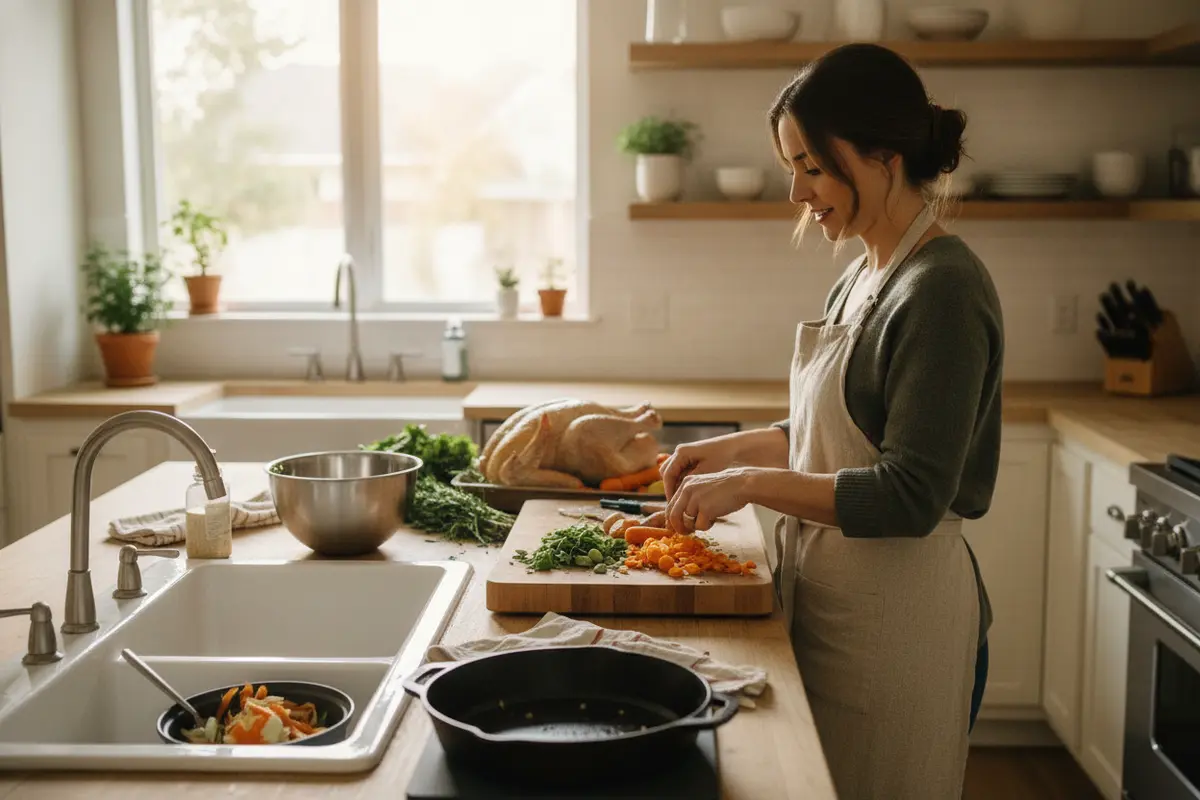
A note for your guests: Please scrape plates into the bin, keep oil and grease out of the sink, and let someone know if a drain starts slowing down. It is much easier to respond early than to discover a backed-up sink after dinner.
If your kitchen sink is already slow, gurgling, or backing up, do not keep feeding it more scraps or rely on repeated attempts to force the blockage through. You can read about professional drain cleaning and, for a persistent main-line concern, hydro jetting options in Austin. These are possible service approaches, not a reason to assume the cause before the plumbing is evaluated.
How can you pace cleanup after a large meal?
Cleanup can be as demanding as cooking when several people are rinsing plates and loading the dishwasher at once. Set up a simple sequence so food waste does not get pushed toward the drain in a hurry. Ask one person to scrape plates, another to stack dishes, and leave the sink clear for washing. If you have a garbage disposal, use it only as its manufacturer directs and do not treat it as a shortcut for clearing a whole meal’s leftovers.
- Collect scraps before rinsing. Put leftovers and plate scraps in the bin or compost rather than washing them into the sink.
- Keep pans with grease separate. Let the contents cool and handle them for disposal outside the sink; wipe greasy cookware before washing.
- Do not force a slow drain to keep up. Pause cleanup if water begins to pool or drain slowly. Continuing to run water can make an existing backup harder to manage.
- Use the dishwasher when it is working normally. Follow its loading and use instructions. If the kitchen sink is already backing up or the dishwasher is not draining as usual, stop and get guidance rather than starting another cycle.
It also helps to avoid running multiple cleanup tasks at once when the sink is showing a problem. A slow drain is a signal to pause, not a challenge to see how much water it can take. Tell guests what you have noticed so no one unknowingly adds scraps or runs another appliance into an affected drain. These small choices make it easier to keep the kitchen usable through the rest of the gathering.
What should you tell guests about bathrooms and toilets?
Bathrooms see more use when the house is full. A simple reminder prevents many avoidable clogs: toilets are for human waste and toilet paper only. Do not flush wipes, paper towels, tissues, cotton products, dental floss, or cooking-related waste, even if a package says a wipe is flushable. Put a small wastebasket where guests can see it and, if it feels useful, leave a friendly note in the bathroom.
Before the first guests arrive, flush each toilet and check that it stops refilling normally. Look for water around the base, a handle that sticks, or a toilet that runs on and off between uses. These signs do not identify a specific fault, but they are useful reasons to arrange an evaluation before a bathroom is in heavy use. If one toilet is already unreliable, let guests know which bathroom to use rather than waiting for a busy moment to find out it cannot keep up.
For a clog, avoid repeated flushing. If the bowl is close to overflowing, stop using it and keep people away from the area. A plunger may be appropriate for a straightforward toilet clog, but do not mix drain chemicals or use a tool in a way that could damage the fixture. If water is rising, leaking, or returning through another fixture, stop and contact a plumbing professional.
How can you plan for extra showers and hot-water use?
Several back-to-back showers can use hot water faster than a typical household routine. The exact amount available depends on your water heater and how your household uses it, so avoid assuming that every guest can shower one after another without a pause. A little coordination is often enough: let guests know when hot water may be in high demand, spread showers out when possible, and avoid running multiple hot-water-heavy tasks at the same time if the supply is already limited.
Pay attention to changes you have noticed before guests arrive. If hot water has been inconsistent, the heater is making an unfamiliar sound, or you have seen water near the equipment, do not wait until the home is full to investigate. Keep the area around the appliance accessible and follow any safety instructions provided with it. Do not open panels, adjust gas controls, or attempt repairs unless you are qualified to do so.
If the problem is recurring, Mend Services offers plumbing help for Austin-area homes. A technician can evaluate the symptoms and explain appropriate next steps. Do not assume that a change in hot-water performance has one particular cause without an inspection.
What should you check before guests arrive?
A quick check the day before a gathering can catch obvious issues while there is still time to respond. Keep it practical; there is no need to dismantle anything or test equipment beyond normal use.
- Look beneath kitchen and bathroom sinks. Check for visible drips, damp cabinet floors, or a musty smell that is new. Remove stored items only if needed to see the area clearly.
- Run water briefly at sinks and showers. Notice whether it drains at its usual pace. If water pools or a drain makes a new gurgling sound, avoid putting more waste down it.
- Flush toilets once. Confirm that each flush works as expected and that the tank stops refilling. Do not repeatedly flush a toilet that is slow or close to overflowing.
- Check visible supply connections and exposed pipes. Look for active drips or moisture. Do not tighten or alter a connection if you are unsure what it is or if the leak is significant.
- Locate the main water shutoff. Make sure adults in the household know where it is and how to access it. If you are unsure how it operates, find out before an urgent leak occurs rather than experimenting during one.
- Set out a few helpful reminders. Make the food-scrap bin and bathroom wastebaskets easy to find, and explain any known limitation such as a slow drain or a toilet that should not be used.
For homeowners who want a broader seasonal routine, Mend has additional home maintenance tips for Austin homes. A checklist can help you notice changes, but it is not a substitute for professional evaluation when a leak, recurring clog, or persistent hot-water issue is present.
What is the safest response to a plumbing problem during a gathering?
First, stop using the affected fixture. If water is actively leaking and you can safely reach the relevant shutoff valve, turn off the water to that fixture. If you cannot stop the flow, use the main shutoff if you know how to operate it. Keep people clear of wet floors, and do not touch electrical equipment or switches in a wet area. If water is near electrical equipment, treat the area as unsafe and get appropriate help.
For a drain backup, stop running water into the affected sink, tub, or toilet. Do not flush again to see if it has cleared, and do not pour multiple products into the drain. Note which fixtures are affected and when the problem began. If more than one drain is backing up, sewage is present, or water is spreading, seek prompt professional help rather than trying a series of home remedies.
If you need service, Mend provides emergency plumbing information for Austin. When contacting a professional, describe what you observed, which fixtures are involved, whether the problem is active, and any steps already taken. That helps explain the situation without asking you to diagnose it yourself.
For planned repairs, local permit and code requirements can depend on the work. The City of Austin notes that work exempt from a building permit must still comply with applicable building codes; check Austin’s permit guidance for context and confirm requirements that apply to a particular project.
How do hosting habits and plumbing help compare?
Use this quick guide to decide whether a simple household habit is enough or whether a recurring symptom deserves a closer look. It is not a diagnostic chart. When in doubt, stop using the affected fixture and ask for professional guidance.
| Situation | Helpful first step | When to seek help |
|---|---|---|
| Cooking grease or scraps | Keep them out of the drain; wipe pans and use a bin. | If the sink is slow, backing up, or repeatedly clogging. |
| Slow sink or shower | Stop adding food waste or debris and note which fixtures are affected. | If the problem persists, returns, or affects multiple drains. |
| Toilet close to overflowing | Stop flushing and keep the bathroom out of use. | If water rises, leaks, or the clog does not clear safely. |
| Water around a fixture or pipe | Stop using it; use a local shutoff only if it is safe and familiar. | Promptly for an active leak, spreading water, or uncertainty about stopping it. |
| Hot water does not meet usual needs | Space out showers and observe when the change occurs. | If the change repeats, or you see a leak or other unusual condition. |
If the same drain keeps slowing down even after you change what goes into it, avoid treating repeated symptoms as a one-time holiday inconvenience. Mend’s plumbing repair information can help you find a next step for a persistent issue. For other plumbing needs, the company’s Greater Austin service-area information can help you check whether your community is covered.
Arrange a plumbing evaluation for a recurring clog, leak, or hot-water concern.
Frequently Asked Questions
Should cooking oil ever go down the kitchen sink?
No. Keep cooking oil, grease, and fatty drippings out of the sink. Let them cool and dispose of them in a suitable container according to local guidance. Wipe greasy cookware before washing it.
Can guests flush wipes if the package says they are flushable?
It is safest to put wipes in the trash, not the toilet. The toilet should be used for human waste and toilet paper only. A visible wastebasket makes the right choice easy for visitors.
What if a drain slows down while guests are here?
Stop putting food scraps or other waste into it, and limit use of the affected fixture. Do not keep testing it with more water if it is backing up. If the issue persists, affects other fixtures, or water is returning, contact a plumbing professional.
Should I turn off the water before leaving for a holiday trip?
That depends on your home, the length of the trip, and any equipment that relies on water. Do not change a system setting unless you understand its effect. If you have a known leak or plumbing concern, ask a qualified professional what preparation makes sense for your home.
When is a plumbing issue urgent?
An active leak you cannot stop, water spreading into the home, a drain backup involving multiple fixtures, or wastewater returning deserves prompt attention. Keep people away from unsafe areas and avoid contact with water near electrical equipment.
With a few clear kitchen and bathroom habits, an early check for visible changes, and a plan for stopping water safely, you can make holiday hosting easier on your plumbing and more comfortable for everyone at home.


