

Low water pressure in your house can turn a normal shower into a slow trickle or make a washing machine take much longer to fill. For Austin-area homeowners, the first clue is whether the weak flow affects one fixture or every faucet in the home. A clogged aerator or shutoff valve can limit one fixture, while a leak, pressure regulator, main valve, mineral buildup, or supply-line problem can affect the whole house.
Schedule a low water pressure diagnosis with Mend Services
What does low water pressure in a house feel like?
Low water pressure means water is still coming out, but the force or flow is weaker than expected. You may notice a shower that no longer reaches the other side of the tub, a faucet that fills a glass slowly, or a toilet tank that takes too long to refill. The change may happen suddenly, gradually, or only when several fixtures run at the same time.
Low pressure is different from no water. A complete loss of water may point to a closed main valve, a service interruption, a frozen line, or a major break. Weak flow is more often a restriction, pressure-control problem, leak, or supply issue. Note when the problem started and which fixtures are affected before you begin troubleshooting.
Is the problem at one fixture or throughout the house?
Start by comparing several fixtures. Turn on a cold-water faucet at the kitchen sink, bathroom sink, shower, and an outdoor hose connection if one is available. Test them one at a time, then run two at once. This simple comparison helps separate a local fixture issue from a whole-home water pressure problem.
| What you notice | Likely direction | First safe check |
|---|---|---|
| One faucet or shower is weak | Aerator, showerhead, cartridge, or fixture shutoff valve | Remove visible debris from the aerator or showerhead and confirm the local valve is open |
| Several fixtures in one bathroom are weak | Branch-line restriction or a local valve issue | Compare cold and hot flow, then check accessible shutoff valves |
| Every fixture is weak | Main valve, meter valve, leak, regulator, supply line, or utility issue | Ask whether nearby neighbors have the same problem and check for visible leaks |
| Pressure drops when another fixture runs | Flow restriction, undersized or damaged piping, or a supply problem | Record which fixtures are running and whether the change is repeatable |
Do not assume a whole-home failure is caused by a faucet. If multiple fixtures changed at once, move your attention toward the water entry point, the main shutoff, pressure-control equipment, visible supply piping, or a hidden leak.
What causes low water pressure in a house?
Several plumbing conditions can create the same symptom. The most useful diagnosis begins with the pattern, timing, and location of the weak flow instead of replacing the first part that looks suspicious.
1. A clogged faucet aerator or showerhead
A faucet aerator mixes air into the stream and catches particles before they reach the opening. Mineral deposits or sediment can block the small screen and make the faucet appear to have low pressure even though the supply line is working normally. Showerheads can develop the same restriction.
If only one fixture is affected, turn off its local shutoff valves, remove the aerator or showerhead if it can be removed safely, and rinse away loose debris. Do not force a corroded fitting. If the restriction returns quickly or affects several fixtures, the debris may be coming from the plumbing system rather than that fixture alone.
2. A partially closed shutoff or main valve
A valve that is only partly open can restrict flow. This can happen after maintenance, a remodel, a plumbing repair, or an emergency shutoff. Check accessible fixture valves under sinks and behind toilets. If the problem affects the entire house, look for the main shutoff valve near where the water line enters the property or near the water meter.
Move a valve gently and stop if it is stuck, leaking, or heavily corroded. Older gate valves can break internally when forced. If you are unsure which valve controls the home, or if water begins leaking around the stem, contact a plumber rather than turning harder.
3. Mineral buildup or sediment in the plumbing
Minerals and sediment can narrow the inside of pipes, supply lines, aerators, cartridges, and water-treatment equipment. A restriction may develop slowly and become more noticeable at fixtures that use small openings. A whole-home decline can be especially frustrating because cleaning one aerator may provide only temporary relief.
Water treatment equipment, filters, and softeners can also reduce flow when a filter is clogged, a bypass setting is wrong, or a control valve is not operating correctly. Follow the equipment manufacturer’s maintenance instructions. Do not disconnect or bypass a treatment system if you do not understand how it is installed.
4. A leaking pipe or water service line
A leak can reduce the amount of water available at fixtures and may cause pressure to fluctuate. Look for damp cabinets, wet drywall, unexplained puddles, a running water meter when all fixtures are off, ceiling stains, musty smells, or unusually high water use. Some leaks are hidden under floors, behind walls, in ceilings, or underground, so the absence of a visible puddle does not rule one out.
If you suspect a leak, turn off fixtures and listen for running water. Check the meter only if it is safe and accessible. Shut off the home water supply if a significant leak is active, then arrange for leak detection and repair. Mend Services provides leak detection in Austin for homeowners who cannot locate the source.
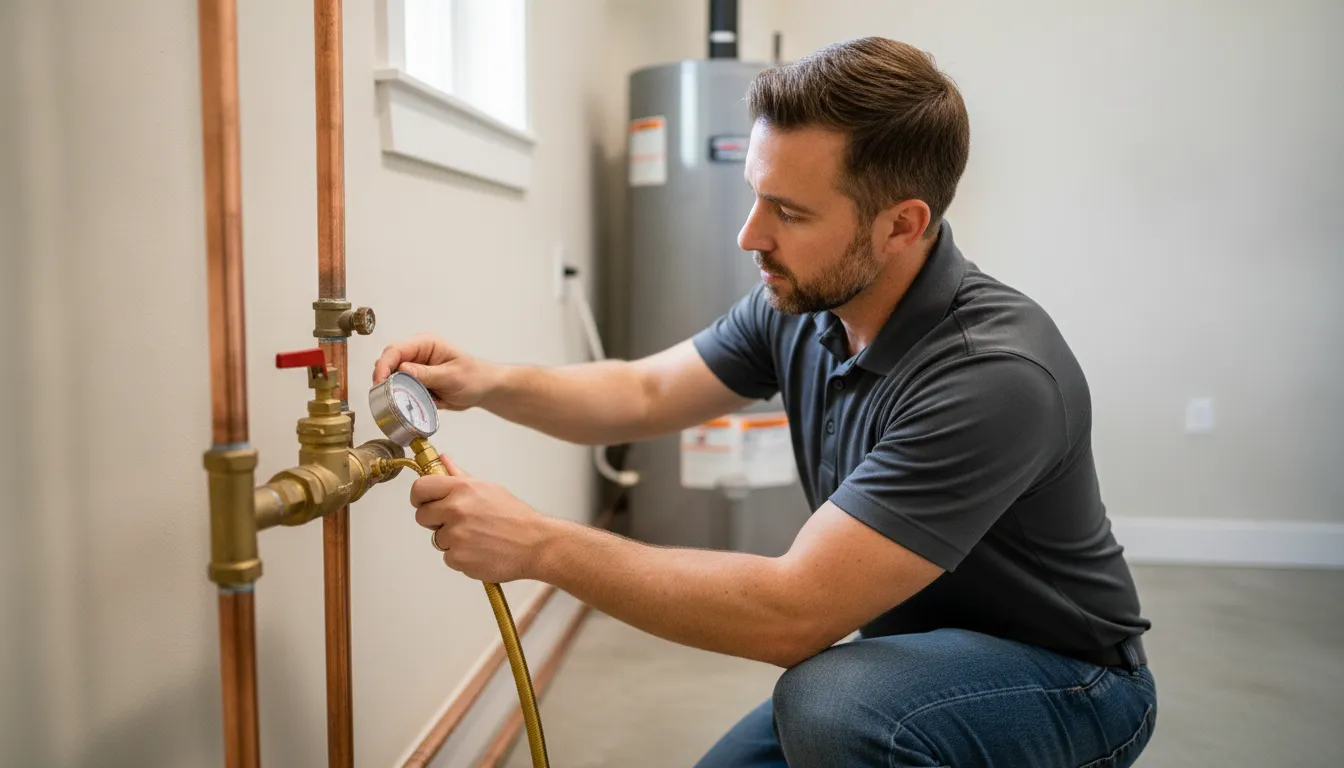
5. A failing or incorrectly adjusted pressure regulator
Some homes use a pressure-reducing valve or pressure regulator to control incoming water pressure. When the regulator wears out or is set incorrectly, it can restrict flow throughout the house. A regulator problem may cause pressure to change, become weak at every fixture, or respond differently when demand changes.
Pressure regulators are not a good place for trial-and-error adjustments. Changing the setting without a gauge can hide the real problem or create excessive pressure that damages fixtures and appliances. A licensed plumber can test the pressure on both sides of the regulator and determine whether adjustment or replacement is appropriate.
6. A damaged or undersized supply line
The pipe that brings water to the home may be damaged, restricted, or too small for the current demand. Older metal piping can corrode internally, while a buried service line can be affected by soil movement, roots, or a break. A supply-line issue can look like a regulator problem because both may affect every fixture.
Do not excavate a water line based only on a weak faucet. A professional can compare static and flowing pressure, inspect accessible piping, and look for evidence that the restriction is before or after the main entry point. If replacement is needed, the right scope depends on the material, route, condition, and local requirements.
7. A utility or neighborhood supply issue
Ask a nearby neighbor whether their water pressure changed at the same time. Road work, utility maintenance, a water-main break, or a temporary demand spike can affect more than one property. Your local water provider may be able to confirm an outage or pressure event.
If your neighbors have normal flow and only your home is affected, the cause is more likely on your property. If the utility confirms normal service but your pressure remains weak, have the home’s valves, regulator, supply line, and plumbing fixtures evaluated.
8. A well-system or filtration problem
Homes served by a private well can experience low pressure when the pump, pressure switch, pressure tank, filter, or well-side piping has a problem. A clogged sediment filter can restrict flow, while a pump or tank issue can change how the system builds and maintains pressure. Well equipment requires a different diagnostic process from a municipal-water home.
Start with safe visual checks, such as a filter condition or a tripped breaker, only if those checks are covered by the equipment instructions. Never adjust a pressure switch or open electrical equipment unless you are qualified to do so. Call a professional familiar with well systems when pressure is inconsistent, the pump runs continuously, or the home loses water.
What can you check safely before calling a plumber?
You can gather useful information without taking apart the plumbing system. Safe checks should help identify the pattern, not force a repair on equipment that may be corroded or under pressure.
- Test cold water at several fixtures and note which ones are weak.
- Compare hot and cold flow at the same faucet. A hot-only problem may involve the water heater or hot-water branch rather than the incoming supply.
- Confirm accessible fixture shutoff valves are open and not leaking.
- Clean a removable aerator or showerhead if one fixture is affected and the fitting comes off without force.
- Look for visible leaks under sinks, around toilets, near the water heater, and around outdoor hose connections.
- Check whether the water meter appears to run when all fixtures are off, if the meter is safely accessible.
- Ask a neighbor or the water provider whether there is a local service issue.
- Write down whether the pressure changes when a toilet fills, a washing machine runs, or another shower starts.
Stop the DIY investigation if you see active water damage, a fast leak, a damaged valve, sewage, electrical equipment near water, or a pipe that may be frozen. The goal is to protect the home and give the technician accurate information, not to keep turning valves until the symptom changes.
How can you test water pressure?
A pressure gauge can provide more useful information than judging the stream by eye. A plumber may test static pressure with fixtures off, then test flowing pressure while water is running. Comparing those readings helps show whether the system can maintain pressure under demand.
A pressure gauge can be useful, but the correct interpretation depends on the home’s design, water source, elevation, regulator, and local conditions. A reading below about 40 psi may support a low-pressure diagnosis, but it does not identify the cause by itself. For general background, see this home water pressure guide.
If you use a temporary hose-thread pressure gauge, attach it only to a suitable connection and follow the gauge instructions. Avoid removing plumbing components from a pressurized line. Record the reading with no water running, then note what happens when a nearby fixture opens. A large difference between static and flowing pressure can point to a restriction, failing regulator, damaged supply line, or another flow problem.
Pressure is only one part of the diagnosis. Flow rate, pipe size, fixture condition, water temperature, and the location of the restriction all matter. A normal static reading does not rule out a clogged cartridge or a problem that appears only when several fixtures run.
When is low water pressure an emergency?
Low water pressure is not always an emergency, but a sudden change combined with water damage can become one quickly. Treat the situation as urgent when the symptom appears with an active leak, a burst or split pipe, sewage backup, flooding, ceiling or wall damage, or a water heater leak.
- Shut off the nearest fixture valve if the leak is limited and the valve works normally.
- Shut off the home water supply if water is actively spreading and you can reach the valve safely.
- Keep people away from wet electrical equipment and do not enter standing water near electrical outlets.
- Move belongings only if you can do so without walking through unsafe water.
- Call for emergency plumbing assistance and explain whether the problem is a leak, loss of water, or weak pressure.
A slow decline with no visible damage can usually be scheduled for diagnosis, but it should not be ignored indefinitely. Pressure problems can make routine fixtures frustrating to use and may signal a leak or restriction that becomes more expensive if it worsens.
How does a plumber diagnose and fix low water pressure?
A professional diagnosis starts by confirming the symptom and mapping where it occurs. The plumber may inspect fixture screens, measure static and flowing pressure, check the main shutoff and meter valve, examine the pressure regulator, look for evidence of leaks, and evaluate accessible supply piping. The recommended repair depends on the cause, not just the pressure reading.
Possible solutions include cleaning or replacing a fixture part, opening or repairing a valve, replacing a regulator, repairing a leak, changing a clogged filter, repairing a water line, or correcting a well-system component. If pipes are heavily restricted, the plumber can explain whether targeted repair or broader pipe work makes sense. Mend Services provides plumbing services in Austin and surrounding areas, including leak detection, waterline work, and pipe repair.
Before work begins, ask what was tested, where the restriction appears to be, which repair options are available, and what could happen if the issue is left alone. Clear answers help you avoid paying for a part replacement that does not address the actual cause.
Get a professional low water pressure diagnosis from Mend Services
Frequently asked questions about low water pressure in a house
What is the most common cause of low water pressure in a house?
The most common cause depends on the pattern. A clogged aerator or showerhead is common when one fixture is weak. A partially closed main valve, leak, pressure regulator problem, mineral buildup, or supply-line restriction is more likely when every fixture is affected. Testing several fixtures is the fastest way to narrow the possibilities.
Why is my water pressure suddenly low throughout the house?
A sudden whole-home change can come from a partially closed valve, a failing pressure regulator, a leak, a water-main issue, or a damaged service line. Check for visible leaks and ask a neighbor about their pressure. If the change is isolated to your property or you hear water running when fixtures are off, schedule a plumbing diagnosis.
Can I adjust my water pressure myself?
You can perform safe observations, but adjusting a pressure regulator or well pressure switch is best left to a qualified professional. An adjustment made without a gauge can fail to solve the restriction or create excessive pressure that damages plumbing fixtures, appliances, or piping.
How do I know if low water pressure is caused by a leak?
Look for damp areas, unexplained puddles, stains, musty smells, a running toilet, rising water use, or a water meter that moves when all fixtures are off. A hidden leak may have no obvious indoor sign. If the pressure dropped quickly, have the plumbing system checked before assuming the problem is a clogged faucet.
Can mineral buildup cause low water pressure?
Yes. Mineral deposits and sediment can narrow small openings in aerators, cartridges, filters, and pipes. Cleaning one fixture may help temporarily, but recurring or whole-home pressure loss requires a broader inspection to find where the restriction begins.
How much does it cost to fix low water pressure?
The cost depends on the cause and location. Cleaning a fixture screen is different from replacing a pressure regulator, finding a hidden leak, repairing a buried water line, or correcting well equipment. A professional inspection can identify the repair scope before you choose a solution.
Can low water pressure damage my home?
Low pressure itself is usually a service problem rather than direct structural damage, but the cause may be serious. A hidden leak, damaged supply line, or failed pressure-control component can worsen over time. Investigate sudden changes, visible water, or unexplained water use promptly.
When low water pressure makes everyday plumbing unreliable, start with the fixture-versus-whole-home test and record what you find. If the cause is not obvious, a licensed plumbing professional can test the system and recommend a repair that addresses the restriction instead of guessing.


