

Kitchen grease clogs Austin drains because warm fat looks like it washed away, then cools and sticks inside the pipe. Austin Water calls the growing mass the Grease Blob, and it is a common reason a kitchen sink slows down long before the rest of the house does. A paper towel, a lidded jar, and a sink strainer prevent most of that buildup, while a plunger cannot remove grease that has already cooled inside the line.
If the kitchen sink is already backing up, schedule drain cleaning with Mend Services.
Schedule drain cleaning for a slow kitchen sink
What Kitchen Grease Clogs Austin Homeowners Should Know
Fats, oils, and grease are one problem with three textures. Bacon fat turns solid as it cools. Olive oil and many salad oils stay liquid longer, then bind to fat already on the pipe wall. Austin Water explains that this mix also grabs wipes and paper towels that should never have been flushed. The clog is rarely one dramatic pour, and it is usually months of small rinses instead.
A typical Austin week makes that easy to miss. Breakfast bacon, a sheet pan of roasted vegetables, and a pot of chili each leave a spoon of fat. None of those small spoons looks like a serious clog in the moment. Together they coat the same short run of pipe under the sink, where the water has already cooled. By the time the water stands, the soft layer is already thicker than a pencil.
Restaurants in Austin are required to keep grease traps, while most houses are not. That is why the same skillet rinse that a commercial kitchen catches can sit in a home branch line until the sink gurgles. The city describes the result as a blockage, a bad smell, or a sanitary sewer overflow. Those are city-pipe problems and home-pipe problems at the same time.
Cooling is the part people underestimate. The water at the faucet can be hot while the pipe in the wall is not. Fat that left the sink as a liquid can firm up a few feet later, especially in winter when the slab and the exterior wall stay cool. Running the tap longer does not rewind that process, because it only moves the soft grease to a new spot in the line.
You do not need a chemistry lesson to use this. If a spoon leaves a shiny film, treat it as grease. Wipe it off before the sponge touches it. The goal is to keep that film out of the drain, not to melt it and hope it stays melted.
What Should Never Go Down an Austin Kitchen Drain
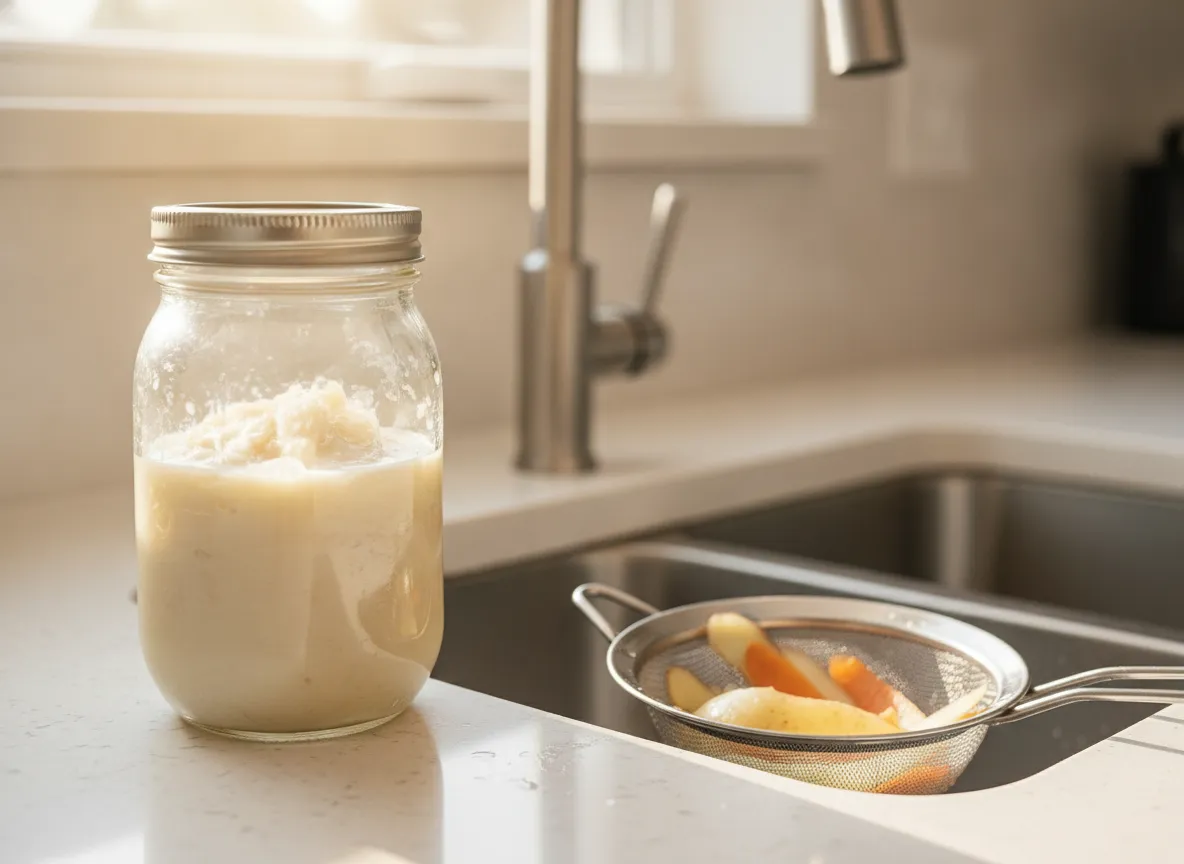
Austin Water’s household list is short, and it works. Wipe grease from pots, pans, plates, and utensils with a paper towel before you wash them. Scrape food scraps into the trash. Set a strainer in the sink so rice, coffee grounds, and vegetable peels never get a chance. Those three habits cover a normal week of cooking without any special tools.
Small amounts of used oil belong in a can or jar with a lid. Let the fat cool first so you are not pouring heat into plastic. When the jar is full, bag it and put it in the trash. A soup can should go in a plastic bag so it cannot leak in the bin on a hot Austin afternoon. Keep the jar by the stove for a week and you will see how much fat never needed the sink.
Austin Water also offers appointment drop-off and pickup for larger amounts of used cooking oil through Austin Resource Recovery. A holiday turkey fryer, a deep fryer, or a catering pan is a pickup problem, not a sink problem. Follow the city’s current instructions for container size and scheduling. Those details change, and the Grease Blob page is the place to check them.
Skip the myths that keep the clog growing:
- Hot water and dish soap do not dissolve grease for good. The fat can pass the trap, cool farther down, and stick where you cannot see it.
- A garbage disposal is not a grease trap. It grinds food into smaller bits that cling more easily, and grinding nuts and other oily foods releases more oil into the line.
- Coffee grounds, eggshells, flour, and starchy pasta water add bulk that grease can grab.
- “Flushable” wipes do not belong in any drain. They are a common partner in the city’s grease buildups.
Compost is fine for many scraps, but very greasy food is not. Austin Water says to trash that portion instead of sending it to a compost bin or the disposal. A quick counter routine helps more than a perfect system. Wipe the pan, scrape the plate, then wash. If you wash first, the film is already sitting in the trap beneath the sink.
Guests and holidays are when the habit slips. A full sink, a rushed host, and a disposal that sounds like it can take anything. Tell helpers the jar is for grease and the strainer stays in. One busy weekend of poured drippings can undo a month of careful rinsing, especially in older homes with longer, flatter kitchen runs.
How a Slow Kitchen Sink Differs From a Whole-House Clog
One slow kitchen sink, with every other fixture moving normally, usually means the buildup is in the kitchen branch. The trap under the sink, the horizontal run in the cabinet wall, and the first few feet of pipe are where cooled fat collects. A second sink on the same wall that slows at the same time still points at that shared kitchen line.
Listen before you assume the worst. A kitchen-only gurgle right after the disposal runs is still a local clue, but a glug from the tub while you drain pasta water is not. Write down which fixture complained and what you had just cooked. That note is more useful than guessing at pipe depth from the kitchen floor.
Age of the house changes the odds, not the rule. Newer Austin builds often have smoother plastic kitchen lines that still collect fat at the trap and at tight turns. Older homes may have longer runs or a patch of older pipe that catches debris. Neither case turns a skillet habit into a sewer replacement, and it only tells you where to look first.
A whole-house problem looks different. The tub gurgles when the washer drains. A basement floor drain rises. More than one room smells like sewer. That pattern is no longer a skillet habit. Mend’s guide to main line drain warning signs is the right next read, and clogged drain repair in Austin covers causes outside the kitchen. This article stays on the cooking side of that line.
Hard water can leave a mineral film, and Austin homes see plenty of it. Mineral film is not the same as grease, which is soft, pale, and smells like old food. If you want the mineral side of the story, read about Austin hard water separately. Do not treat a grease clog with a product meant for scale.
| What you notice | Likely spot | Sensible next step |
|---|---|---|
| Only the kitchen sink is slow after cooking. | Kitchen branch or trap. | Stop pouring fat and clear scraps. |
| The sink drains, then slows again within days. | Grease film past the trap. | Book cleaning instead of repeating the same step. |
| The tub, toilet, or laundry joins the problem. | Shared line or main line. | Stop using water and schedule a visit. |
| Water rises in a floor drain or a second sink. | A backup, not a slow drain. | Do not add chemicals. Call for drain cleaning. |
Safe Steps Before You Book Drain Cleaning
A single slow kitchen sink can start with what you can see. These steps are for standing water and a drain that still moves, not for a sink that is already overflowing or a backup in another room.
- Stop running the disposal and stop adding hot grease “to melt it.”
- Remove the strainer and empty it into the trash. Scoop visible food out of the standing water.
- If the pop-up or stopper is in the way, lift it out and wipe the slimy ring. That ring is often the first inch of the clog.
- Fill the sink a few inches and use a cup plunger with a firm seal. A few slow pulls are enough. Violent plunging can blow the trap joint loose.
- If water still sits after that, wait. Do not pour a liquid drain opener down the line.
Mend’s drain cleaning in Austin page is direct about store-bought liquid cleaners. Those products can eat at pipe walls, and a later repair is more expensive than a cleaning visit. If the sink is open again, go back to the wipe-and-jar habit the same night. A cleared trap does not remove the film farther down the pipe.
Skip the homemade pours too. A kettle of boiling water, a cup of vinegar, or a handful of baking soda will not lift a grease sleeve off the pipe wall. Boiling water can also soften joints you did not plan to touch. If the plunger did not restore a steady drain, the next useful step is a person with the right cable or jet, not another bottle under the sink.
While you wait, keep using as little water as you can in that sink. Scrape plates at the trash can. If you have a second bathroom sink for handwashing, use it. Do not run the dishwasher on a full cycle into a line that is already holding grease. You will only pack the soft clog tighter.
Homes on a septic system have a tighter rule. The U.S. Environmental Protection Agency says grease and oil do not belong in a septic drain at all, because they add to the solids the tank has to hold. City sewer and septic share the kitchen habit. They do not share the rest of the maintenance plan, so keep septic pumping questions on the EPA’s care page rather than guessing a schedule here.
When Kitchen Buildup Needs a Plumber
Call when the sink will not stay clear, when water returns in a second fixture, or when you smell sewer gas at the kitchen wall. Repeating a plunger cycle every evening is a sign the opening you made is closing again. When a clog needs professional help is the broader checklist. For a kitchen, the short version is enough: one room, one slow drain, back within a week.
You do not have to pick a machine before you call. Snaking and hydro jetting solve different leftovers in the same pipe, and Mend already compares drain cleaning versus hydro jetting. A technician can see whether the line needs a cable, a water jet, or a camera before anyone sells you a second visit. Mend Services uses employed, licensed plumbers, including supervision under master plumber license M-46376, so the person in the kitchen is not a one-day subcontractor.
Bring a short note, not a diagnosis. Say which meals preceded the slowdown, whether the disposal was running, and whether any other fixture joined in. That saves time and keeps the visit on the kitchen line unless the symptoms say otherwise. If a clean-out is easy to reach outside, mention it. Camera checks are easier when that access is clear.
After the line is open, the habit still matters. A cable or a jet removes the plug, but it does not change what happens at the sink tomorrow morning. Wipe the pan, keep the strainer in, and give the jar a spot that guests can see. Homes that fry several nights a week will rebuild a film faster than homes that rarely cook with oil. Yearly cleaning is a useful backstop, not a substitute for keeping grease in the trash can.
If you are comparing quotes, ask what the visit includes before anyone opens a wall. For a kitchen grease clog, that usually means clearing the branch and telling you whether the rest of the line looked clear. It should not turn into a sewer replacement story unless other fixtures are involved. Mend’s plumbing team can walk that line with you, and the broader plumbing services page lists the related work if the visit finds more than grease.
Book a kitchen drain visit with Mend Services before the backup spreads.
Book kitchen drain cleaning in Austin
Frequently Asked Questions
Can I pour bacon grease down the drain if I run hot water?
No. Hot water carries the fat past the trap, where the grease cools and sticks to the pipe. Austin Water says to wipe pans and collect cooled grease in a lidded container for the trash.
Does a garbage disposal prevent kitchen grease clogs?
No. A disposal grinds food, but it does not trap fat, and smaller greasy pieces can cling to the pipe more easily. Scrape scraps into the trash first.
Is one slow kitchen sink an emergency?
Not always. If every other fixture drains and there is no sewage smell, start with the strainer and a plunger, then stop. If the tub, toilet, or a floor drain joins in, schedule service and stop using water.
How often should an Austin kitchen drain be cleaned?
Mend recommends professional drain cleaning about once a year for homes that want to stay ahead of buildup. A house that fries often, or that has already had the same sink clog twice, should not wait for the calendar.
Are liquid drain openers safe on Austin kitchen pipes?
Mend advises against them. Harsh liquids can damage pipe walls, and they do not show you whether the clog was grease, roots, or something farther down the line.


