

Austin homes have to manage more than summer heat. Dust, outdoor allergens, humidity, and limited ventilation can all affect the air your family breathes indoors, especially when the HVAC system runs for long stretches.
Schedule an indoor air quality assessment online today.
Professional indoor air quality services austin tx can identify the source of indoor air problems and match the solution to your home. Whether that means better filtration, duct cleaning or sealing, humidity control, air purification, or targeted testing.
The right fix is not always the most expensive equipment. The EPA identifies source control as the most effective starting point, while ventilation helps dilute airborne pollutants. A qualified HVAC professional can evaluate the system as a whole and explain which improvements make sense for your home, rather than treating one symptom in isolation. This same systems-first approach supports the broader Austin electrical and smart home services that help homeowners Trade Up from reactive repairs to proactive care. Start with why Austin’s conditions make indoor air quality worth addressing.
Why Indoor Air Quality Matters for Austin Homeowners
Austin homeowners deal with indoor air challenges that change throughout the year. Cedar fever can drive airborne allergens indoors during winter, wildfire smoke can affect outdoor and indoor air during regional fires. And the area’s humidity and dust can make HVAC systems work harder to maintain a comfortable home. These conditions make indoor air quality a practical part of home care, not an abstract health concern.
The Austin City Council has noted that Americans spend as much as 90% of their time indoors. That makes the air circulating through a home important to daily comfort and well-being. Particularly for children, older adults, and people who are sensitive to allergens or respiratory irritants. When outdoor conditions are poor, the home may become the place where residents spend the most time exposed to whatever enters through doors, windows, ductwork, or gaps in the building envelope.
Austin’s seasonal air challenges
Cedar pollen is a familiar winter problem across Central Texas. During peak pollen periods, particles can enter on clothing, pets, and foot traffic, then settle into carpets and furnishings or recirculate through the HVAC system. Wildfire smoke presents a different challenge because it contains fine particles that can remain suspended indoors if the home lacks effective filtration and controlled ventilation.
Humidity and dust create additional pressure on indoor comfort. Excess moisture can contribute to a damp, stale environment, while dust may accumulate in return-air pathways and on filters. Austin’s humid and dusty climate is one reason air quality evaluations should consider the entire system, including filtration, ventilation, ductwork, and moisture conditions, rather than focusing on a single piece of equipment.
Ventilation, filtration, and professional evaluation
The Environmental Protection Agency explains that ventilation helps remove or dilute airborne pollutants from indoor sources. That does not mean simply bringing in more outdoor air at every moment. During a smoke event, high-pollen day, or humid stretch, the right approach depends on the home’s equipment, airflow, filtration, and current outdoor conditions. A professional evaluation can identify where contaminants are entering and whether the HVAC system is distributing them.
Homeowners who want to review filtration options can explore Mend’s best AC filter for allergies guidance. For more persistent concerns, a trained HVAC professional can assess the system and recommend a coordinated solution instead of treating symptoms with an isolated product.
What Services Improve Indoor Air Quality in Austin TX?
The right service depends on what is affecting the air in your home. The first step is source control: the U.S. Environmental Protection Agency says eliminating pollution sources or reducing their emissions is usually the most effective way to improve indoor air quality. Ventilation and filtration can then reduce the concentration of pollutants that remain. A professional evaluation should connect those strategies to your HVAC equipment, ductwork, and the conditions inside the home.
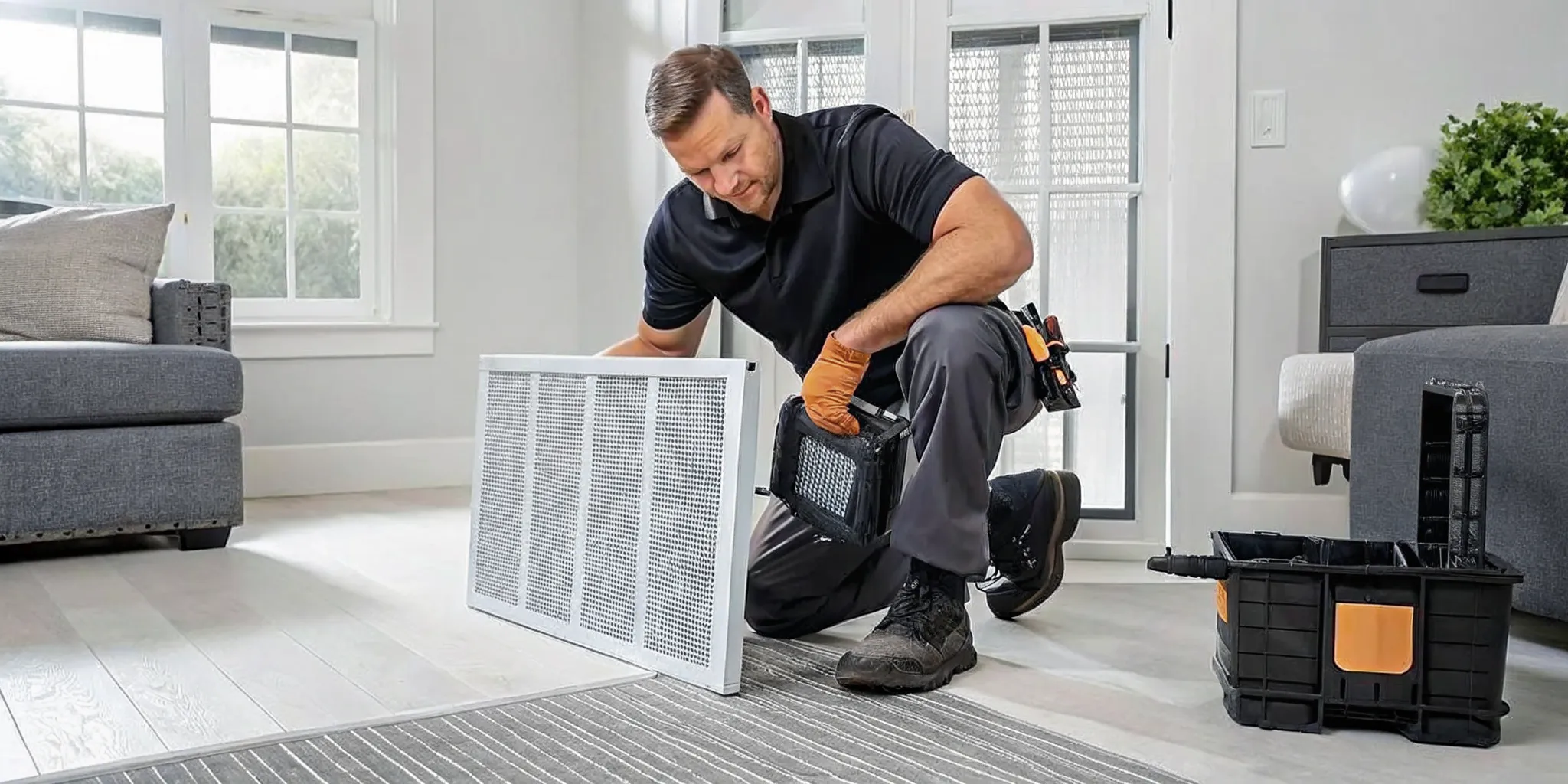
Air duct cleaning
Duct cleaning can help when dust, construction debris, or other settled contaminants are being carried through the supply registers. It is not a universal answer for every IAQ concern, and it should not replace source control or correction of a moisture problem. A qualified technician can inspect the accessible duct system, identify whether buildup is present, and determine whether cleaning is appropriate for the condition of the system.
Cleaning also provides an opportunity to look for disconnected sections, damaged insulation, and other defects that affect comfort. In an Austin home, that assessment matters because seasonal dust and airborne irritants can place added demand on the HVAC system. For related guidance, see this overview of Austin indoor air quality and humidity control.
Duct sealing
Leaky ducts can pull contaminants into the air distribution system while wasting conditioned air. The U.S. Department of Energy reports that typical duct systems lose 25 to 40 percent of the heating or cooling energy produced by the furnace, heat pump, or air conditioner due to leaks. Sealing the appropriate joints and connections can improve how efficiently air reaches each room and reduce the amount of conditioned air lost in unconditioned spaces.
A technician should test and inspect the system before recommending sealing. The goal is not simply to apply material where it is easy to reach. It is to identify leakage that affects airflow, comfort, equipment performance, or indoor conditions, then verify the repair.
Whole-home air filtration systems
Whole-home filtration upgrades treat air as it moves through the central HVAC system, rather than relying on a small room unit. The filter and cabinet must be matched to the blower and ductwork so improved particle capture does not create excessive airflow resistance. Filter selection, replacement intervals, and equipment condition all influence the result.
Duct cleaning, duct sealing, and air filtration upgrades are among the core professional services used to address indoor air quality concerns in Austin. Because IAQ often overlaps with ventilation, controls, and electrical capacity, a coordinated home assessment can be useful. Mend also provides electrical services when an IAQ upgrade requires safe, properly planned electrical work.
Whole-House Air Purifiers vs. Air Cleaners: What Is the Difference?
The terms air purifier and air cleaner are often used interchangeably, but the equipment can serve very different parts of a home. A portable air cleaner treats the air in one room. A whole-house purifier is installed into the HVAC system so filtered air can circulate through the ductwork as the system operates.
Neither device replaces source control or ventilation. The EPA identifies source control as the most effective way to improve indoor air quality, while ventilation helps dilute and remove pollutants. Filtration is one part of a broader plan, particularly in Austin homes dealing with dust, seasonal allergens, and changing humidity.
| Consideration | Whole-house air purifier | Portable air cleaner |
|---|---|---|
| Placement | Installed in or alongside the HVAC duct system. | Placed in a room and connected to a standard electrical outlet. |
| Filtration and treatment | May use high-efficiency filters, UV treatment, or electrostatic collection, depending on the system design. | Usually uses a replaceable filter, with some models adding HEPA, UV, or electrostatic features. |
| Coverage | Can address circulated air throughout the home when the HVAC system is properly sized and operating. | Best suited to one room or a defined area, such as a bedroom or home office. |
| Cost and maintenance | Higher installation cost, followed by scheduled filter or component maintenance. | Lower initial cost, but filters require regular replacement and the unit occupies floor space. |
| Best use case | Homeowners seeking an integrated solution for recurring, whole-home filtration. | Renters, single-room concerns, or households that need targeted filtration quickly. |
Book your indoor air quality consultation online.
How the filtration methods differ
HEPA-style filters physically capture very small particles as air passes through the filter media. UV components use ultraviolet light as a treatment stage, while electrostatic systems use an electrical charge to attract particles to collection surfaces or charged filter media. The right approach depends on the HVAC equipment, available cabinet space, airflow requirements, and the pollutants being addressed.
Which option fits an Austin home?
A portable cleaner can make sense when the concern is limited to one bedroom, nursery, or office. Whole-house equipment is more practical when several rooms need attention and the existing HVAC system can support the added filtration without restricting airflow. A professional evaluation should also consider duct condition, filter fit, ventilation, and moisture management. Mend can assess those factors as part of Austin indoor air quality planning, rather than treating a purifier as a stand-alone fix.
How Much Does Indoor Air Quality Service Cost?
The cost of an indoor air quality assessment depends on what is affecting the home and which solution addresses it. A professional visit may include an inspection of the HVAC system, airflow evaluation, filter review, targeted air quality testing, or a discussion of symptoms and comfort concerns. That first assessment is important because testing, cleaning, sealing, and purification solve different problems.
Air quality testing is typically priced according to the contaminants being evaluated, the number of samples, and whether laboratory analysis is needed. A duct cleaning quote can vary based on the size and layout of the home, the accessibility of the ductwork, and the condition of the system. Cleaning is not the same as sealing. If a system has significant leakage, sealing may be the more important investment.
The U.S. Department of Energy reports that typical duct systems can lose 25 to 40 percent of the heating or cooling energy produced by the central furnace, heat pump, or air conditioner due to leaks. That energy loss makes duct inspection and sealing worth considering when rooms are unevenly conditioned, utility use seems high, or the HVAC system runs longer than expected.
Whole-home purification installation has its own pricing variables, including the type of equipment, the required electrical or ductwork modifications, filter availability, and system compatibility. A professional should size and place the equipment for the home rather than quote a generic package. The Environmental Protection Agency also notes that controlling pollution at its source is generally the most effective first step, while ventilation can dilute or remove indoor pollutants.
Mend’s standard diagnostic service visit is $69, where applicable. That visit can help identify whether the next step should be testing, duct cleaning, duct sealing, filtration, or purification. For a local evaluation, review Mend’s indoor air quality services in Austin. A technician can assess the existing system and provide an accurate recommendation and quote based on the home’s actual conditions.
When Should You Schedule Duct Cleaning?
Duct cleaning is not automatically an annual service. In many homes, scheduling it every few years is reasonable, but the right timing depends on what is happening inside the system and throughout the house. If you notice clear warning signs, schedule an inspection sooner rather than waiting for the next routine maintenance visit.
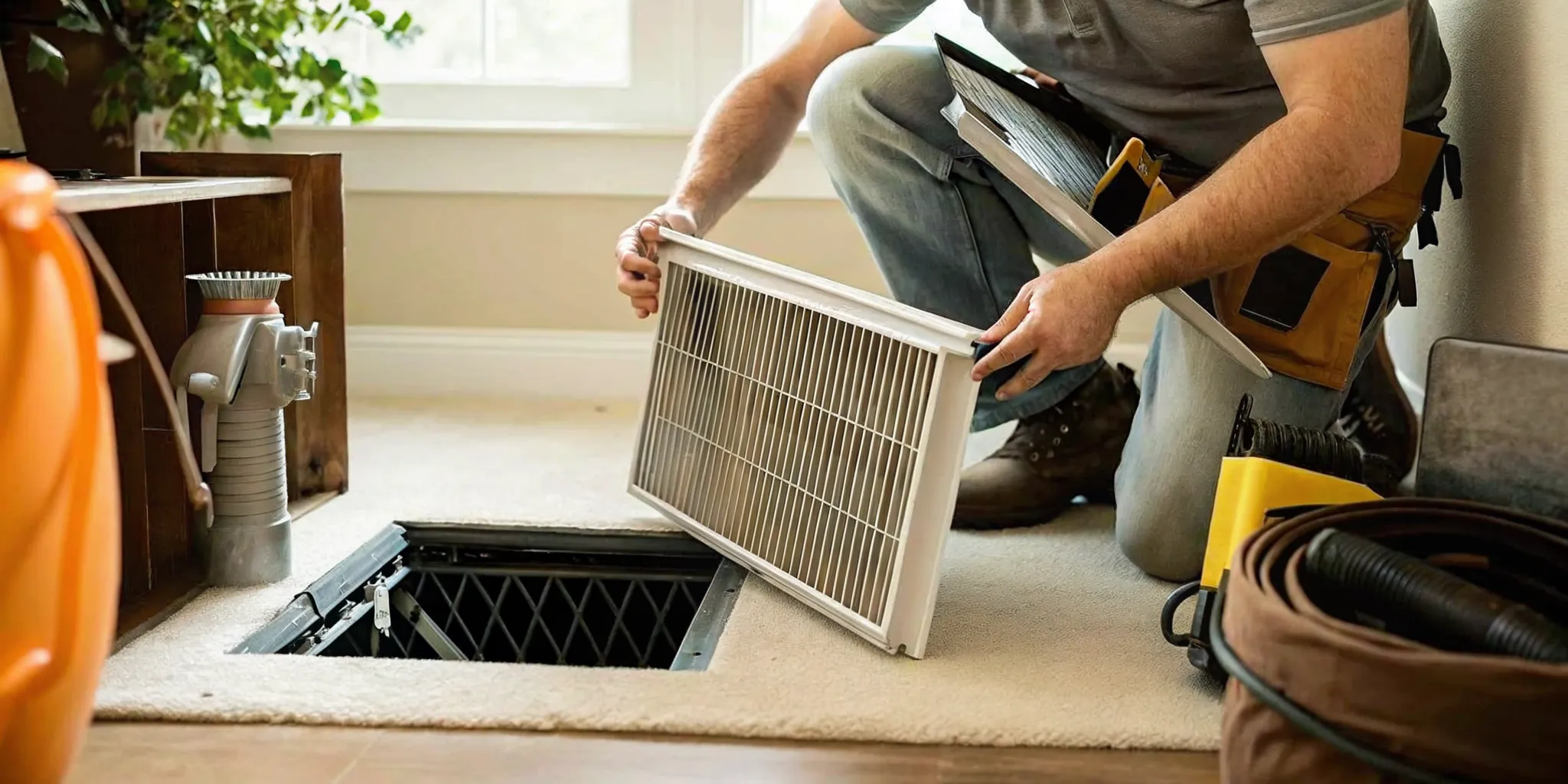
Signs the ductwork needs attention
- Dust around supply vents: A persistent ring of dust or debris around multiple registers can indicate buildup in the duct system or air leaks near the grille.
- Musty odors or visible mold: A stale smell that returns when the HVAC system runs deserves professional evaluation. Mold concerns require more than masking the odor, especially when moisture may be involved.
- New or worsening allergy symptoms: If sneezing, congestion, or other allergy flare-ups increase when the system operates, an HVAC professional can assess the filter, blower compartment, ducts, and moisture conditions.
- Pests or debris: Evidence of rodents, insects, nesting material, or construction debris in the ductwork is a reason to arrange service promptly.
- A recent renovation: Drywall dust, sawdust, and other particles can enter open or poorly protected ducts during remodeling. Cleaning may be appropriate after the work is complete.
- Pets in the home: Homes with multiple pets can accumulate more hair and dander in the return-air path, particularly when filters are overdue for replacement.
Cleaning and sealing address different problems
Duct cleaning removes accumulated dust and debris from accessible portions of the system. It does not, by itself, repair leaks. If rooms are unevenly comfortable or energy use seems out of proportion to the home’s needs, ask whether duct sealing should be evaluated alongside cleaning.
Duct cleaning and sealing are established indoor air quality services, but the useful recommendation depends on the condition of your system. A technician can inspect the ductwork, identify the source of odors or debris, and explain whether cleaning, sealing, filtration, or another correction is warranted. Keep the timing aligned with your broader HVAC maintenance checklist so issues are addressed before they affect comfort and air circulation.
- Schedule an inspection when you notice the warning signs above instead of waiting for the next routine visit.
- Ask the technician to check accessible duct sections, the blower compartment, and the filter before any cleaning is proposed.
- Review whether sealing or filtration upgrades should be paired with cleaning so the system is addressed as a whole.
Schedule your duct inspection and IAQ assessment online.
Frequently Asked Questions
What does professional indoor air quality testing check?
A professional assessment reviews likely pollutant sources, ventilation, humidity, filtration, and duct condition. Testing should be matched to the concern, such as persistent odors, excess dust, allergy symptoms, or suspected moisture. The results help determine whether source control, duct work, filtration, or humidity management is the appropriate next step.
Are air purifiers necessary for Austin homes?
Not every home needs the same equipment. Purification can be useful when pollen, dust, smoke, or other airborne particles remain a concern after basic source control and adequate ventilation. An HVAC professional can match the equipment to the home and confirm that added filtration will not restrict airflow.
How often should I change my HVAC filter?
Use the interval specified for your filter and HVAC system, then inspect the filter sooner if you have pets, allergies, construction dust, or heavy seasonal pollen. A loaded filter can reduce airflow and make the system work harder. The correct replacement interval depends on filter size, rating, household conditions, and runtime.
What are the benefits of professional duct cleaning?
Professional cleaning can remove accumulated dust and debris from accessible duct surfaces, while an inspection can identify leaks or damaged sections. Cleaning is not a substitute for sealing: leaky ductwork wastes a significant share of the cooled or heated air the system produces (U.S. Department of Energy).
What is whole-home indoor air quality?
Whole-home IAQ treats air as part of the HVAC system rather than relying only on a portable room unit. Depending on the assessment, the solution may combine filtration or purification, ventilation, and humidity control so the equipment serves the home more consistently.
Schedule Your Indoor Air Quality Assessment
Every home has different airflow, filtration, and comfort needs. An assessment can help identify the right next step, whether that means testing, filtration, duct work, or another whole-home solution. Schedule an indoor air quality assessment with Mend Services online. A focused evaluation gives you a clear starting point for improving the air your household breathes.


