
If you need a new HVAC installation in San Marcos, TX, Mend Services is the team to trust. Households need a reliable HVAC system to provide cooling in summer and heating in winter to stay safe and comfortable. Our team can help you choose an HVAC replacement that will keep your family more comfortable while reducing utility costs.

HVAC Replacement & Installation in San Marcos, TX
Schedule Now
Second Opinion On System Change Outs
FREE
Second Opinion On All System Replacements
Benefits of a Second Opinion Includes:
Benefits of a Second Opinion Includes:
- Confirms Diagnosis and Resolution
- Ensures Appropriate Repairs & Equipment
- Provides a Better Cost Understanding
- Empowers Informed Decision Making
*Cannot combine with any other offers or specials. One-Time use only. Must present coupon to redeem. Limited time only.
Offer expires
November 30, 2026
 Workmanship Guarantee
 Professional & Polite Staff
 Smart Technology Solutions

Personalized Home HVAC Installation
The three most common options for HVAC systems in San Marcos are air conditioners, furnaces, and heat pumps. Pairing an AC with a furnace is the traditional configuration, but heat pumps are an increasingly popular choice. Many homes in this area can have a heat pump as a standalone solution that delivers both their cooling and heating. This is because heat pumps perform as effectively as top air conditioners, and San Marcos temperatures rarely drop low enough to cause inefficiency from extreme cold.
Central ACs, heat pumps, and forced-air furnaces use ductwork to provide consistent air throughout a home. Our team also installs ductless alternatives, such as mini-split heat pumps. Mini-splits can provide both heating and cooling, and are a great option for older houses that don’t have ducts. They’re also great for garages and remodeled basements. Another advantage of mini-splits is that they’re inherently zoned, which allows for personalized comfort and energy savings up to 30%. Our team can zone central HVAC systems to deliver similar benefits by installing variable-speed blowers, motorized duct dampers, and additional thermostats for precise temperature control.
When replacing an outdated HVAC system, it’s worth considering smart technology. Systems that pair with smart thermostats offer significant long-term savings and convenience. Even basic scheduling features can cut annual heating and cooling costs by up to 10%, while advanced models provide energy monitoring, voice control, and learning capabilities that adapt to your habits.
When considering your options for HVAC replacement, also pay attention to energy efficiency ratings. The industry uses SEER2 for cooling efficiency. It uses HSPF2 for heat pump heating efficiency and AFUE for furnace heating efficiency. In all cases, the higher the rating, the less energy consumed and the cheaper the operating costs. With fuel-burning furnaces, high-efficiency models also tend to have sealed combustion and require better ventilation, which can reduce the risk of exhaust backdrafting and improve overall safety.
Systems with high ratings may cost more, but they may also have the ENERGY STAR label. That’s often the main criterion for tax credits, rebates, and other energy incentives. Incentives can dramatically lower your initial costs and help you to recoup your investment sooner.
A new HVAC system can provide you with many benefits.
- Smaller carbon footprint
- New warranty protection
- Quieter and safer operation
- Reduced cooling and heating costs
- Faster and more even cooling and heating
San Marcos HVAC Replacement Services
At Mend Services, we install a wide range of HVAC systems and trusted brands throughout San Marcos and the surrounding communities. Our customer-first approach has earned us BBB accreditation with an A+ rating. The systems we install include industry-leading warranties, and we back our work with an additional labor warranty. We also offer free estimates for HVAC replacements and provide guidance on available energy efficiency incentives.
An in-home consultation is the best way to get answers about your HVAC installation in San Marcos. Call Mend Services or contact us online to schedule an appointment.

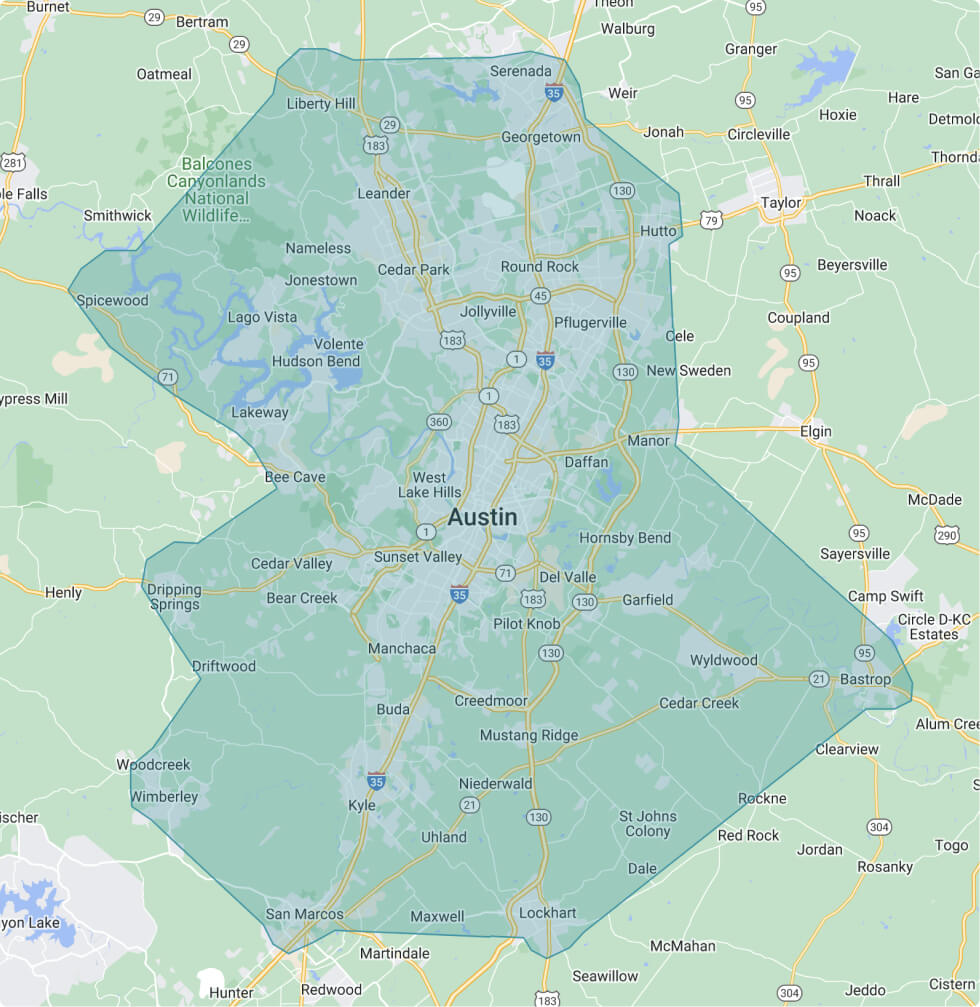
Austin Service Area
Greater Austin & the surrounding areas
- Austin
- Bastrop
- Bee Cave
- Buda
- Cedar Park
- Del Valle
- Driftwood
- Dripping Springs
- Georgetown
- Hutto
- Kyle
- Lakeway
- Leander
- Liberty Hill
- Lockhart
- Manchaca
- Manor
- New Braunfels
- Pflugerville
- Round Rock
- San Marcos
- Spicewood
- West Lake Hills
- Wimberley
Don’t see us in your area?
Give us a call at 512-360-0704

Explore all of our professional HVAC services!
Testimonials
See why our customers trust Mend

Secoya R. from the electrical team provided excellent service; tackling each item with the positivity of a craftsman who sees their labor as a reflection of the qualities they stand for. Secoya addressed issues with the main breaker, panel breakers, outlets, switches, and fixtures in a timely and thoughtful manner. Professionalism and leadership abilities. The future is bright for this young electrician!

First time customer . Very happy with service and will be a repeat customer

Mend is fantastic. We were in a tight situation with some plumbing issues and Mend responded quickly. The tech who came out, Danny, was phenomenal! He got things sorted out quickly, efficiently, and expertly, providing the right amount of detailed info along the way. Highly recommended.


The people at Mend were wonderful. I had two cabinet doors made and the young man did a fabulous job, very talented.
I will not hesitate to use them again!!
I will not hesitate to use them again!!

When PEC came to install a new meter at Homespun Kitchen and Bar, and something went wrong, Daniel Hopkins and Charles Boyd from Mend Services came to our rescue in the wee hours of the morning to diagnose the issue. They promised to be back first thing in the morning once they were able to source the part for repair so that PEC could finish the meter install and get the power back on! They truly saved the day so the restaurant could get back open and functioning quickly! EXCEPTIONAL AND PROFESSIONAL SERVICE! HIGHLY RECOMMEND!

Davis did a great job! Had to cut into our wall in the living room and was extremely clean in his process. He was very professional and friendly. We really appreciate our service today.


Contact Mend Today
Serving Austin, TX and Surrounding Areas
24/7 Emergency Service


©2026 Mend Services. All Rights Reserved.
This site is protected by reCAPTCHA and the Google Privacy Policy and Terms of Service apply.
Web Design and Internet Marketing by RYNO Strategic Solutions