
Professional HVAC installation in West Lake Hills, TX, is a great way to boost the overall efficiency of your home. It doesn’t matter if you want a new heating or cooling system. Our helpful HVAC replacement technicians are here to assist you today with the highest level of expertise in the business.

HVAC Installation Service in West Lake Hills, TX
Schedule Now
Second Opinion On System Change Outs
FREE
Second Opinion On All System Replacements
Benefits of a Second Opinion Includes:
Benefits of a Second Opinion Includes:
- Confirms Diagnosis and Resolution
- Ensures Appropriate Repairs & Equipment
- Provides a Better Cost Understanding
- Empowers Informed Decision Making
*Cannot combine with any other offers or specials. One-Time use only. Must present coupon to redeem. Limited time only.
Offer expires
November 30, 2026
 Workmanship Guarantee
 Professional & Polite Staff
 Smart Technology Solutions

West Lake Hills HVAC Installation
When choosing the right heating or cooling system, there are many factors that you’ll want to consider. One of the most important is the type of system you get.
Both heat pumps and ductless mini-splits are great for providing all-year-round comfort, while furnaces and central air conditioners only work for their respective seasons. If your home doesn’t have ductwork, then choosing a ductless mini-split can be an ideal, non-invasive option.
When selecting a new HVAC unit, you’ll want to consider its heating or cooling capacity. This describes how much hot air or cold air the unit can produce. Larger homes will need bigger units than smaller homes. One of our technicians can easily evaluate your home and make a recommendation on the appropriate size system to meet your needs. This will ensure you don’t overpay for an oversized system or end up with a unit that doesn’t meet your heating or cooling demands.
Another imperative factor to consider is the unit’s efficiency. Air conditioners have a Seasonal Energy Efficiency Ratio2 (SEER2) rating, and heating systems have an Annual Fuel Utilization Efficiency (AFUE) rating. Heat pumps are in their own category of Heating Seasonal Performance Factor (HSPF). These efficiency ratings will give you valuable insight when comparing systems. The higher a unit’s efficiency, the less energy it will use. This means lower heating or cooling bills for you.
When selecting a heater for your home, you’ll want to consider the type of fuel it uses. Furnaces can run on electricity, natural gas, propane, or heating oil. It can be helpful to determine what fuel prices are in your area so that you understand which system may provide you with the lowest operating costs.
HVAC replacement is not something you want to put off until your existing system completely fails. Rather, replacement is a service you should schedule at a convenient time. When you’re proactive about planning your replacement, you can find favorable financing and have adequate time to research different options to determine the best one for you.
Watch for these signs you need your HVAC system replaced:
- Repair costs are adding up
- Unit is over 10-15 years old
- Higher energy bills
- Major part breaks down, like an AC compressor
Professional maintenance service is one of the best ways to learn when a replacement is likely necessary. Understanding the lifespan of your type of HVAC unit can help you determine how long it’s likely to last you. Furnaces that burn fuel like propane, natural gas, or heating oil can last 20 to 25 years while electric furnaces last 25 to 30 years. Air-source heat pumps and ductless mini-splits last for 10 to 15 years. Central air conditioners last between 15 and 20 years. During a tune-up visit, the technician can advise you on the overall condition of your unit.
Expert HVAC Replacement Services
Mend Services offers helpful HVAC replacement services for the West Lake Hills community. We offer free replacement quotes for all our customers. We’re a BBB-accredited business with an A+ rating thanks to our top-quality customer care practices.

Frequently Asked Questions
Our process begins with a detailed load calculation and site inspection, followed by equipment selection, permit procurement, ductwork assessment or upgrade, professional installation, system testing, and customer orientation to ensure your new HVAC operates optimally.
Mend Services performs Manual J load calculations considering square footage, insulation, window placement, and local climate to recommend the correct system capacity, ensuring efficient comfort without oversized equipment driving up costs.
In West Lake Hills, TX, all HVAC installations must comply with Travis County mechanical codes, include proper ventilation, duct sealing, and permit inspections; Mend Services handles all code requirements and schedules final inspections for you.
Absolutely—if your current ducts are undersized or leaky, we offer full duct replacement or sealing services as part of the installation package to improve airflow, efficiency, and indoor air quality.
A standard single-system installation usually takes one to two days, depending on complexity; our team coordinates efficiently to minimize disruption and ensure your home is comfortable as soon as possible.
Seek a SEER rating of 16 or higher for cooling and an AFUE of 90%+ for heating; Mend Services offers ENERGY STAR® certified models that maximize savings and performance in the Texas climate.
Yes—modern, high-efficiency HVAC systems are attractive to buyers, improve comfort, and can boost resale value; Mend Services helps document efficiency upgrades to highlight in your home listing.
Clear pathways to equipment locations, secure pets, and remove any wall hangings near the outdoor unit; our technicians will handle furniture protection and clean up once the job is complete.
Regular filter changes every 1–3 months, annual professional tune-ups, and keeping outdoor units free of debris will keep your system running smoothly and protect your investment.
Yes—Mend Services offers smart thermostat installation that connects to Wi-Fi, enabling remote temperature control, energy usage monitoring, and personalized scheduling for maximum efficiency.

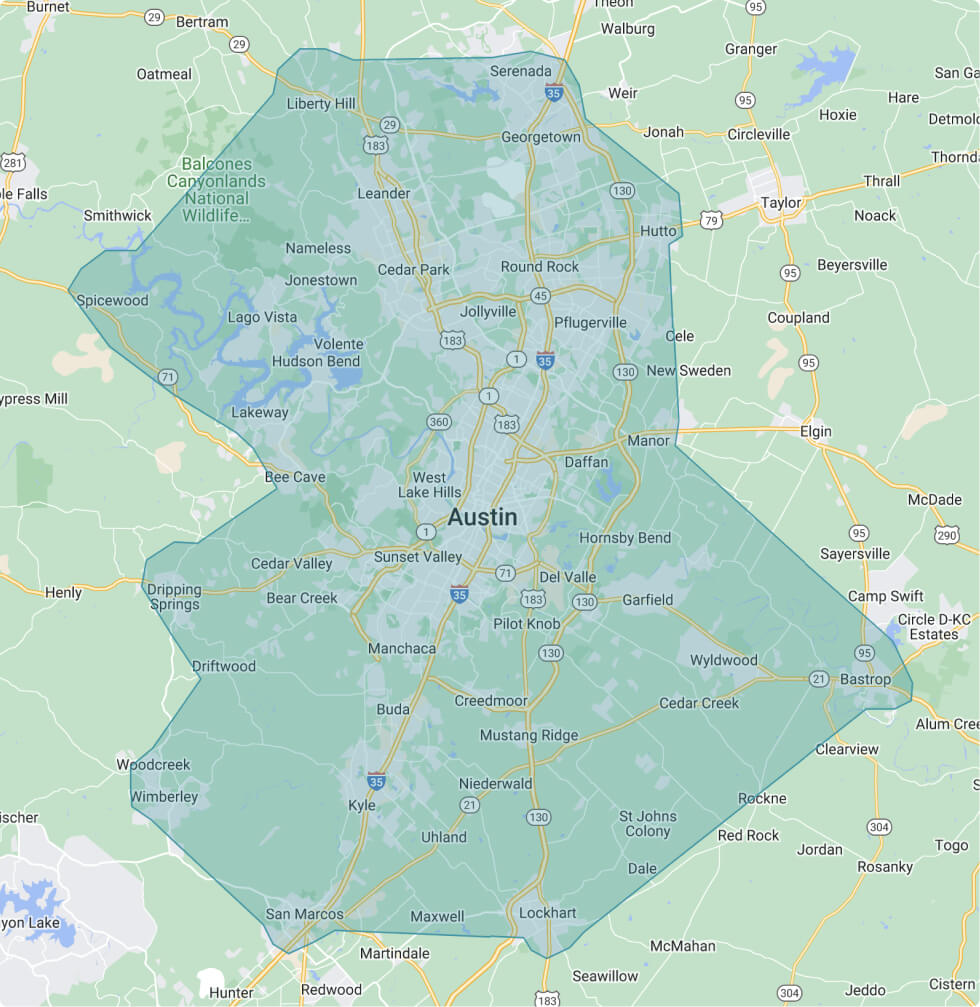
Austin Service Area
Greater Austin & the surrounding areas
- Austin
- Bastrop
- Bee Cave
- Buda
- Cedar Park
- Del Valle
- Driftwood
- Dripping Springs
- Georgetown
- Hutto
- Kyle
- Lakeway
- Leander
- Liberty Hill
- Lockhart
- Manchaca
- Manor
- New Braunfels
- Pflugerville
- Round Rock
- San Marcos
- Spicewood
- West Lake Hills
- Wimberley
Don’t see us in your area?
Give us a call at 512-360-0704

If you need expert HVAC installation in West Lake Hills, call Mend Services today.
We also offer HVAC repair and HVAC maintenance services!
Testimonials
See why our customers trust Mend

Secoya R. from the electrical team provided excellent service; tackling each item with the positivity of a craftsman who sees their labor as a reflection of the qualities they stand for. Secoya addressed issues with the main breaker, panel breakers, outlets, switches, and fixtures in a timely and thoughtful manner. Professionalism and leadership abilities. The future is bright for this young electrician!

First time customer . Very happy with service and will be a repeat customer

Mend is fantastic. We were in a tight situation with some plumbing issues and Mend responded quickly. The tech who came out, Danny, was phenomenal! He got things sorted out quickly, efficiently, and expertly, providing the right amount of detailed info along the way. Highly recommended.


The people at Mend were wonderful. I had two cabinet doors made and the young man did a fabulous job, very talented.
I will not hesitate to use them again!!
I will not hesitate to use them again!!

When PEC came to install a new meter at Homespun Kitchen and Bar, and something went wrong, Daniel Hopkins and Charles Boyd from Mend Services came to our rescue in the wee hours of the morning to diagnose the issue. They promised to be back first thing in the morning once they were able to source the part for repair so that PEC could finish the meter install and get the power back on! They truly saved the day so the restaurant could get back open and functioning quickly! EXCEPTIONAL AND PROFESSIONAL SERVICE! HIGHLY RECOMMEND!

Davis did a great job! Had to cut into our wall in the living room and was extremely clean in his process. He was very professional and friendly. We really appreciate our service today.


Contact Mend Today
Serving Austin, TX and Surrounding Areas
24/7 Emergency Service

©2026 Mend Services. All Rights Reserved.
This site is protected by reCAPTCHA and the Google Privacy Policy and Terms of Service apply.
Web Design and Internet Marketing by RYNO Strategic Solutions