

Home repairs rarely stay in one neat category. A failing air conditioner can raise indoor humidity, and a hidden leak can damage more than a pipe. An electrical upgrade may affect how your HVAC or plumbing equipment operates. For Leander homeowners, the best service decision starts with understanding the problem and choosing a provider equipped to handle the work safely.
Home services in Leander TX include coordinated plumbing, HVAC, and electrical help for repairs, maintenance, installations, upgrades, and urgent problems. Mend Services is an Austin-based provider with Leander among its primary service markets, giving homeowners one relationship for multiple trades instead of coordinating separate contractors.
This guide explains what to look for before scheduling work, how to recognize when a problem needs prompt attention, and which questions can help you compare providers. Start with the scope of the job, the qualifications behind the service, and the practical details that protect your home and budget. For a broader explanation of credentials and hiring decisions, read Mend’s licensed home services guide before comparing local providers.
Schedule home service online with Mend Services
How to Choose Home Services in Leander TX
Choosing a local provider is not only about finding a company that lists the right trade. It is also about confirming who is responsible for the diagnosis, the work, the permits, and the follow-up. Mend’s licensed home services guide explains why credentials, employee training, and warranty terms matter across Central Texas. Use that background as a starting point, then ask Leander-specific questions about the system in your home and the requirements for the planned job.
Start with the scope of the problem, not just the trade name. Choosing a home service provider is easier when you define the work first. A leaking water line, an aging air conditioner, and a panel that no longer supports a home’s needs may seem like separate concerns. They can also affect one another. For example, an electrical upgrade may be part of an HVAC replacement, while a plumbing issue may require both diagnosis and restoration work. A provider that understands all three systems can help you see the full project before work begins.
For homeowners comparing home services in Leander TX, look for a company that explains the options in plain language. The provider should identify urgent work and clarify which recommendations are repairs, maintenance, or replacements. Mend Services is an Austin-based home services company serving residential and commercial customers across Greater Austin and Central Texas. Leander is one of its primary service markets, and the company provides plumbing, electrical, and HVAC services through one integrated provider. That arrangement can reduce the need to coordinate several contractors for related work.
Start with the service category, then consider the bigger picture
Plumbing support may include repairs, installation, maintenance, drain cleaning, sewer work, leak detection, water-line work, and emergency response. HVAC work can range from AC and heating repair or installation to maintenance, heat pumps, zoning, and indoor air quality solutions. Electrical projects may involve panels, generators, EV charging, lighting, smart-home features, or broader electrification plans. Reviewing these service categories helps you describe the problem accurately without deciding too early that you need a specific replacement.
Ask whether the provider can inspect the relevant system, explain the cause of the issue, and identify work that should be coordinated. You should also ask what happens next if the technician finds a connected concern. One point of contact can make communication simpler, but it should not replace a clear scope of work or your opportunity to ask questions.
| Need | Questions to ask | Useful preparation |
|---|---|---|
| Repair | What failed, and what can be repaired? | Note symptoms, timing, and affected areas. |
| Maintenance | What condition is the system in today? | Gather service records and equipment details. |
| Upgrade | What capacity, permit, or trade work is involved? | Explain your goals, layout, and future plans. |
Use local coverage as a practical screening question
Local service coverage matters because the company needs to support the type of work you are planning in your area. Mend’s broader service-area coverage includes Leander and nearby Greater Austin communities. You can review the Mend service areas page for broader coverage information, then visit the home services in Leander page for the company’s local plumbing, electrical, and heating and air offerings.
This article is an informational guide for comparing needs, questions, and service categories. It is not a replacement for that local service page, and it does not assume that every home needs the same solution. If you are comparing providers, review the company’s company information as well as its service descriptions. The goal is a well-defined project, a provider with the right trade capability, and a plan that fits the condition and priorities of your home.
When Your Leander Home Needs HVAC Service
HVAC service covers more than fixing an air conditioner after it stops cooling. A homeowner may need help with a heating or AC repair, seasonal maintenance, a system replacement, or a new installation for a home addition. Mend Services also handles heat pumps, zoning, and indoor air quality solutions, giving Leander homeowners options for both immediate comfort problems and longer-term system planning. You can review the full range of HVAC services before deciding which type of appointment fits the situation.
Know when a repair is more than a minor inconvenience
Call for an evaluation when the system repeatedly cycles on and off or struggles to maintain the thermostat setting. Weak airflow, unusual odors or sounds, or rooms that feel noticeably different can also signal a problem. A sudden loss of cooling during hot weather or a heating failure during a cold spell deserves prompt attention. Especially when children, older adults, or anyone with health concerns is in the home. Do not keep operating equipment that produces a burning smell, trips a breaker repeatedly, or shows other signs of an electrical or safety problem. Turn it off and seek professional guidance.
Urgent HVAC needs can include a complete AC failure, a serious refrigerant or water leak, unsafe combustion concerns, or a system that cannot keep indoor conditions stable. Mend documents emergency coverage across its HVAC, plumbing, and electrical service lines as available 24/7/365. That availability does not promise a specific arrival time. Explain the symptoms clearly when you request help. Follow any immediate safety instructions provided by the service team. For a cooling failure that cannot wait, see the page for emergency AC repair.
Plan maintenance and upgrades around the whole home
Preventive maintenance can help identify worn components, airflow restrictions, drainage concerns, and other developing issues before they become a larger disruption. It is also a useful time to discuss whether an aging system should be repaired, replaced, or redesigned. Heat pumps can support both heating and cooling, while zoning can help address rooms that consistently run warmer or cooler than the rest of the house. These decisions depend on the home’s layout, existing equipment, comfort goals, and electrical or ductwork requirements. So a qualified assessment matters more than choosing equipment from a short list.
Indoor air quality may be part of the conversation when a home has persistent dust, humidity concerns, odors, or comfort complaints that temperature changes alone do not solve. A whole-house dehumidifier can be one option to evaluate alongside filtration, ventilation, and system condition. Mend’s whole-house dehumidifier installation page provides a starting point for that discussion.
Whether the need is an urgent repair, scheduled maintenance, or a planned installation, look for a provider that explains the diagnosis and choices in plain language. Clear scope and upfront pricing before installation work begins can make a major HVAC decision easier to evaluate.
Plumbing Help for Leander Repairs and Upgrades
Plumbing problems range from a slow drain to a leak that can damage walls, flooring, or cabinets. The right response depends on where the problem starts, how quickly it is worsening, and whether the plumbing system needs a repair, replacement, or preventive upgrade. Mend’s plumbing services cover residential repairs, installation, replacement, maintenance, leak detection, camera inspection, sewer work, and water-line work for homeowners who want one provider to understand the larger system.
Know when a small symptom needs attention
A dripping faucet may be a fixture issue, but a recurring wet spot, unexplained increase in water use. Low pressure, or the sound of water running when every fixture is off can point to a concealed leak. A slow drain can also be more than an isolated sink problem. If several fixtures drain slowly, wastewater backs up, or an unpleasant odor persists. A professional evaluation can help identify whether the restriction is in a branch line or the main sewer line.
Drain cleaning is one option for clearing buildup and restoring flow. Mend also lists camera inspections and sewer work among its plumbing capabilities, which can help locate a problem before a homeowner commits to disruptive work. Depending on the condition and location of the line, the appropriate solution may involve pipe repair and replacement rather than repeated drain clearing. Hydro-jetting is another published drain service, but the method should be selected after the plumbing system and obstruction have been evaluated.
Plan water-line and water-heater work carefully
Water-line problems can affect pressure, water quality, or the reliability of service throughout the home. Pipe repairs and replacements may be necessary when materials are damaged, a line has recurring leaks, or a repair no longer makes practical sense. Water heaters deserve the same planning. A leaking tank, inconsistent hot water, unusual noise, or visible corrosion can signal a repair or replacement decision. Homeowners should document the symptoms, note when they occur, and identify which fixtures are affected before the appointment.
Prepare for an urgent plumbing call
For an active leak, shut off the nearest fixture valve or the home’s main water supply if it is safe to do so. Move belongings away from the affected area, avoid electrical equipment near standing water, and take photos before cleanup when possible. A sewage backup, burst pipe, or rapidly spreading leak warrants prompt help. Mend documents emergency plumbing coverage as available 24/7/365 across its plumbing, electrical, and HVAC service lines. That availability does not replace basic safety steps, and homeowners should not enter contaminated water or attempt a repair beyond their skill level.
Before work begins, gather any prior repair records, information about the age of the water heater or visible piping, and details about when the issue first appeared. Clear access to shutoff valves and equipment. These simple preparations give the technician better context and help the homeowner make a more informed decision about the next step.
Electrical Services for Safer, More Capable Homes
Electrical work can address an immediate safety concern, support a major renovation, or make daily life more convenient. A homeowner may need a panel upgrade before adding new equipment, backup power for greater resilience. An EV charging setup, better lighting, or a coordinated plan for replacing gas-powered systems with electric alternatives. The right scope depends on the home’s existing wiring and available capacity. Equipment and intended use matter too, so an evaluation should come before installation work.
Panel upgrades and whole-home electrification
The electrical panel is the distribution point for the home’s circuits. When homeowners add high-demand equipment, the existing setup may need to be reviewed for capacity, organization, and compatibility with the planned project. Panel work can be part of a broader whole-home electrification plan that coordinates electrical needs with heating, cooling, water heating, cooking, or other equipment changes. Planning the work as a system helps homeowners understand what must happen first instead of treating each upgrade as an isolated decision.
Whole-home electrification also benefits from clear communication between trades. Electrical requirements may overlap with HVAC or plumbing work, particularly when equipment is being replaced or relocated. Mend documents panel upgrades and whole-home electrification among its electrical offerings, along with related residential projects. Its Texas electrical license is documented as TECL #35517. Homeowners can review the full scope through residential electrical services.
Generators, EV charging, and lighting
Generator installation is a planning project, not simply a matter of placing equipment outside. The evaluation should account for the circuits a homeowner wants supported, the location of the equipment, and how the system will connect with the home’s electrical distribution. A professional can explain the available options and identify the work needed for the chosen setup. Mend lists generator installation and EV charging among its electrical services, giving homeowners a way to discuss backup power and vehicle charging within the same electrical conversation.
Lighting projects can improve visibility, comfort, and the way rooms are used. They may involve fixture changes, added controls, task lighting, or a larger redesign. Smart-home services can extend that work through connected lighting and other controls, but the project should still begin with practical goals rather than a list of gadgets. Ask which components are being installed, how they will be controlled, and what happens if a device or network connection changes.
When electrical help is urgent
Burning odors, visible damage, repeated breaker trips, sparking, or a loss of power affecting only part of a home warrant prompt attention. Avoid handling damaged wiring or repeatedly resetting a breaker to keep a failing circuit running. Mend documents 24/7/365 emergency coverage across its plumbing, electrical, and HVAC service lines, although homeowners should describe the symptoms clearly so the situation can be triaged appropriately. A qualified professional can help distinguish an electrical service issue from a utility outage or another home-system problem without making assumptions before inspection.
Permits, Licensing, and Questions to Ask Before Work
Permits and professional credentials address different parts of a home improvement project. A permit gives the local authority an opportunity to review applicable plans and inspect covered work. Licensing or registration helps show whether the contractor is authorized for the trade and jurisdiction involved. Before scheduling remodeling, plumbing, HVAC, or electrical work, ask who handles each responsibility and what documentation you should receive.
Leander says its Permits and Building Inspection Division issues and inspects construction-related permits and certificates of occupancy. Its inspectors examine work for compliance with codes and basic construction health and safety standards. The city also states that a permit is required before construction begins on property within city limits. Contractors and subcontractors must be registered before a permit is issued. Review the city’s Permits and Building Inspection guidance for current information.
Examples on the city’s activity list include remodels that relocate or remove interior walls or involve electrical, mechanical, or plumbing work. Water heaters and generators are also listed. By contrast, the city’s examples of work that does not require a permit include replacing plumbing fixtures without altering existing plumbing. And replacing light fixtures or appliances without altering existing wiring. Those examples do not determine every project. The city expressly says its list is not comprehensive and asks residents to confirm required permits with the Permits and Building Inspections Department before work begins.
How code and inspection questions fit together
Electrical work can involve both state requirements and local inspection. The Texas Department of Licensing and Regulation says Texas adopted the 2023 edition of the National Electrical Code effective September 1, 2023. TDLR also explains that the local licensing or inspecting authority, such as a city or county with jurisdiction, is responsible for inspecting work performed in its area. You can read the TDLR electrical compliance guide for that state-level context. The applicable local rules and project details still matter, so treat these sources as guidance rather than legal advice.
For planned work, ask these questions before approving the scope:
- Does this project require a permit, inspection, or contractor registration in Leander?
- Who will submit the application, schedule inspections, and provide the permit or inspection records?
- Which code edition and local amendments apply to this work?
- What trade licenses or credentials does the company hold, and can I verify them?
- Will the project change existing wiring, plumbing, gas connections, structural elements, or equipment capacity?
- What is included in the written scope, and what work would require a separate approval?
A reputable provider should be willing to explain the process without implying that every job has the same requirements. Mend documents Texas license numbers for electrical, master plumbing, and HVAC work, including TECL #35517, M-46376, and TACLB29665E. You can also review the broader Mend service areas information, then confirm project-specific requirements directly with the city before work starts.
What to Expect From a Local Multi-Trade Provider
A local multi-trade provider should make home repairs easier to understand, not create another layer of coordination. Before you hire, look for a clear scope of work, qualified technicians, transparent pricing, warranty information, and a defined process for urgent problems. These questions help you compare providers based on accountability and fit rather than a vague promise of convenience.
Use this practical checklist when evaluating a provider:
- Confirm the scope. Ask whether the company handles the type of plumbing, electrical, or HVAC work you need. A provider that covers multiple trades can keep related work connected, which may reduce the need to coordinate separate contractors. Mend provides all three service lines through one integrated provider.
- Ask who will perform the work. Find out whether technicians are employees or subcontractors, and ask about training and background checks. Mend documents that its technicians are full-time W-2 employees, background-checked, and continuously trained. You can also ask which trade licenses apply to your project and request the relevant credentials before work begins.
- Discuss permits before scheduling. Ask whether the planned work may require a permit, who will handle the application, and how inspections will be coordinated. The provider should explain its role clearly instead of leaving you to guess what happens after the estimate.
- Get pricing in writing. Before installation work begins, ask what is included, what could change the price, and when you will approve the work. Mend states that installations use upfront pricing before work begins and follows a no-hidden-fees policy.
- Read the warranty terms. A warranty should identify what is covered, for how long, and whether manufacturer coverage applies separately. Mend documents a one-year covered parts and labor warranty, with manufacturer warranties passed through where applicable.
- Understand emergency service. Ask how the company triages urgent plumbing, electrical, and HVAC issues, what information you should provide, and how updates are communicated. Mend documents emergency coverage across all three service lines 24/7/365, but homeowners should still ask about the process rather than assume a particular arrival time.
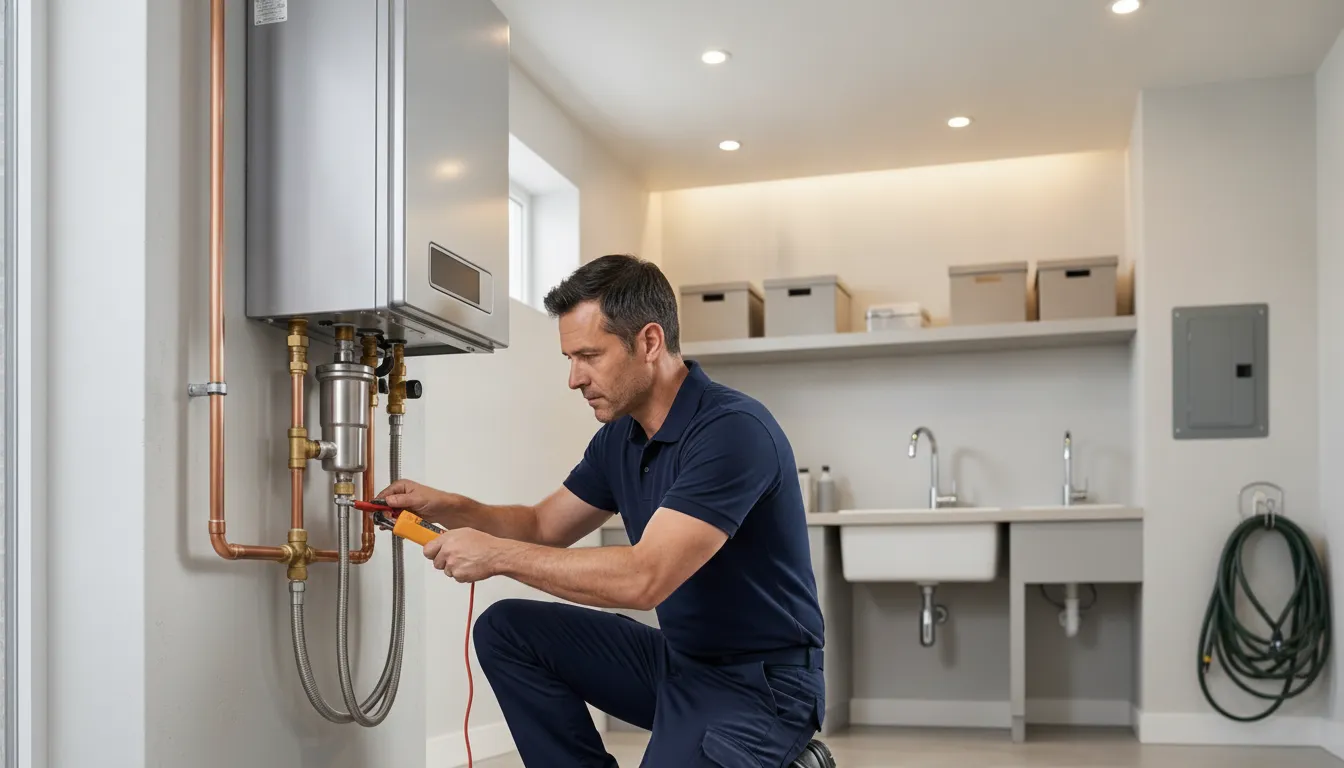
A plain-language note for homeowners
You do not need to know every technical term before calling. Describe what you noticed, when it started, and whether the problem is affecting safety, water, heating, cooling, or power. Then ask the provider to explain the likely next step in everyday language. If you are comparing Mend Services and company information, you can review the company’s background and approach before making a decision. Its broader Mend service areas also show how Leander fits within its Greater Austin coverage.
The best choice for home services in Leander TX is a provider that gives you a usable plan: what needs attention now. What can wait, what the work includes, who is responsible for permits, and what protection applies after the job is complete.
Plan your Leander home service with Mend Services
Frequently Asked Questions
When should I call for emergency home service in Leander?
Call promptly for a burst pipe, sewage backup, loss of heating or cooling during unsafe conditions, active water damage, or an electrical hazard. First protect people, shut off water or power only if it is safe, and contact the appropriate utility for an outage. A provider with plumbing, HVAC, and electrical capabilities can help determine which trade should respond.
What should I ask before hiring a home services provider?
Ask who will perform the work, whether the company handles the needed trade, what the scope includes, whether permits may apply, and when pricing will be provided. Also confirm licensing, warranty terms, and whether technicians are employees or subcontractors. Clear answers make it easier to compare providers without relying only on online ratings.
When might a permit be required for work in Leander?
Leander says a permit is required before construction begins within city limits. Its listed examples include remodels involving electrical, mechanical, or plumbing work, as well as water heaters and generators. The city also notes that its list is not comprehensive, so confirm requirements with the Permits and Building Inspections Department before work starts: Leander permit guidance.
How can I coordinate plumbing, HVAC, and electrical projects?
Start with one written scope that identifies the goal, existing system limits, sequencing, permit responsibilities, and inspection needs. Coordinating trades through one integrated provider can reduce duplicate visits and conflicting recommendations. For a larger upgrade, ask which work must happen first, what access is required, and how changes to one system could affect the others.
Schedule Home Service in Leander
When plumbing, HVAC, or electrical needs overlap, one coordinated conversation can make it easier to understand the work and choose a practical next step. Mend Services documents coverage for Leander and the surrounding Greater Austin area. Schedule home service online with Mend Services to discuss service in Leander.


