

A heat pump stuck on auxiliary heat is one of the most confusing messages an Austin thermostat can show. The house may still feel warm, yet the outdoor unit sounds quiet, the energy bill starts climbing, or the display never leaves aux. Auxiliary heat is the backup that steps in when the heat pump cannot keep up on its own. It is normal for short stretches. It is a problem when it becomes the only heat you get.
This guide explains what the message means, how long a normal run should last, and the few checks you can make before you call. It does not replace a repair diagnosis. If the backup stays on, or the home cannot hold temperature, Mend Services can evaluate the heat pump and tell you whether the outdoor unit, the controls, or the airflow path is the issue.
Call (512) 360-0704 to schedule a free estimate if your heat pump is stuck on auxiliary heat.
What Auxiliary Heat Means on a Heat Pump
A heat pump does not make heat the way a furnace does. It moves heat. In winter it pulls heat from outdoor air and delivers that heat indoors. The U.S. Department of Energy explains that heat pumps transfer heat rather than generate it, which is why the backup strips use more electricity than the heat pump itself.
Auxiliary heat, often shortened to aux heat, is the supplement that fills the gap. On an all-electric system it is usually electric resistance strips inside the air handler. On a dual-fuel system it is a gas furnace that takes over when the heat pump is not the better choice. Either way, the backup uses more energy than the heat pump, so it should run only when the heat pump needs help.
Emergency heat is related, but it is not the same thing. Auxiliary heat comes on by itself during a cold start, a large thermostat jump, or a defrost cycle. Emergency heat is a setting you choose. It locks the system onto the backup and stops the heat pump from heating. Leave emergency heat off unless a technician tells you the heat pump should stay off.
Why the message appears in Austin weather
Austin winters are mild most days and sharp on a few. A heat pump sized for Central Texas can handle a typical 40-degree morning without backup heat. A sudden drop into the 20s, an open front door during a party, or a thermostat raised several degrees at once can call for auxiliary heat for a short time. That brief call is the system doing its job. A light that never clears is a different story.
How Long Should Auxiliary Heat Stay On?
Time is the simplest clue. A normal auxiliary-heat run is measured in minutes, not hours. Use the pattern below as a first sort, then confirm with the outdoor unit and the thermostat, not with a guess about the part that failed.
| What you notice | Typical length | What it usually means |
|---|---|---|
| Aux heat right after you raise the setpoint several degrees | 10 to 20 minutes | The backup is helping the heat pump catch up. It should stop once the room nears the setpoint. |
| Aux heat while the outdoor unit steams or sounds different | A few minutes, then a repeat later | The heat pump is likely in a defrost cycle. Auxiliary heat covers the pause so the supply air does not feel cold. |
| Aux heat through a rare hard freeze, then it clears | During the coldest hours | The heat pump is near its limit and the backup is sharing the load. Watch it after the weather moderates. |
| Aux heat all day, or the only heat you have | Hours, or it never stops | The heat pump may not be heating. This is the stuck pattern, and it needs a technician. |
Do not keep raising the setpoint to “test” the system. Each jump can call the strips again and make a healthy unit look stuck. Set one comfortable temperature and give it time.
When a Heat Pump Stuck on Auxiliary Heat Is Still Normal
Three ordinary events turn the backup on without a failed part. Knowing them keeps you from booking a repair for a cycle that was about to end.
Defrost on the outdoor unit
In heating mode the outdoor coil gets cold. Moisture in the air can freeze on it. The heat pump then reverses briefly, warms the coil, and melts the frost. During that pause the indoor strips often run so you do not feel cool air from the vents. Steam rising from the outdoor unit on a cold morning is common during defrost. A unit buried in ice, or a defrost that seems to run without end, is not common.
A big thermostat change
Heat pumps are happiest at a steady setting. If you walk in and jump the heat from 62 to 72, the thermostat may decide the heat pump alone is too slow and bring on auxiliary heat. That recovery should end. If you use a setback schedule, keep the swing modest so the strips are not doing the work every evening.
A short cold snap
On the coldest Austin nights the heat pump may run continuously and still need help. Auxiliary heat sharing the load for those hours can be normal. Once the afternoon warms up, the message should clear and the outdoor unit should carry the heat again. If the light is still on at 60 degrees outside, the weather is no longer the explanation.
Checks to Make Before You Call
These checks stay on the homeowner side of the equipment. Look, listen, and change a filter if the slot is meant for you. Do not open the air handler, pull a disconnect, or handle refrigerant lines.
- Read the thermostat mode. Heat is the normal winter setting. If it says emergency heat or Em heat, switch it back to heat and wait. Emergency heat will keep the backup on even when the heat pump is fine.
- Note the setpoint and the room temperature. A gap of several degrees after a schedule change can explain a short aux-heat run. A gap that never closes cannot.
- Check the air filter. A clogged filter restricts airflow, and the heat pump then struggles to deliver heat. Replace a dirty filter if you can reach it without tools. Skip this if the filter door is behind a panel you would have to unlatch.
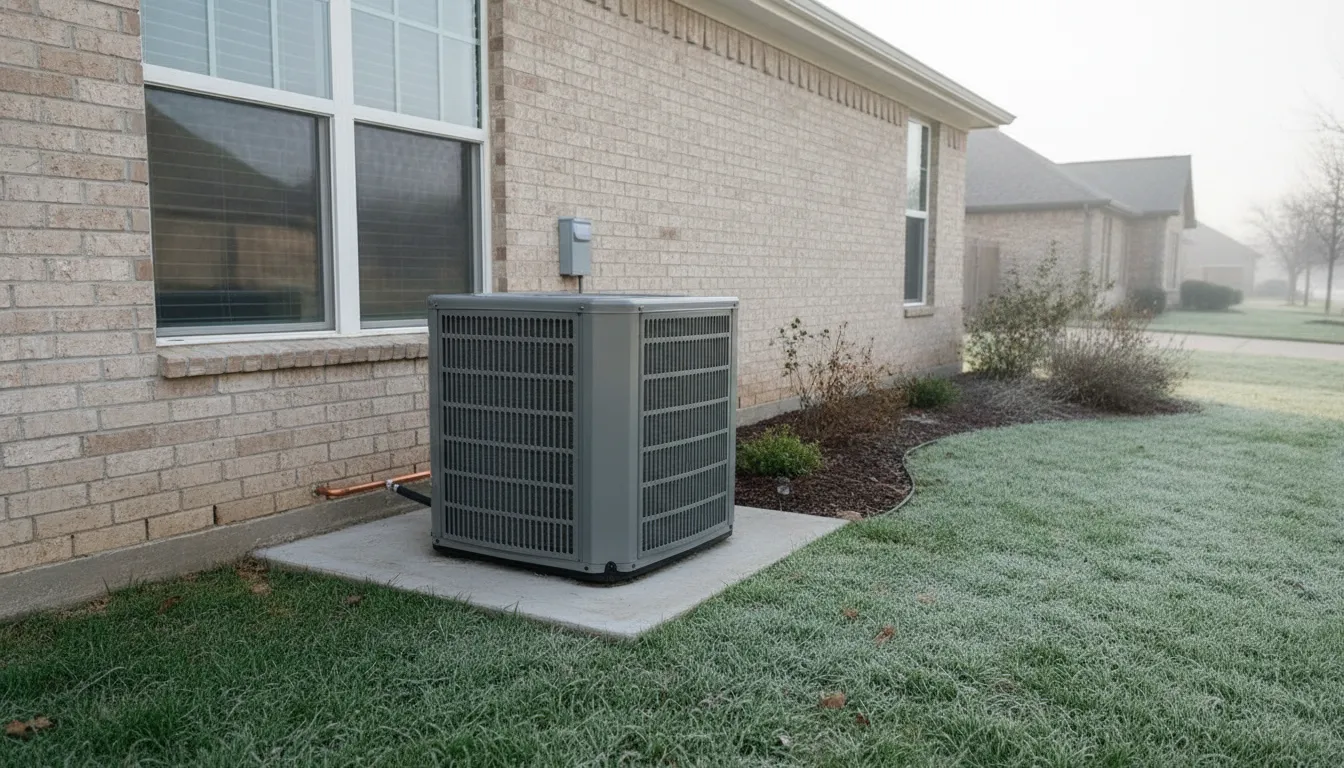
- Walk to the outdoor unit. It should have open space around it, a fan that runs during a heat call, and no blanket of ice. Leaves packed against the coil or a cover left on from storage will force the backup to work.
- Listen at a supply vent. Steady warm air with the outdoor unit running usually means the heat pump is heating and aux heat was only a helper. Air that stays lukewarm while aux heat never clears is a reason to call.
- Look at the breaker only from the outside of the panel. A tripped breaker can kill the outdoor unit while the indoor strips still heat. Do not open the panel or reset a breaker that trips again.
Write down what you saw: the thermostat words, about how long aux heat has been on, whether the outdoor fan runs, and whether there is ice. That note saves time on the visit. It is not a diagnosis.
Signs the Heat Pump Itself Needs Repair
Auxiliary heat is a clue, not the failed part. The repair is about why the heat pump stopped carrying the load. Call for service when one of these shows up.
- The auxiliary or emergency message stays on for hours after the home should have recovered.
- The outdoor unit never runs, or it hums and shuts off, while the vents still blow some heat.
- Ice covers the outdoor coil and does not melt after a defrost cycle.
- The heat pump runs, but the supply air never gets warm unless the strips are on.
- You hear grinding, screeching, or a repeated click from the outdoor unit.
- The breaker trips again after one reset, or you smell burning at the air handler.
Those symptoms can trace back to airflow, a control, a sensor, or the outdoor unit. Sorting them is the work of a licensed technician, not a settings change. Mend’s heat pump repair guide for Austin covers how a normal repair visit is diagnosed. Use this page for the aux-heat symptom, and that guide once you know you need the repair.
If the house is getting cold and the backup is not keeping up, treat it as urgent. Our emergency heat pump repair page lists the warning signs that should not wait overnight. A stuck aux-heat light with a warm house can usually wait for the next service window. A stuck light with a falling indoor temperature should not.
What a Technician Checks on This Visit
A useful visit starts with the symptom you already recorded, then tests the equipment. Expect the technician to confirm the thermostat is calling for heat rather than emergency heat, measure whether the heat pump is actually heating, and inspect the outdoor coil and fan. Airflow, including the filter and obvious duct restrictions, is part of that look because poor airflow can push a healthy heat pump onto its backup.
Electrical and refrigerant work stays with the technician. You should leave with a plain explanation of what was found and what the repair options are. If the heat pump is simply too small for the house, or it is near the end of its life, the conversation may turn to replacement. That is a separate decision from clearing a stuck auxiliary-heat call. Our heat pump installation page is the place for new-equipment questions, and the heat pump versus central air comparison helps if you are weighing system types. Neither of those pages answers the “why is aux heat stuck on” question.
Mend Services is a locally owned Austin company serving homeowners across its Central Texas service area. HVAC work is supervised under Texas license TACLB29665E, and employed technicians handle the visit. You do not need to repeat those credentials to get a clear answer about the backup heat.
How Austin Homeowners Can Avoid Another Long Aux-Heat Run
You cannot stop every defrost cycle, and you should not try. You can avoid the habits that make the strips run longer than they should.
- Hold a steady winter setpoint instead of large morning and evening swings.
- Replace the filter on a schedule you can see, and keep furniture and rugs off the return grille.
- Keep the outdoor unit clear. Two feet of open space, no storage cover during the heating season, and no shrubs packed against the coil.
- After a rare ice storm, look once. Frost that melts off is fine. A solid block of ice is a service call.
- Book a seasonal check before the first cold front so airflow and controls are confirmed while the system is still heating normally. The Austin HVAC maintenance service is the visit for that, not a repair article.
If auxiliary heat has become the everyday heat in your home, do not wait for the next bill to confirm it. The strips are the expensive way to heat. Finding out why the heat pump is sitting out is the cheaper path.
Call (512) 360-0704 and tell Mend Services how long auxiliary heat has stayed on.
Frequently Asked Questions
Is auxiliary heat the same as emergency heat?
No. Auxiliary heat turns on by itself to help the heat pump during a recovery, a defrost, or a very cold spell. Emergency heat is a mode you select, and it runs the backup while the heat pump stays off. Switch emergency heat off unless a technician has told you to leave it on.
Why does my heat pump blow cool air when the aux light is on?
During defrost the system pauses heating so it can warm the outdoor coil. The backup should cover that pause. A short burst of cooler supply air can happen at the start or end of defrost. Cool air that continues, with the aux message stuck on, means the heat pump is not returning to heating and should be checked.
Can a dirty filter make a heat pump stay on auxiliary heat?
It can contribute. Restricted airflow makes it harder for the heat pump to deliver heat, so the thermostat may call for backup more often. Replacing a dirty filter is a fair first check. If the message stays on after the filter is clean and the outdoor unit still will not carry the heat, the filter was not the whole problem.
Should I turn the breaker off if auxiliary heat will not stop?
Not as a test. Killing power can drop the indoor temperature and does not show which part failed. Use emergency heat only if the technician directs it, or if the outdoor unit is making a dangerous noise and you need the backup while you wait. Otherwise leave the system in heat and schedule service.
Who should I call in Austin if the heat pump will not leave auxiliary heat?
Call an HVAC company that can test the heat pump, not just reset the thermostat. Mend Services handles heat pump repair across the Austin area, including the backup-heat symptom described here. Describe how long the message has been on and whether the outdoor unit is running so the visit starts in the right place.


