

When a heat pump stops keeping an Austin home comfortable, the problem is not always a complete system failure. Heat pump repair means finding and correcting a fault that prevents the equipment from moving heat properly, such as restricted airflow, a control issue, or a refrigerant problem. Because a heat pump can move heat indoors for heating and outdoors for cooling, the same system serves both comfort needs. The U.S. Department of Energy explains how heat pumps transfer heat between your home and the outdoor air.
In practical terms, heat pump repair Austin TX involves a professional evaluation of the system’s heating or cooling performance, followed by an explanation of the findings and repair options. Homeowners can check simple conditions, but electrical, refrigerant, and component work should be handled by a qualified technician.
Schedule heat pump service in Austin
Understanding which symptoms point to airflow, controls, or other system concerns makes it easier to describe what you are experiencing and decide what to do next.
What Heat Pump Repair Austin TX Usually Addresses
A heat pump does not create heat in the same way a conventional heating system does. It transfers heat between your home and the outdoor air. In heating mode, it moves available heat from outside into the home. In cooling mode, it reverses that movement and carries heat from indoors to the outdoors. The U.S. Department of Energy describes an air-source heat pump as a system that transfers heat between a house and outside air. So both heating and cooling performance depend on that transfer working as intended.
That operating principle helps explain why a repair evaluation often starts with the symptoms you notice, rather than with a single assumed failed part. If the system is running but the indoor temperature is not changing as expected. The technician needs to determine whether the heat-transfer process, airflow, or another operating condition is affecting comfort. A heat pump may also feel different from a traditional furnace. During heating, many systems provide a steady, gentle flow of warm air. Air from the vents may not feel extremely hot, even when the system is operating normally.
Heating and cooling performance
Because a heat pump works in both directions, a problem may appear in one mode or in both. A system that struggles to heat the home may need a different evaluation from one that cannot cool effectively. The reversing function matters because the unit must change the direction of heat movement between seasons. Repair work should therefore be based on measured system performance and the specific conditions present when the problem occurs. Not on the assumption that every comfort complaint has the same cause.
System design also affects what normal operation looks like. Inverter-driven or multi-speed compressors can adjust output as outdoor and indoor conditions change, helping maintain continuous comfort. A single-stage heat pump does not vary its output in the same way. As a result, cycling and airflow patterns can differ between systems. Understanding the equipment type helps a technician distinguish normal characteristics from a condition that warrants repair.
Airflow and operating conditions
Airflow is another part of the repair picture. Weak or uneven airflow can change how well conditioned air reaches rooms, while a heat pump that runs without delivering expected comfort may require a closer technical assessment. Refrigerant conditions may also need professional evaluation. These checks involve HVAC equipment and should not be treated as a do-it-yourself refrigerant or electrical project.
For a broader look at how a professional evaluates heating and cooling concerns, see our Austin HVAC repair service guide. If the symptoms point specifically to the heat pump, you can review our Austin heat pump repair service page for the next step. The goal is to identify what the system is doing, compare that behavior with its design, and explain the repair options clearly before work begins.
What Are the Common Signs Your Heat Pump Needs Repair?
A heat pump may need professional evaluation when its usual comfort pattern changes. Because heat pumps move heat between your home and the outdoors, a problem can show up in heating, cooling, airflow, sound, or cycling behavior. The symptom itself does not identify the failed part. For example, weak airflow may relate to a filter, ductwork, blower, or another system condition. While poor heating or cooling may require checks of refrigerant flow and overall performance. The U.S. Department of Energy notes that clogged filters can restrict airflow and reduce cooling performance, but a technician should confirm the cause before repair decisions are made.
Unusual sounds or repeated start-and-stop cycles
New or unusually loud sounds deserve attention, especially if they begin suddenly or occur with reduced comfort. Humming, rattling, grinding, buzzing, or repeated clicking can indicate that a component or electrical control needs evaluation, but sound alone is not a diagnosis. The same caution applies to short cycling, when the system starts and stops more often than expected instead of maintaining a steady indoor temperature. Frequent cycling can place additional stress on controls or other components, so note when it happens and whether it occurs in heating, cooling, or both modes.
Weak airflow or uneven comfort
Air that feels weak at several supply registers, rooms that no longer reach the thermostat setting. Or a noticeable difference between rooms may signal an airflow or system-performance issue. A dirty filter is one possible contributor, and leaking, clogged, or constricted ducts can also affect delivery. If airflow is still poor after a safe filter check, avoid opening the equipment or attempting electrical work. An HVAC professional can measure airflow and determine whether the concern is at the filter, ductwork, blower, or heat pump itself.
Poor heating, poor cooling, ice, or a thermostat mismatch
A heat pump that runs but cannot keep the home comfortable in either mode should be evaluated. Ice on the outdoor unit can be a warning sign when it is excessive, persistent, or accompanied by weak performance. A thermostat reading that does not match the room. Or a system that does not respond to a correct setting, may also point to a control or equipment issue. These clues can have several explanations, so do not assume that ice proves low refrigerant or that a thermostat mismatch proves the thermostat has failed. Refrigerant handling and technical testing belong with a trained technician.
Before scheduling Austin HVAC repair service, record the symptom, when it started, the operating mode, and any unusual sounds or visible ice. That information can help guide the evaluation while keeping the focus on a safe, accurate diagnosis.
Safe Checks Austin Homeowners Can Make Before Calling
A few low-risk observations can help you decide whether the problem may be related to settings, airflow, or a power interruption. They can also give a technician useful information when you schedule service. Keep the checks visual and limited to items designed for normal homeowner access. Do not remove covers, open electrical panels, or attempt to diagnose components inside the equipment.
-
Confirm the thermostat setting and batteries
Check that the thermostat is set to the mode you want, such as heat or cool, and that the temperature setting is appropriate. Also compare the displayed room temperature with how the home feels. If the screen is blank, dim, or showing a battery warning, replace the batteries if your thermostat uses replaceable batteries and the battery compartment is clearly accessible. Avoid repeatedly moving the setting up and down while you test the system. Heat pumps generally operate efficiently with a steady thermostat setting.
-
Look at the filter without disturbing the equipment
If your filter is located in an ordinary return-air grille or another homeowner-accessible slot, check whether it looks visibly loaded with dust. Replace it with the correct size and orientation if you have a matching replacement and the filter is intended for routine homeowner changes. A clogged filter restricts airflow and can reduce system performance. Do not reach past the filter, remove an indoor-unit cover, or try to clean internal coils.
-
Check visible airflow obstructions
Walk through the home and make sure supply registers are not covered by furniture, rugs, boxes, or curtains. Confirm that return grilles have open space around them. Note whether several rooms have weak airflow or whether the issue is limited to one area. Do not open ductwork or attempt to seal, clean, or modify it yourself.
-
Clear space around the outdoor unit
From a safe distance, look for leaves, branches, tall grass, stored items, or other obvious obstructions around the outdoor cabinet. Remove only loose debris that you can safely pick up without touching the unit, grille, fan, or wiring. Never reach through the grille, push objects into the cabinet, or spray water into the equipment. If ice is present, do not chip, scrape, or melt it with tools.
-
Visually check for a tripped breaker, without opening anything
If the home has lost power to the heat pump, you may look at the clearly labeled breaker position from outside the panel area. Do not remove the panel cover or touch wiring. Do not reset a breaker repeatedly or investigate burning smells, buzzing, heat, or visible damage. Stop immediately and contact a qualified professional if any electrical warning sign is present.
Stop at these checks. Refrigerant work, electrical diagnosis, ice removal, component testing, and equipment disassembly are not do-it-yourself steps. If these observations do not restore normal operation, a licensed HVAC professional can evaluate the system safely and determine whether Austin HVAC repair service is appropriate.
When Is Heat Pump Trouble Urgent?
Some heat-pump problems can wait for a scheduled evaluation. Others create an immediate safety concern. If you smell burning insulation or plastic, see smoke, notice sparks, or hear sharp electrical arcing near the indoor or outdoor unit. Turn the system off if you can do so without approaching danger. Keep people and pets away from the equipment. If smoke continues, flames appear, or you suspect an electrical fire, leave the home and call emergency services from a safe location.
Water near electrical equipment is another reason to stop and assess the situation carefully. Do not step into standing water to reach a disconnect, thermostat, or panel. If the power can be shut off from a dry, safe location, do so, then contact a qualified professional. Do not remove access panels, touch wiring, or attempt to locate a refrigerant leak. Refrigerant and electrical components require trained handling.
Loss of heat becomes more urgent when indoor conditions could endanger someone in the home, including infants, older adults, or people with health conditions affected by cold. Use safe temporary measures, such as moving household members to a warm location, while arranging professional help. Do not rely on space heaters near curtains, furniture, water, or overloaded outlets, and never use an oven or outdoor fuel-burning appliance to heat the home.
Repeated breaker trips also deserve more than a reset. A single trip can have several explanations, but a breaker that trips again may indicate an electrical or equipment fault. Reset it only if the area is dry, there is no smoke or burning odor, and you can do so without opening equipment. If it trips again, leave the system off and call for service. When you request Austin HVAC repair service, tell the technician exactly what you observed.
How a Technician Diagnoses the Problem
A heat pump can move heat in either direction. So a symptom that looks like a heating failure may involve the system’s cooling operation, controls, airflow, or refrigerant circuit. A qualified technician starts with the full system rather than guessing from one noise, temperature reading, or error message. That matters in Austin, where the same equipment may be expected to heat and cool through changing conditions.
Checks that narrow down the cause
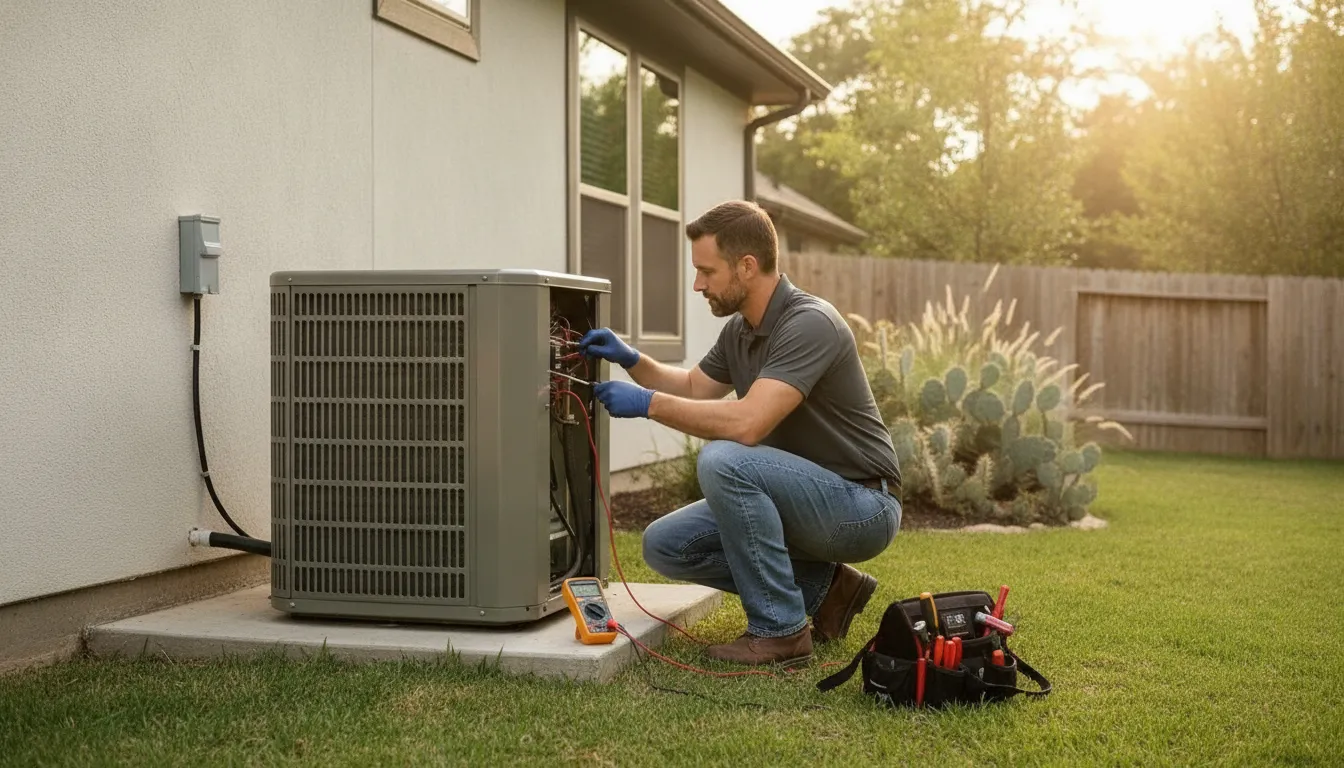
The evaluation typically includes a review of refrigerant conditions and refrigerant flow. Refrigerant work is not a homeowner repair because it requires specialized testing and responsible handling. The technician also checks airflow through the system, including whether restricted airflow could be affecting comfort or system performance.
System performance is evaluated in the mode that is producing trouble. The technician may compare the system’s operation with the thermostat demand. Observe how the indoor and outdoor equipment responds, and assess whether the heat pump is transferring heat as expected. Because heat pumps operate in both heating and cooling modes, the reversing valve is an important part of the diagnosis.
Other components can also contribute to the same household symptom. The technician examines the relevant controls and components to determine whether the problem is isolated or connected to a broader system issue. Mend’s documented capabilities include component repairs, reversing-valve repair, refrigerant-flow troubleshooting, refrigerant testing, airflow measurement, and system-performance diagnostics. These checks help connect the observed symptom to a specific repair recommendation.
What happens after the evaluation
The technician explains the findings in clear terms, discusses the available repair or replacement options, and provides pricing before any approved work begins. You retain the opportunity to ask questions and approve the recommended next step. No repair should be started before that approval.
Mend Services operates under HVAC license TACLB29665E and serves Austin-area homeowners. If you need broader help identifying an HVAC issue, review the Austin HVAC repair service information before scheduling.
Repair or Replacement: What Should You Compare?
A heat pump problem does not automatically mean the entire system needs to be replaced. A focused repair may make sense when the issue is limited, the system is otherwise performing consistently. And the technician can explain what failed and how the repair addresses it. Replacement becomes a more reasonable topic when failures keep returning, important components are deteriorating, or the system’s overall condition no longer supports dependable heating and cooling.
Start by asking what the system is being asked to do. An air-source heat pump transfers heat between the home and outdoor air. Because the same system serves both modes, a component problem can affect comfort in different seasons. A recommendation should account for performance in the mode you are using now and the condition of the equipment as a whole.
| Option | When it may fit | Questions to ask |
|---|---|---|
| Repair | A specific fault is identified and the rest of the system is in suitable condition. | What failed? Was the underlying cause found? What else was checked? |
| Monitored maintenance | The system operates, but recurring symptoms or seasonal changes warrant closer observation. | What should be monitored? Which changes mean service is needed? |
| Replacement | Failures repeat or the system is significantly worn. | What equipment fits the home? How will sizing, ductwork, and controls affect performance? |
Ask the technician to separate the immediate fault from broader system findings. A repair recommendation should identify the affected component, explain the evidence, and note whether airflow, controls, and refrigerant-related conditions were evaluated as appropriate. If replacement is suggested, ask how the proposed system will match the home’s heating and cooling needs and whether existing ductwork and controls are suitable. Review Austin heat pump installation options for broader equipment considerations.
How to Prepare for Heat Pump Service in Austin
A little preparation can make a heat pump service visit more useful, especially when the problem comes and goes. Before the appointment, write down what you noticed and when it started. Include whether the system is failing in heating mode, cooling mode, or both; whether airflow feels weak; and whether rooms are staying at the wrong temperature. Record unusual sounds, short cycling, odors, visible water, or an outdoor unit that appears unusually quiet or obstructed. If there was a recent power outage, storm, breaker trip, or other electrical event, mention that to the technician.
You can also note the date of the last filter change and list the checks you already attempted. Such as confirming the thermostat mode, checking that supply registers are open, or looking for obvious outdoor debris without reaching into the equipment. This prevents repeated steps and gives the technician a clearer starting point. Do not open electrical panels or attempt to access refrigerant components.
During a professional evaluation, the technician can assess the system, explain the findings, and discuss available options before any approved work begins. This article is informational guidance, not a replacement for an on-site diagnosis. For the booking destination, visit Austin heat pump repair service.
Schedule HVAC service with Mend Services
Frequently Asked Questions
What are common signs that a heat pump needs repair?
Watch for a noticeable change in heating or cooling performance, weak or inconsistent airflow, unusual cycling, or a system that cannot maintain the thermostat setting. These symptoms can have more than one cause, so they do not identify a specific failed part by themselves. A technician can evaluate airflow, refrigerant conditions, electrical components, and overall system performance before recommending a repair.
What can I safely check before calling for service?
Confirm that the thermostat is set to the intended mode and temperature, and check whether the air filter is visibly dirty. Make sure supply vents are open and the outdoor unit is not blocked by leaves or other debris. Do not open electrical panels, handle refrigerant, or attempt component repairs. If the system still performs poorly, professional evaluation is the safest next step.
Can a refrigerant problem cause a heat pump to stop working properly?
Yes. Low refrigerant or a leak can affect heat transfer and system performance, but the symptom alone does not confirm a refrigerant problem. Refrigerant testing and leak-related work should be handled by a trained HVAC professional. Do not add refrigerant yourself or use an unapproved substitute.
What does a technician check during a heat pump service visit?
A technician typically starts by discussing the symptoms and reviewing system operation. The evaluation may include airflow, refrigerant conditions, electrical connections, controls, and the heat pump’s ability to operate in heating and cooling modes. After identifying the issue, the technician should explain the findings and available options clearly before work begins.
Schedule an Austin HVAC Evaluation
A professional evaluation can help clarify whether airflow, controls, refrigerant conditions, or another issue is affecting your heat pump. If you are still noticing inconsistent comfort or unusual operation, schedule an Austin HVAC evaluation so the problem can be assessed safely and the next steps explained plainly.