

In Austin, a furnace can sit through much of the year and still need attention before it carries the home through cooler weather. Seasonal maintenance is more than changing a filter. It combines safe homeowner checks with professional inspection of the equipment, airflow, and components that are not safe to open or adjust yourself.
For dependable furnace maintenance Austin homeowners should start with visible airflow and thermostat checks, then schedule a qualified HVAC professional to inspect the furnace before seasonal use. Leave gas, electrical, combustion, carbon-monoxide, and internal equipment work to a professional.
Schedule furnace maintenance before you need reliable heat.
The right preparation begins by separating simple observations you can make at home from the inspection work that calls for trained service. That distinction makes the seasonal checklist safer and more useful.
What Furnace Maintenance in Austin Should Cover Before Heating Season
Furnace maintenance is more than changing a filter or turning the thermostat up for the first time. A seasonal visit should help confirm that the heating system is ready to operate safely and consistently, while also identifying conditions that could lead to a repair. For Austin homeowners, the most useful approach separates simple observations you can make around the home from inspections and testing that belong to a qualified HVAC professional.
Start with the furnace-specific basics
Before heating season, a professional maintenance visit should focus on the components and operating conditions that affect the furnace directly. That includes reviewing the system’s heating operation, checking airflow-related concerns, and looking for signs of wear, damage, or abnormal performance. The technician may also use diagnostic measurements to understand how the system is operating rather than relying only on whether warm air comes from the vents.
Homeowners can support this process by noting unusual noises, inconsistent room temperatures, weak airflow, unusual odors, or repeated cycling. You can also check that supply and return vents are not blocked by furniture, curtains, storage items, or other household objects. These observations give the technician useful context, but they do not replace an inspection of the furnace itself.
Know what should remain professional-only
Furnaces can involve gas, electrical components, combustion, and safety controls. Do not remove internal panels, alter wiring, adjust gas components, or attempt to test combustion equipment yourself. If you notice a strong fuel odor, signs of scorching, unusual exhaust, or a carbon monoxide alarm, leave the area as appropriate for the situation and contact qualified help. Routine maintenance should never involve taking risks with equipment you are not trained to service.
How this differs from broad HVAC maintenance
A general HVAC visit may address the wider system, including cooling, airflow, zoning, or indoor air quality. Those topics matter, but they can make a furnace article too broad. The HVAC maintenance checklist provides that larger maintenance context. This seasonal furnace review should instead concentrate on heating operation, furnace safety, airflow symptoms, and whether a repair or further diagnosis is needed before colder weather arrives.
Mend provides HVAC maintenance, heating repair, and related heating services for Austin and surrounding Central Texas communities. A planned visit can establish a clearer starting point for the season, while any warning signs can be routed to repair before they become a more disruptive heating problem.
A Safe Homeowner Furnace Maintenance Checklist
A homeowner check should help you notice changes, keep the area around the equipment orderly, and give a technician useful information. It should not turn into a do-it-yourself furnace repair. If a task would require removing an access panel, handling wiring, working around gas connections or combustion components, or investigating a carbon monoxide concern, stop and arrange professional service instead.
Use the following checklist when the furnace is not actively heating, and keep children and pets away from the equipment while you look. Do not force a part, bypass a safety control, or continue investigating if you smell gas, see scorch marks, hear unusual electrical sounds, or feel unwell.
-
Observe the filter and airflow. Check the filter from the normal homeowner access point without opening a sealed furnace compartment. If the filter is visibly loaded with dust, damaged, damp, or not seated correctly, note what you see and follow the filter manufacturer’s instructions or ask a professional for help. Do not assume that a thicker or higher-rated filter is automatically suitable for every system. A filter that does not fit correctly can allow dust around its edges or restrict airflow. Also pay attention to how the system sounds and feels during normal operation. Weak airflow, a new whistling sound, short cycling, or rooms that no longer receive comfortable airflow are observations to document, not invitations to adjust internal components.
-
Test the thermostat at a normal setting. Confirm that the thermostat display is on and that the mode and temperature setting match what you intend. If the thermostat uses batteries, replace them according to the manufacturer’s directions when the display indicates they are low. During a normal call for heat, note whether the furnace starts and stops as expected, whether the thermostat responds, and whether the home reaches a comfortable temperature. Avoid repeatedly changing the setting to force a cycle or removing the thermostat cover. If the display is blank, the system does not respond, or the behavior is inconsistent, record the time and symptoms for a technician.
-
Look for visible vent or register obstructions. Walk through the rooms served by the furnace and make sure supply registers and return grilles are not covered by rugs, furniture, boxes, curtains, or other household items. Clean visible dust from the outside of a grille with ordinary household tools, but do not remove ductwork or reach into openings. Keep the path around registers clear so air can circulate as designed. If one room has a persistent airflow problem while others feel normal, include that detail in your notes rather than closing or opening multiple registers in an attempt to balance the system.
-
Keep the surrounding area orderly. Remove stored belongings, paper, cleaning products, and other clutter from around the furnace and any visible air-handler or venting area. Keep combustible household items away from equipment, and do not use the furnace area as a storage shelf. Look only for visible moisture, rust, damage, loose-looking covers, or unusual debris. Do not open combustion or electrical compartments, remove service panels, touch wiring, adjust gas controls, or attempt to clean burners. Those areas involve hazards that require the right training and procedures.
-
Check accessible outdoor equipment areas when applicable. If your heating system has an outdoor component, keep leaves, branches, lawn debris, and other obstructions away from its visible exterior. Do not dismantle the cabinet, hose the equipment, or inspect internal parts. For a furnace located indoors, focus on the accessible area around the unit and leave any flue, vent, gas, and electrical connections alone. A visible obstruction or damaged component is a reason to schedule an inspection, not a repair project.
-
Write down changes and dates. Record the filter size and the date you observed or replaced it, thermostat behavior, rooms with weak airflow, unusual sounds, visible damage, and any recent service. Short notes can help a technician reproduce the issue more quickly. Include whether the problem occurs at startup, during a heating cycle, or only in certain rooms. Keep service records, equipment information, and previous repair recommendations together so you can compare new symptoms with the system’s history.
This checklist supports safe observation, but it cannot confirm the condition of combustion, electrical, or internal furnace parts. For those concerns, use a qualified HVAC professional. Mend Services provides heating maintenance and repair for Austin and surrounding Central Texas communities, including homeowners who need help interpreting a symptom before the next heating season.
When Should You Schedule Furnace Maintenance in Austin?
For most Austin homeowners, the best time to schedule furnace maintenance is before the system has to run regularly. Planning ahead gives a technician time to inspect the equipment, identify developing problems, and explain whether any repair should be handled before colder weather arrives. It also avoids making the first heating cycle of the season a test run for a system that has been idle for months.
There is not one universal calendar date or rigid service interval that fits every furnace. The right timing depends on the age and condition of the equipment, how often it operates, the home’s comfort patterns, and whether it has shown unusual behavior. A household that uses its furnace lightly may have different needs from one that relies on it throughout the heating season. If your system has a history of breakdowns or has not received preventive attention recently, scheduling sooner is sensible rather than waiting for a convenient season.
Use the seasons as a planning reminder
Austin’s heating demand is seasonal, so late summer or early fall is a practical planning window for many homeowners. Scheduling before the first sustained cold spell leaves more room to make an informed decision if the technician finds a worn component or an airflow concern. It also lets you confirm that the thermostat, filter, and supply and return airflow are ready for normal use without waiting until the home is uncomfortable.
Seasonal planning does not mean maintenance should be postponed when the calendar is inconvenient. If you recently moved into a home, changed how the space is used, or are unsure when the furnace was last serviced, a professional evaluation can establish a useful baseline. Mend Services offers preventive maintenance through Whole Home Wellness Plans with annual or bi-annual service, giving homeowners a structured option without requiring every household to follow the same schedule.
Warning signs should move service sooner
Schedule service promptly when the furnace begins making unfamiliar noises, produces inconsistent heat, cycles unusually, struggles to maintain the thermostat setting, or causes unexplained increases in comfort problems. A dirty filter or blocked vent may be a simple airflow issue, but repeated symptoms can point to a condition that needs professional diagnosis. Do not open combustion or electrical compartments, investigate gas odors, or attempt internal repairs yourself. Leave those concerns to a qualified HVAC professional.
If the furnace stops heating, smells strongly of gas, or raises a carbon monoxide concern, treat the situation as a safety issue rather than routine maintenance. Leave the area when appropriate, follow your household’s emergency procedures, and request qualified help. For less urgent symptoms, review the furnace repair warning signs so you can distinguish a maintenance question from a repair need. Homeowners who want broader seasonal guidance can also consult the HVAC maintenance checklist, then schedule furnace maintenance Austin homeowners can plan around their equipment’s actual condition.
What a Professional Furnace Tune-Up Can Find
A professional tune-up looks beyond the visible parts of a heating system. Instead of relying only on whether warm air comes from the registers. A technician evaluates how the furnace starts, moves air, responds to controls, and operates as a complete system. The goal is to identify conditions that may affect comfort, reliability, or safe operation before they become a larger service problem.
Airflow and comfort problems
Restricted airflow can make a furnace work harder while leaving some rooms uncomfortable. During a service visit, a technician may look for conditions involving the filter, return-air path, supply ducts, blower operation, and registers. Airflow measurement can help distinguish a simple maintenance concern from a duct, blower, or equipment issue that needs further diagnosis. Uneven temperatures, weak airflow at several registers, or a furnace that runs for unusually long periods are useful observations to share with the technician.
A tune-up can also help identify control-related concerns. The thermostat, wiring, and equipment response should work together so the system starts and stops as intended. If the thermostat calls for heat but the furnace does not respond consistently, or if the system cycles repeatedly. A professional can investigate the likely cause instead of treating the symptom as a filter problem.
Performance and equipment concerns
Professional HVAC diagnostics can include system-performance checks and, when relevant to the equipment, refrigerant testing. Those checks help a technician evaluate whether the system is operating within expected conditions. A finding does not automatically mean that a major repair or replacement is necessary. It may point to cleaning, an adjustment, a component that needs closer inspection, or a separate repair appointment.
That distinction matters for homeowners. Maintenance is intended to find and address routine concerns, but a tune-up is not a promise that every component will remain problem-free. A technician should explain what was observed, what needs attention now, and what can be monitored. Ask for the reasoning behind any recommendation so you can make an informed decision about the next step.
Safety issues that should not wait
Gas, combustion, electrical, and internal furnace concerns require professional handling. Do not remove access panels, alter wiring, adjust gas components, or attempt to troubleshoot combustion equipment yourself. If you notice a gas odor, a carbon-monoxide alarm, soot, unusual flames, burning odors, or a furnace that shuts down unexpectedly. Turn the system off if it is safe to do so and seek qualified service. Leave the area and follow emergency guidance for an active gas or carbon-monoxide concern.
For a broader look at seasonal tasks across heating and cooling equipment, review this HVAC maintenance checklist. Keep the furnace-specific safety and diagnostic work with a qualified HVAC professional, especially when the issue involves gas, electricity, combustion, or components inside the equipment.
Which Furnace Problems Need Repair Instead of Routine Maintenance?
Routine maintenance is intended to keep a furnace operating safely and reliably. Repair is needed when the system is already showing a fault, behaving unusually, or failing to deliver consistent heat. Knowing the difference helps Austin homeowners avoid treating a developing problem as a simple seasonal task.
Maintenance may be appropriate when the furnace still heats the home normally. The thermostat responds as expected, and there are no unusual sounds, smells, or visible signs of damage. A homeowner can handle basic observations such as checking the filter, keeping supply and return vents clear, and noting whether rooms feel evenly heated. A professional maintenance visit can then address inspection and service needs before heavier heating demand arrives.
Repair becomes the better path when comfort or operation has changed. Repeated cycling, a furnace that will not start, weak airflow. Or rooms that remain cold despite a normal thermostat setting can point to a malfunction rather than ordinary upkeep. New rattling, banging, scraping, or squealing sounds also deserve attention, particularly when they occur each time the system starts or runs. Do not keep resetting a furnace that repeatedly shuts itself off. That pattern is useful information for a technician, not a maintenance task to postpone.
Watch for signs that involve safety
Some symptoms should move the situation beyond routine scheduling. Stop using the furnace and seek prompt professional guidance if you notice a strong fuel odor, soot around the equipment, visible scorching, smoke, or a carbon monoxide alarm. Never open combustion or electrical compartments to investigate a suspected internal problem. If anyone in the home experiences symptoms that could indicate carbon monoxide exposure. Leave the area and contact emergency services or the appropriate utility emergency line before arranging HVAC service.
Water around a furnace, a damaged flue or vent, or a burning smell that does not quickly disappear can also signal a condition that needs diagnosis. A dusty odor when the furnace first runs after a long period of inactivity may have a harmless explanation. But a persistent or worsening smell should not be dismissed. Describe when the symptom occurs, how long it lasts, and whether the furnace continues running. Those details can help a professional determine the next step.
Use a symptom-based decision
If the furnace is operating normally and you are preparing for the season, schedule maintenance. If it is operating but producing inconsistent comfort or unusual behavior, arrange an inspection rather than waiting for a complete shutdown. If there is an immediate safety concern, turn the system off when safe to do so and seek urgent help. For a fuller list of symptoms that warrant service, review these furnace repair warning signs.
This approach keeps furnace maintenance Austin homeowners schedule focused on prevention while ensuring that actual defects receive the right level of attention. It also avoids replacing equipment based on one symptom alone. A qualified technician can evaluate whether repair is appropriate and explain when a larger system decision should be considered.
Schedule furnace service with Mend Services.
How Austin Homeowners Can Plan for Reliable Winter Comfort
A practical winter plan separates three different jobs: noticing conditions around the furnace, arranging preventive service, and responding when the system shows a problem. Keeping those purposes distinct helps you take useful action without attempting work that belongs to a qualified HVAC professional. Homeowner checks can identify simple observations and changes. Planned maintenance gives a technician an opportunity to evaluate the system before you depend on it. Urgent repair addresses a failure or a safety concern that should not wait for a routine appointment.
Use the comparison below as a decision guide, not as a substitute for professional diagnosis. If you notice a gas odor, signs of combustion trouble, suspected carbon monoxide, exposed wiring. Or another immediate safety concern, leave the area as appropriate and contact the relevant emergency service or qualified professional.
| Type of care | Purpose | What a homeowner can do | Next step |
|---|---|---|---|
| Homeowner check | Spot visible changes and support normal operation. | Check the thermostat, observe airflow, replace the filter according to its instructions, and keep supply and return openings clear. | Document anything unusual and arrange service if the concern continues. |
| Planned professional maintenance | Evaluate heating performance and identify developing concerns before a failure. | Gather the model information and note unusual sounds, cycling, odors, or temperature differences. | Schedule furnace maintenance with an HVAC professional. Preventive care may also be available through Mend’s Whole Home Wellness Plans, including annual or bi-annual service. |
| Urgent repair | Address a failed system or a condition that could affect safety. | Stop troubleshooting when the issue involves gas, combustion, electrical components, internal parts, or suspected carbon monoxide. | Contact a qualified HVAC professional promptly. Use a furnace repair guide to review warning signs before calling. |
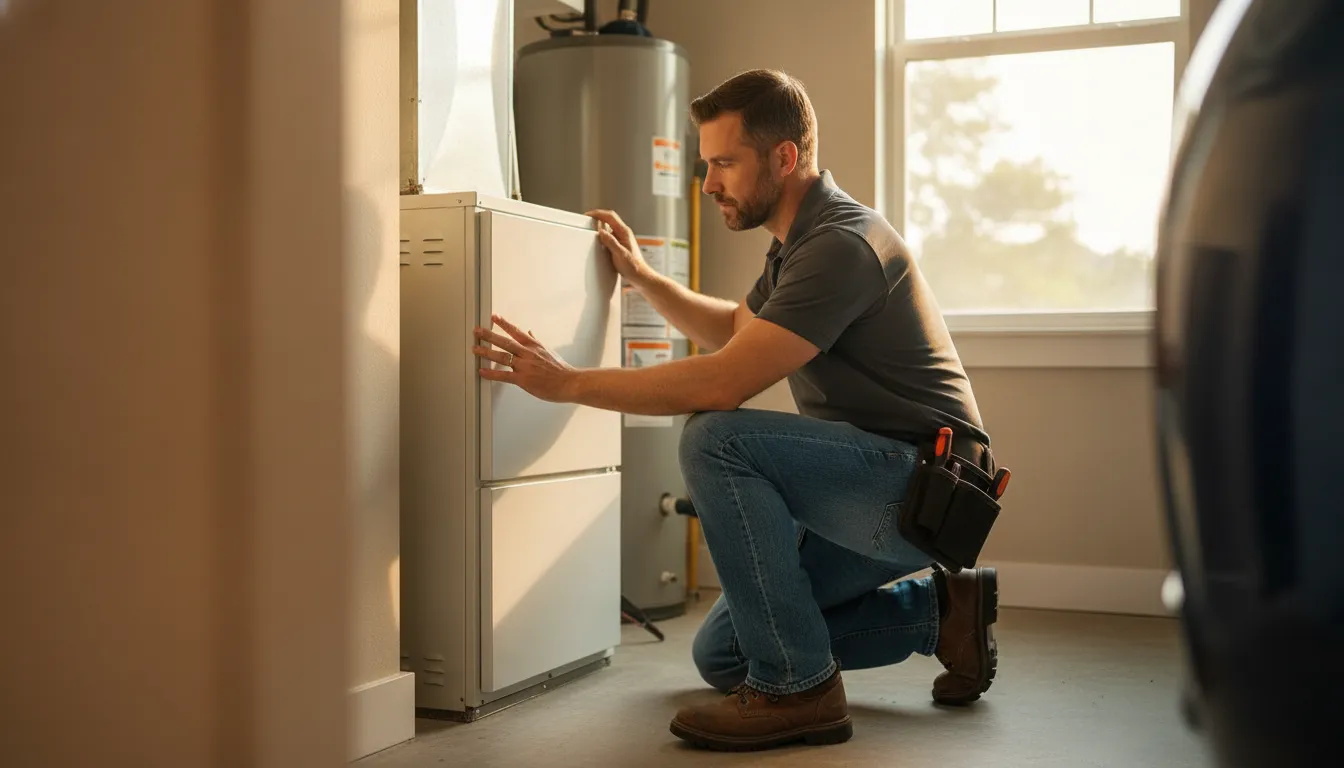
For broader seasonal planning, review this HVAC maintenance checklist, then keep the furnace-specific observations separate from general cooling and air-quality tasks. Mend provides heating installation, maintenance, repair, heat pumps, zoning, and indoor air-quality solutions as part of its Austin HVAC services. That makes it possible to move from a basic homeowner check to an appropriate professional next step without guessing which type of service is needed.
The most useful plan is the one you can follow before comfort becomes an urgent concern. Record what you observe, schedule preventive maintenance when the system is not performing as expected. And treat safety-related symptoms as a reason to stop and seek qualified help rather than continue troubleshooting.
Frequently Asked Questions
How often should you schedule furnace maintenance?
Plan professional maintenance around your home’s heating season and the condition of the equipment rather than relying on a one-size-fits-all interval. Austin homeowners often schedule before regular heating use begins, while older systems or systems with recurring issues may need closer attention. Mend offers preventive maintenance through Whole Home Wellness Plans with annual or bi-annual service options.
When is the best time for furnace maintenance in Austin?
Schedule service before you need steady heat, so a technician can identify concerns while you still have time to plan the next step. If the furnace is making unusual noises, cycling unexpectedly, producing weak airflow, or failing to heat evenly, arrange an evaluation sooner instead of waiting for the seasonal rush.
What furnace maintenance can a homeowner safely do?
Homeowners can replace or inspect the filter according to the equipment instructions. Confirm that supply and return vents are not blocked, check thermostat settings, and keep the surrounding area clear. Do not open gas or electrical compartments or attempt combustion work. Stop and contact a qualified HVAC professional if you notice a gas odor, suspected carbon monoxide, damaged wiring, or an internal equipment problem.
Where can I find furnace maintenance service in Austin?
Mend Services provides HVAC maintenance, heating repair, and related residential services in Austin and surrounding Central Texas communities. You can review the company’s Austin HVAC services and schedule professional help when a homeowner check identifies a safety concern or equipment issue.
Ready to Schedule Furnace Maintenance in Austin?
A seasonal check can help you address small concerns before they become an uncomfortable winter interruption. If your furnace needs professional maintenance, repair guidance, or a closer look at heating performance, Mend Services can help Austin-area homeowners choose the next step.
Schedule service online and share what you have noticed, including unusual sounds, weak airflow, uneven temperatures, or a furnace that has not been used recently.
Schedule furnace maintenance in Austin with Mend Services


