

Replacing a furnace is not just a matter of choosing a unit from a catalog. The final project depends on the equipment, the home’s heating needs, and the work required to connect everything safely and correctly.
Furnace installation cost Austin TX depends on furnace type, efficiency, heating capacity, and installation requirements. Carrier provides a general planning range for a new gas furnace, including the unit and professional installation. That outside guidance is not a Mend quote or a universal local price. Venting, ductwork, electrical changes, access, and other installation details can move an estimate higher or lower.
Get a clear furnace installation estimate based on your Austin home.
The most useful estimate is based on an evaluation of the existing system and the home. A broad online range cannot replace that review.
Understanding the estimate makes it easier to compare options and spot missing scope. Then you can choose a system that fits your needs before reviewing the details that shape the number.
Understanding furnace installation cost Austin TX for your home
When homeowners search for furnace installation cost in Austin, they are usually asking about more than the equipment alone. The installed cost can include the furnace, professional labor, and any changes needed to connect the system to the home’s existing ductwork, venting, electrical components, or other materials. The final figure depends on the home and the installation scope, not just the model selected.
For a general planning reference, Carrier provides broad industry guidance for a new gas furnace, including professional installation. That guidance is not a Mend price or a guaranteed Austin quote. Mend does not publish a universal furnace price because two homes with similar square footage can still require different equipment, labor, and installation work.
What the planning range does and does not tell you
Carrier identifies furnace type, efficiency, heating capacity, and installation requirements as major cost factors. Home size and installation complexity also affect the estimate. A higher or lower number is not automatically a sign that a quote is unreasonable. It may reflect the system’s specifications, the home’s heating needs, or work required beyond swapping equipment.
For example, replacing an existing furnace with a similar unit generally requires less work than a project that needs new ductwork or venting. A project can move above a broad planning range when it involves extensive venting, ductwork, electrical, or other material modifications. That is why a useful estimate should explain what is included instead of presenting one unexplained number.
The same distinction matters when comparing an equipment-only price with an installed price. A furnace selected for one home’s heating capacity may not be the right match for another home, even if both homeowners begin with the same online range. Efficiency can also change the equipment choice and the work required to install it. In other words, the planning range helps establish the question to ask, but it cannot replace an evaluation of the specific installation.
Look for a clear separation between the furnace itself and the work needed to place it into service. That makes it easier to identify whether a difference comes from the furnace type, efficiency, capacity, or installation requirements. It also helps prevent an apparently low estimate from leaving ductwork, venting, electrical, or other material changes outside the stated scope.
This article focuses narrowly on how to understand and compare furnace installation costs in Austin. It is not a replacement for Mend’s furnace installation guide, which covers the broader installation topic, including system types and the installation process. If you are still defining the work your home may need, review Mend’s Austin HVAC installation services resource for the larger service context. The goal is to connect the cost question to the actual scope of work, so you can evaluate an estimate with the right expectations.
Which factors change a furnace installation estimate?
Two Austin homes can receive different estimates even when their furnaces appear similar from the outside. The equipment choice matters, but the total also reflects how well the system fits the home’s heating load and what the installation requires. Efficiency, home size, and installation complexity are three primary variables, according to Carrier’s furnace cost guidance.
Equipment, efficiency, and heating capacity
Furnace type affects both the equipment selection and the work needed to install it. A higher-efficiency model may use additional heat-capture components and may require different venting than an older furnace. That can add labor and materials, so efficiency should be evaluated as part of the complete installation scope rather than as an isolated rating.
Heating capacity is also important. A furnace should be selected for the home’s calculated heating load, not by square footage alone. Climate, insulation, windows, ductwork, and other characteristics affect that load. The U.S. Department of Energy’s furnace guidance applies to residential natural gas, propane, and oil furnaces below 225,000 Btu/h. But the right capacity for a particular Austin home still requires a professional assessment. An oversized furnace can cycle inefficiently and create uneven comfort.
Home size, ductwork, and venting
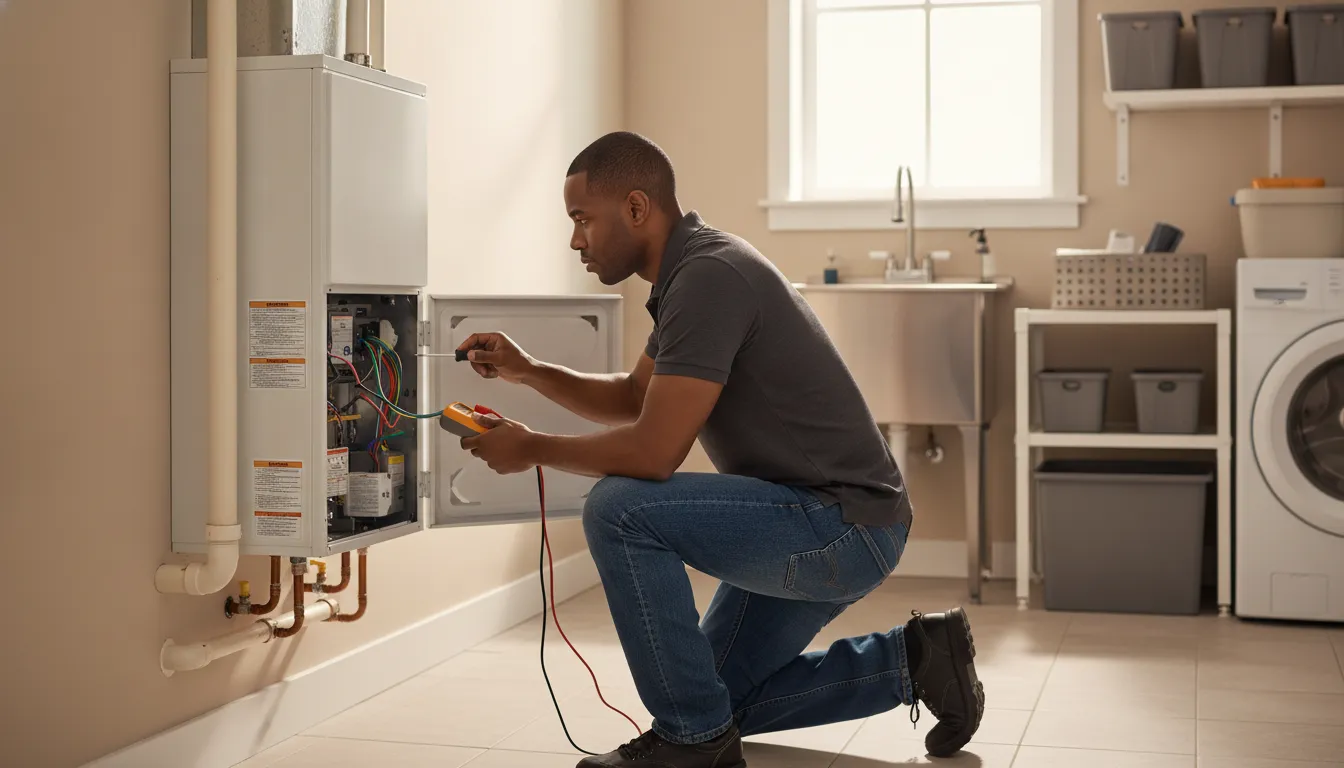
Home size influences the heating load, but it does not automatically determine the furnace size. Existing ductwork may need modification or replacement if it is damaged, improperly sized, or incompatible with the new system. A replacement using a similar unit and existing connections generally requires less work than a project involving new ductwork.
Venting can change the estimate as well. High-efficiency condensing furnaces may use a different venting arrangement from an older furnace. The condition, layout, and accessibility of the current system determine how much modification is needed.
Electrical, removal, and site conditions
Electrical connections, gas piping, thermostats, and other infrastructure may require updates. Removing and safely disposing of the old furnace can also add work. Limited access to an attic, closet, or utility area may increase installation complexity and labor. Local permit requirements and fees depend on the location and project scope, so they should be identified in the written estimate rather than assumed.
Talk with Mend about your furnace replacement options in Austin.
If you are weighing replacement against continued repairs, review when to replace your HVAC system. For a related look at how installation scope affects another major HVAC project, see AC installation cost factors.
How do furnace type and efficiency affect furnace installation cost Austin TX?
Equipment choice affects more than the name on the proposal. It determines how the furnace delivers heat, how closely it can respond to changing conditions, and what components may be required during installation. The right comparison is not simply the highest efficiency available. It is the system that fits the home’s heating needs, existing setup, and comfort priorities.
How common furnace operating designs differ
| Furnace design | How it operates | What to consider |
|---|---|---|
| Single-stage | Runs at full capacity when it is on, then turns off when the thermostat reaches the set temperature. | A straightforward design with one operating level. |
| Two-stage | Runs at a lower capacity most of the time and increases output when more heat is needed. | Provides two operating levels for changing heating demand. |
| Modulating | Adjusts heating output in small increments to maintain a more precise temperature. | Uses finer output control and additional system components. |
These operating descriptions are based on Carrier’s furnace guidance, which identifies single-stage, two-stage, and modulating designs as distinct ways to control output. They should not be treated as universal promises about comfort or operating cost. Home size, insulation, ductwork, thermostat controls, and installation quality all influence how a system performs.
What AFUE tells you
AFUE stands for Annual Fuel Utilization Efficiency. For a natural gas furnace, it describes how much of the fuel is converted into usable heat over a typical year. A higher AFUE indicates a greater share of the fuel becomes heat, but the rating is only one part of the selection process. It does not tell you whether a particular furnace is correctly sized or whether the existing ductwork can deliver heat evenly.
Higher-efficiency equipment generally costs more because it uses additional components to capture more heat. That makes the equipment specification and the installation scope important parts of any comparison. A replacement using a similar existing setup may require less work than a project that needs new ductwork or venting. Ask for those details in writing instead of comparing efficiency labels alone. Carrier explains the relationship among furnace type, efficiency, capacity, and installation requirements in its furnace cost guidance.
If you are weighing a furnace against another heating and cooling arrangement, you can also compare HVAC system options before requesting an installation estimate. A clear comparison should connect the equipment choice to the home’s existing setup, not just to a rating printed on a product label.
When should Austin homeowners replace a furnace?
Replacement usually deserves a closer look when the furnace is older, repairs are becoming frequent or costly, or the existing system no longer fits the home’s heating needs. That does not mean age alone makes a furnace a bad investment. A practical decision starts with the condition of the equipment, the repair required, and the scope of work a replacement would involve.
Start with the repair, not just the age
A well-maintained gas furnace may last 15 or more years, according to Carrier’s general guidance. A furnace that is more than 12 to 15 years old may merit a closer look, but that range is not a universal deadline. It is a prompt to compare the next repair with the condition and expected use of the system. Furnace repair warning signs can help you organize that evaluation before making a decision.
For a newer or well-maintained furnace with a limited repair, repair may be the reasonable path. Replacement becomes more worth investigating when the same system needs frequent or costly repairs. It is also worth considering when a repair would address only one issue in an aging unit or when the equipment has other signs of declining reliability. Ask the technician to explain what failed, whether the repair solves the immediate problem, and what other condition concerns were found. A clear explanation is more useful than choosing based on a simple age rule.
Compare the full replacement scope
A replacement quote is not only the price of the furnace cabinet. Equipment type, efficiency, heating capacity, and installation requirements all affect the project. Replacing an existing furnace with a similar unit generally requires less work than a change that needs new ductwork or venting. Ductwork modifications, electrical changes, gas infrastructure work, removal, or disposal can change the total scope. Carrier notes that an in-home professional assessment is the best way to determine the installed price for a specific replacement. When to replace your HVAC system offers a broader framework for weighing system condition and replacement needs.
Austin and Central Texas homeowners should also consider seasonal comfort and the practical risk of waiting until the system fails. That is a planning consideration, not a promise that replacement must happen by a particular date. If the furnace is operating safely and reliably, use the evaluation to compare repair, replacement, and any required ductwork or venting work. If the system is unreliable or the repair scope is substantial, getting a written assessment before the next heating demand can make the choice less rushed.
What should a written furnace estimate include?
A useful estimate should make the proposed work understandable before you agree to it. It should connect the recommended equipment to your home’s heating needs, explain what the installation involves, and show which items are included in the price. Because installation requirements vary by home, a professional evaluation is more useful than a generic online range.
- Evaluation findings. The estimate should summarize the condition of the existing system, the home’s comfort concerns, and any relevant airflow or performance findings. Mend’s process includes evaluating the system, explaining the findings, and discussing repair or replacement options.
- Sizing and equipment details. Look for the proposed furnace type, heating capacity, efficiency information, and model or equipment description. Capacity should reflect the home’s heating load, not square footage alone. Climate, insulation, windows, and ductwork can affect sizing. If the estimate presents good, better, and best options, each option should clearly explain what changes.
- Installation scope. The written scope should state whether the project includes removal and disposal of the old unit, startup, testing, cleanup, and any required materials. Replacing a furnace with a similar unit generally involves less work than a project requiring new ductwork or venting. Those differences should not be left implied.
- Ductwork, venting, and electrical work. The estimate should identify modifications to ductwork, venting, electrical connections, gas piping, thermostats, or other infrastructure. Damaged, improperly sized, or incompatible ductwork may require modification or replacement. Higher-efficiency equipment can also require different venting. These details help explain why two apparently similar proposals may not cover the same work.
- Permits and project conditions. If permits, inspections, code-related work, access limitations, or unusual site conditions apply, the estimate should say who handles them and whether related fees are included. Requirements depend on the location and project scope, so ask for a clear answer for your address.
- Warranty and service terms. Confirm the contractor’s labor or parts coverage, manufacturer warranty responsibilities, and any conditions that apply. Mend lists a one-year parts-and-labor warranty and licensed HVAC professionals. You can review its Austin HVAC installation services for additional service information.
- Schedule and total price. The proposal should identify the expected work sequence, any customer responsibilities, expiration date, and total installed price. It should distinguish included work from optional upgrades instead of combining everything into an unclear lump sum.
- Financing or incentives, if offered. Financing terms should show the lender, approval requirement, term, interest details, and expiration or availability conditions. Never assume an advertised offer still applies. Similarly, potential HVAC rebates and tax credits should be verified for the equipment and your project before being counted in the budget. Mend offers free replacement estimates and free second opinions for major replacements, giving homeowners a way to compare the written details.
How can Austin homeowners compare furnace installation quotes?
Comparing furnace bids is less about finding the shortest number and more about confirming that each contractor priced the same work. A quote that excludes ductwork, venting, electrical changes, removal, or other installation requirements may look lower while leaving important decisions unresolved. Ask each contractor to explain what the proposed system and installation include, then compare the written scopes line by line.
Use a practical quote checklist
- Verify the contractor. Confirm the company is properly licensed for the work and ask who will perform the installation. Mend Services lists Texas HVAC license TACLB29665E and uses licensed professionals. You can also review its Austin HVAC installation services before requesting an estimate.
- Match the equipment and sizing basis. Make sure every quote identifies the proposed furnace, heating capacity, efficiency measure, controls, and any included accessories. Furnace size should reflect the home’s heating load, not square footage alone. If one contractor recommends a different capacity, ask what home conditions support that recommendation.
- Compare the installation scope. Check whether the bid includes removal and disposal of the existing unit, connections, ductwork changes, venting, electrical or gas infrastructure work, permits where applicable, startup, and testing. A similar replacement may require less work than a project involving new ductwork or venting, so scope differences matter.
- Review warranty and written terms. Look for separate manufacturer and contractor warranty details, exclusions, labor coverage, and the process for requesting service. Mend documents a one-year parts-and-labor warranty, with manufacturer warranties passed through to customers. The final estimate should also state the total price, payment terms, expected responsibilities, and any conditions that could change the scope.
Be cautious when a salesperson gives only a verbal total or pressures you to decide before the equipment, work, and warranty terms are documented. A professional in-home assessment is the most reliable way to connect the estimate to your home’s actual requirements. For additional background on the installation process, see the furnace installation guide. If an efficiency upgrade may qualify for assistance, review HVAC rebates and tax credits, but confirm current eligibility and terms before relying on them.
Get a written furnace installation estimate based on your Austin home’s needs.
Frequently Asked Questions
How much does furnace installation cost in Austin, TX?
There is no universal Austin price because equipment, efficiency, heating capacity, labor, and site requirements differ. Carrier publishes general planning guidance for a new gas furnace with professional installation, but that is not a Mend quote and may not fit your home. An in-home assessment is the most reliable way to price the actual work. Carrier cost guidance
Is a high-efficiency furnace worth the extra cost?
It depends on the equipment, your home’s heating needs, fuel costs, and how long you expect to use the system. AFUE measures how much fuel a natural gas furnace converts into usable heat. Higher-efficiency models generally cost more because they use additional heat-capture components, so compare the upfront premium with the expected long-term operating value rather than choosing by rating alone. DOE furnace guidance
Should I repair my old furnace or replace it?
Compare the repair scope with the system’s condition, reliability, and suitability for the home. A minor repair may be reasonable when the furnace remains dependable, while frequent or costly repairs can justify evaluating replacement options. A professional can explain both paths and identify whether ductwork, venting, electrical connections, or other installation requirements would affect a replacement estimate.
What should I ask for in a furnace installation estimate?
Request a written scope that identifies the equipment, heating capacity, efficiency, removal and disposal, ductwork or venting work, electrical or gas modifications, permits when applicable, warranty coverage, schedule, and total price. Ask whether the contractor evaluated the home’s heating load instead of sizing the furnace from square footage alone. Mend offers free estimates for system replacement and free second opinions for major replacements.
Get a furnace installation estimate in Austin
A written estimate can help you understand the equipment, installation scope, and factors behind the proposed project before you decide. Mend Services can review your home’s needs and explain the available options in clear terms.
Get help comparing furnace installation options in Austin.