

A burst pipe can turn a small plumbing problem into soaked floors, damaged walls, and a fast-moving cleanup. If water is actively escaping, keep people away from electrical hazards. Shut off the main valve only if it is safe and accessible, and contact qualified plumbing help rather than attempting a risky repair.
Schedule emergency plumbing help with Mend Services
For emergency pipe repair near me in Austin, first limit the water source, protect belongings, and call a professional who can diagnose the failure and make the area safe. Household leaks can waste water and sometimes damage homes, according to the U.S. Environmental Protection Agency: EPA leak guidance.
Knowing what qualifies as an emergency helps you choose the right next step without losing time or taking on work that belongs to a licensed plumber. Start by separating an active, damaging leak from a problem that can wait for a routine appointment.
What Counts as a Plumbing Emergency?
A plumbing problem becomes an emergency when water, sewage, or an unsafe condition can quickly damage your home or put people at risk. A pipe that has burst or is actively spraying water is especially urgent when the shutoff is difficult to reach or the flow is spreading into walls, ceilings, or flooring. A fast-growing leak under a sink, behind an appliance, or near the foundation also deserves prompt professional attention.
Not every drip requires emergency service, but waiting is risky when the source is hidden or the affected area is growing. The EPA notes that household leaks can waste water, increase utility bills, and sometimes damage homes. You can read the agency’s guidance on household leak detection for more background.
Situations that should not wait
- Burst or actively spraying pipe: A broken supply line can release water continuously until the water is shut off and the damaged section is repaired.
- Fast-spreading or hidden leak: Wet drywall, pooling water, sagging ceilings, or unexplained moisture may indicate water is moving inside the structure.
- Sewage backup: Wastewater entering a tub, floor drain, toilet, or living area creates a sanitation concern and should be handled by qualified professionals.
- Overflowing toilet: An overflow that will not stop, particularly one involving contaminated water, can cause avoidable damage and sanitation problems.
- Water near electrical hazards: Water around outlets, electrical panels, appliances, or wiring creates a safety risk. Keep people away and do not enter an unsafe area to reach a valve.
If it is safe and accessible, limit the flow at the nearest shutoff while you arrange help. Do not cut into a wall, force a stuck valve, or attempt a repair in standing water. For homeowners who need 24/7 emergency plumbing help in Austin or nearby Central Texas communities, contact a qualified plumbing professional and confirm current service availability for your address.
What to Do Before an Emergency Plumber Arrives
When water is spreading, focus on safety and limiting damage rather than trying to locate or repair the failed pipe. Follow this sequence if the conditions are safe:
- Protect people and pets first. Keep children and animals away from standing water, active leaks, and slippery floors. If water is near outlets, appliances, cords, or electrical panels, do not step into the area or touch electrical equipment. Leave the space and wait for qualified help if you cannot safely reach the shutoff.
- Shut off the main water supply if it is safe and accessible. Clemson recommends shutting off the main valve after a pipe bursts. Common locations include near the home’s foundation, at the water meter, or directly above the water heater. Do not force a stuck valve, enter a flooded area, or open walls to reach a pipe. If you are unsure which valve controls the home, tell the plumber what you found when you call.
- Use the water-heater shutoff for a hot-water burst. If the failed line is carrying hot water, Clemson says the nearby valve at the water heater may be used to stop that supply. Keep clear of hot water and equipment that may have been affected by flooding.
- Drain remaining water from the lines. After the supply is off, open the lowest faucet in the home, such as a tub or utility sink. Then open a higher faucet to help air enter the lines and improve drainage. Stop if a faucet, fixture, or surrounding area is unsafe to access.
- Contain the water without attempting a repair. Place buckets or towels where they can catch or slow water, but do not dismantle fixtures, cut pipe, apply heat, or make a temporary repair inside a wall. If you need pipe repair and replacement options, a professional can determine whether the line should be repaired or replaced.
- Move valuables and document the damage. Lift furniture, boxes, and other belongings away from wet floors when you can do so safely. Take clear photos or video of the leak, affected rooms, visible fixtures, and damaged belongings. Note when you first noticed the problem and whether the water was hot, dirty, or spreading.
- Contact professional help and stay available. Share the leak location, water source, steps already taken, electrical concerns, and any access instructions. Do not reopen the main valve or resume normal use until the plumber has assessed the situation. For the safety guidance on shutoffs and draining a burst line, see Clemson’s burst-pipe guidance.
How to Choose Emergency Pipe Repair Near Me in Austin
When searching for emergency pipe repair near me in Austin, start by confirming that the company actually serves your part of Greater Austin. Coverage may include nearby communities such as Buda, Kyle, Round Rock, Cedar Park, Pflugerville, Georgetown, and San Marcos, but availability can vary by location. Ask whether a technician can serve your address before relying on a listing or assuming coverage.
Questions to ask before booking
- Do you handle burst pipes, severe leaks, or water-line damage?
- Are the technicians licensed and qualified for the work required?
- Can I reach someone after normal business hours?
- What information should I provide so you can understand the situation?
Licensing is one useful trust signal. Mend Services holds Texas Master Plumber License M-46376, but homeowners should still ask who will perform the work and what the visit will cover. A qualified professional can help determine whether the problem calls for a localized repair, replacement, or additional inspection. Do not attempt a risky repair simply because the leak appears easy to reach.
Also separate 24/7 contact availability from a guaranteed arrival time. Mend has around-the-clock emergency plumbing availability with on-call technicians, which means you can contact the company at any time. That does not establish a promise that a technician will arrive within a fixed number of minutes or hours. Ask about current scheduling and explain whether water is still flowing, the main shutoff is closed, or the leak is affecting electrical equipment or occupied areas.
Share clear details when you call
Be ready to give the service address, the location of the leak, and whether it is active. Explain which fixtures or rooms are affected and whether you have safely shut off the water. Photos can help when conditions are safe. Mention standing water, visible ceiling or wall damage, sewage, and any immediate hazards. If the situation involves a danger beyond plumbing, move people away and contact the appropriate emergency service.
This article is a decision guide, not a replacement for a service assessment. For the next step, use plumbing repair services in Austin to reach the service destination and confirm the right path for your property.
What Causes Burst Pipes and Active Leaks?
A sudden leak is not always caused by one dramatic failure. The plumbing system may have been weakening for years before water appears on a wall, ceiling, floor, or cabinet. The EPA explains that old piping, worn fixtures, and corrosion can all contribute to household leaks. Equipment malfunctions and incorrect installation or fixture application can create additional failure points.
Cold temperatures are another concern, especially for exposed or poorly protected lines. Water inside a frozen pipe can place damaging stress on the pipe, and the resulting break may not be obvious immediately. Clemson notes that frozen bursts often become apparent only after temperatures rise above freezing. A return to warmer weather can therefore reveal a leak that began during the freeze.
Irregular water pressure can also contribute to leaks. Watch for changes that suggest a developing problem, such as unexplained dampness, water near a fixture, staining, a wet cabinet base, or water use when every faucet and appliance is off. A drop in pressure or a sudden change in flow can be another reason to investigate promptly. Moisture sensors and flow-monitoring devices can alert homeowners to unexpected dampness or unusual water consumption, according to the EPA.
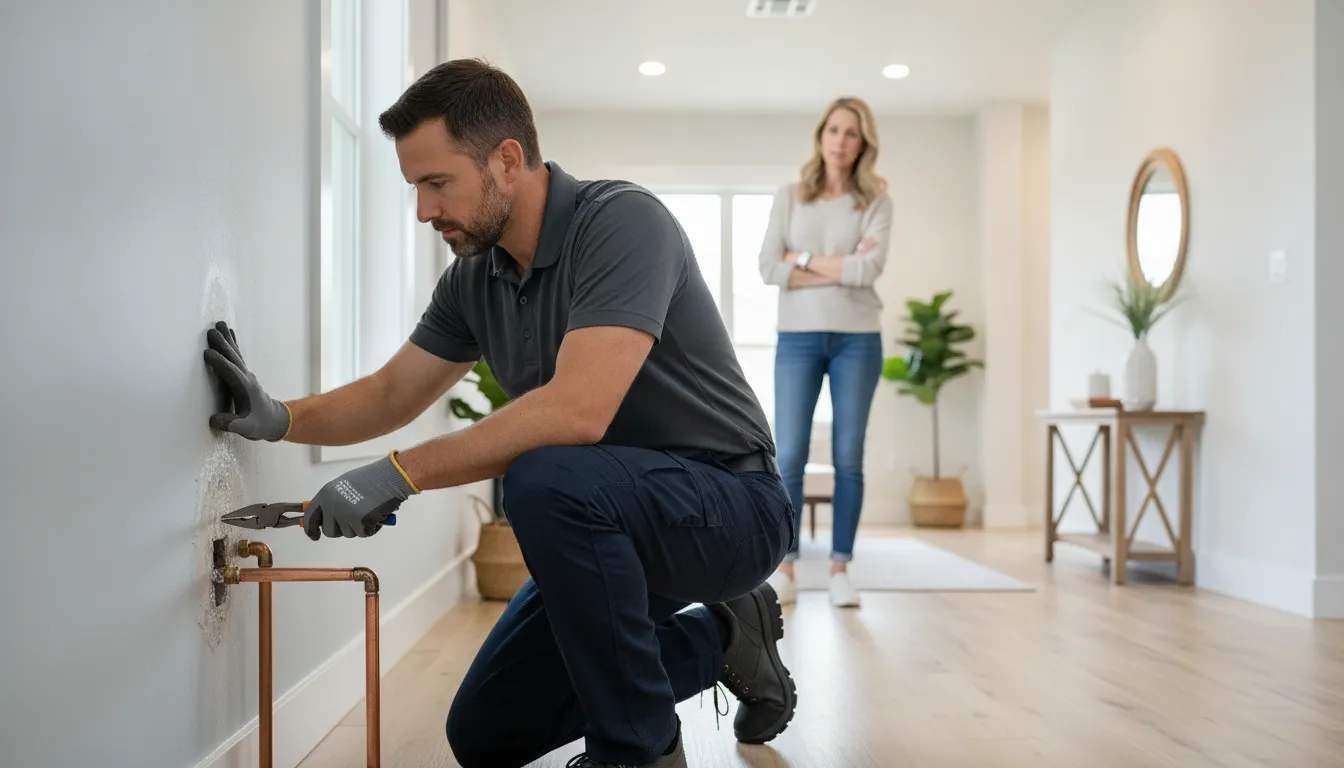
Do not wait for a visible flood if warning signs are getting worse. An active leak can damage the home and waste water, even when the source is hidden. If you cannot identify the source safely, arrange a professional plumbing inspection before the damage spreads.
What Should You Expect From Emergency Pipe Repair?
Emergency pipe repair usually begins with diagnosis, not an immediate decision to replace everything. The technician should identify where water is escaping, determine whether the line is still pressurized, and assess any damage to nearby walls, floors, cabinets, or equipment. If the leak is hidden, the visible water may not be the exact location of the failed section.
| What you notice | What a professional may assess | Useful question to ask |
|---|---|---|
| Water is still flowing | Source, shutoff, pressure, and immediate containment | What can safely remain in use? |
| Visible pipe or fitting failure | Localized repair versus replacement of a wider section | What caused the failure? |
| Water inside a wall, floor, or ceiling | Access needs, hidden damage, and drying or restoration concerns | What work is included in the estimate? |
Diagnosis and isolation come first
Once the problem is located, the damaged section may be isolated so the rest of the plumbing can remain usable when conditions allow. Ask which valve controls the affected line and whether shutting off the main supply is still necessary. If water has reached electrical equipment, outlets, or wiring, stay clear of the area and follow appropriate safety guidance rather than attempting access yourself.
Repair or replacement depends on the pipe and access
A localized failure may be suitable for a repair. Replacement can make more sense when the pipe is extensively corroded, difficult to access, repeatedly failing, or made from material that no longer provides a dependable long-term solution. The final recommendation can depend on the pipe material, its location, the amount of damage, and how much wall, ceiling, flooring, or landscaping access is required. Ask whether the proposed work addresses only the visible failure or a broader section that may also be compromised.
What to ask before approving the work
- What caused the failure, and how was the damaged area confirmed?
- What work is included in the estimate, including access, cleanup, and restoration?
- Is this a repair, a partial replacement, or a recommendation to replace more of the line?
- What materials will be used, and what limitations should I understand?
- What documentation should I keep for my insurer or property records?
Pricing depends on site conditions and the scope explained in the estimate. A useful estimate should describe the recommended work rather than rely on a generic emergency fee. Mend states that its services include a one-year parts-and-labor warranty. Confirm the current terms and exclusions for the specific repair before work begins.
When Should You Call Mend Services in Austin?
Call for professional help when water is still flowing, a leak keeps returning, or you cannot safely identify or control the source. A burst pipe, severe leak, sewage backup, or serious water damage can worsen quickly, especially when water reaches flooring, walls, cabinets, or electrical equipment. If the situation creates an immediate safety hazard, move people and pets away from the area and contact emergency services when appropriate.
First, if it is safe and accessible, turn off the main water supply. Do not enter standing water near outlets, appliances, or electrical panels, and do not attempt a repair that requires cutting, heating, or opening damaged systems. Once the area is reasonably safe, note where the water is coming from, what shutoffs you used, and which parts of the home were affected. Photos can help explain the situation during the initial handoff.
Mend serves Austin and nearby Greater Austin communities, including Buda, Kyle, Round Rock, Cedar Park, Pflugerville, Georgetown, and San Marcos. Availability can vary by location, so confirm coverage for your address when you contact the team. Mend offers around-the-clock emergency plumbing contact with on-call technicians. That means you can reach out at any time, but it does not promise a fixed arrival time.
When you call or schedule, share whether water is actively flowing, whether the main shutoff is closed, whether sewage is involved, and whether anyone faces a safety risk. The Mend’s emergency plumbing service page is the most direct next step for urgent situations. For a broader repair need, you can also review Mend plumbing services in Texas and confirm the appropriate path with the team.
Schedule emergency plumbing help with Mend Services online.
Frequently Asked Questions
What should I do first if a pipe bursts?
Protect people and stay clear of wet areas near electrical equipment. If the shutoff is accessible and it is safe to do so, turn off the main water valve. Then open a low faucet to drain the line, contain water without attempting a repair, document visible damage, and contact a licensed plumber.
Can a handyman fix a leaking or burst pipe?
A minor, accessible issue may appear simple, but an active leak can involve hidden damage, water pressure, corrosion, or a failed connection. A licensed plumbing professional can isolate the problem, determine whether repair or replacement is appropriate, and identify related risks before the damage spreads.
What affects the cost of emergency pipe repair?
There is no responsible universal price for this work. The total can depend on where the pipe is located, how easily it can be accessed, the materials involved, the extent of water damage, and whether the line can be repaired or needs replacement. Ask what the estimate includes before work begins.
How can I find urgent plumbing help in Austin?
Look for a plumbing company that clearly handles burst pipes and severe leaks, serves your area, and explains how its emergency availability works. Mend provides around-the-clock emergency plumbing contact for Austin and surrounding Central Texas communities, including Greater Austin locations, but availability at a specific address should be confirmed.
Is a leak still an emergency if it slows down?
It can be. A slow or hidden leak may continue damaging walls, floors, cabinets, or belongings even when little water is visible. If you cannot safely identify and stop the source, shut off the water if possible and arrange professional plumbing inspection and repair rather than assuming the problem has resolved.
Schedule Emergency Plumbing Help
When a burst pipe or active leak is putting your Austin home at risk, a professional assessment can help identify the source and determine the safest next step. Mend Services provides plumbing repair and water leak support for homeowners who need practical guidance during an urgent situation.
Schedule emergency plumbing help with Mend Services online


