

Electrical work rarely feels routine when it affects your lights, outlets, panel, or family’s safety. The right provider can help you separate an urgent hazard from a planned upgrade. A qualified team should explain the work in plain language and complete the job with appropriate care.
When you need an electrician in Dripping Springs TX, look for a licensed, insured. And bonded provider that can handle both diagnosis and installation, explains the scope before work begins, and stands behind the completed work. Mend Services serves Dripping Springs from its Greater Austin and Hill Country territory, with licensed master-professional supervision, background-checked full-time W-2 technicians, and 24/7/365 emergency electrical availability.
Schedule electrical service for your Dripping Springs home
This guide covers the electrical services homeowners commonly need, the warning signs that should end a DIY project, and the questions worth asking before you schedule. Start with the kinds of work a qualified electrical team can safely coordinate through Mend electrical services.
Electrical Services in Dripping Springs TX
Electrical work often starts with a small annoyance, such as a dead outlet or a light that flickers. But the right solution depends on what is happening behind the wall. A qualified electrician can diagnose the cause, explain the repair, and identify whether the home needs a targeted fix or a broader upgrade. That matters in Dripping Springs, where homeowners may be repairing an older property, finishing a remodel, adding high-demand equipment, or planning a more resilient home.
Mend Services serves Dripping Springs as part of its Greater Austin and Hill Country territory. It does not claim a local Dripping Springs office. Its electrical services cover residential needs ranging from troubleshooting and repairs to installations and modernization projects.
Repairs, troubleshooting, and electrical safety
Repair work may include investigating repeated breaker trips, nonworking circuits, loose or damaged outlets, faulty switches, flickering lights, or wiring concerns. The goal is not simply to reset a breaker or replace a visible device. A technician should trace the issue, check the condition of related components, and explain what needs attention. Mend uses circuit analyzers, panel diagnostic equipment, and other electrical testing tools to support that process.
Electrical safety work can also include inspections and corrections that help a homeowner understand the condition of the system. If you smell burning, see smoke or sparks, feel tingling from an appliance. Or notice heat or discoloration around an outlet, stop using the affected equipment and seek professional help. Do not open an electrical panel or attempt wiring repairs if you are not qualified.
Installation and home modernization
Homeowners may need electrical installation for a remodel, addition, appliance, generator, lighting plan, EV charger, or smart-home feature. Mend’s documented electrical scope includes panel upgrades, whole-house electrification, generator installation, EV charging, lighting, and smart-home automation. These projects should begin with an assessment of the home’s existing capacity and the intended equipment, rather than a one-size-fits-all installation.
For example, a panel evaluation can help determine whether the system is prepared for new loads. A lighting project can improve visibility, comfort, and control without treating every fixture as an isolated task. A generator or EV charger may require coordination with the home’s distribution system. Keeping these related needs with one electrical provider can make the scope easier to understand and reduce avoidable handoff gaps.
Emergency electrical service
Some problems cannot wait for a convenient appointment. Mend reports 24/7/365 emergency availability for its electrical service line, including urgent concerns such as smoke. Sparking, loss of power associated with a dangerous condition, or suspected electrical damage. If there is an active fire or immediate threat to life, leave the home and contact emergency services first. For a non-fire electrical emergency, keep people away from the affected area and explain the symptoms clearly when requesting help.
Whether you need a repair, a new installation, or a plan for modernizing your home. Choose a provider that can explain the work in plain language and document the recommended scope. Mend holds Texas Electrical Contractor License TECL #35517 and serves Dripping Springs from its Greater Austin and Hill Country service area.
When Should You Call an Electrician in Dripping Springs TX?
Call a qualified electrician when an electrical problem is recurring, produces heat or odor, causes a shock or tingling sensation, or shows visible damage. Small symptoms can point to an overloaded circuit, a loose connection, damaged wiring, or a failing device. Waiting for the symptom to become more obvious can increase the risk of fire, equipment damage, or electric shock.
The National Fire Protection Association recommends having electrical work done by a qualified electrician. Its warning signs include frequent blown fuses or tripped circuit breakers, tingling when touching an appliance. Discolored or warm outlets, a burning or rubbery smell, flickering or dimming lights, and sparks from an outlet. See the NFPA electrical safety guidance for the complete list and prevention recommendations.
Stop work when you see these warning signs
- Repeated trips or blown fuses: Do not keep resetting the breaker as a workaround. Unplug the affected device if you can do so safely, and arrange an evaluation.
- Heat, discoloration, odor, or sparks: Stop using the outlet, switch, appliance, or circuit. Do not touch a warm or damaged cover, and do not try to tighten or replace anything while it is energized.
- Shock or tingling: Step away from the appliance and avoid testing it again. A tingling sensation can indicate an unsafe fault that needs professional diagnosis.
- Flickering or dimming: Note whether the issue affects one fixture or several rooms, then stop using equipment connected to the affected circuit until it is checked.
Safe homeowner actions are limited to observation and removing yourself from danger. If a device is operating normally and you can reach its plug without touching a hot, wet, damaged, or sparking area, unplugging it may be reasonable. Otherwise, leave it alone. Never open an electrical panel, remove a dead-front cover, probe an outlet, splice wiring, or work inside a wall to investigate a fault. Turning off a breaker is not a substitute for professional diagnosis, and you should not enter an area with smoke, active arcing, fire, or exposed energized conductors.
Know when the situation is an emergency
For smoke, flames, active sparking, a strong burning odor, an electrical fire, or anyone receiving a serious shock. Move people and pets away if you can do so without crossing the hazard. Call 911 when there is fire, smoke, injury, or immediate danger. Do not use water on an electrical fire, and do not re-enter the area until emergency responders say it is safe. For urgent but non-fire electrical failures, use Mend’s electrical home emergency plan so you know what information to gather and what to do next. Mend reports 24/7/365 emergency availability for its electrical service line. For diagnostics, its technicians use panel diagnostic equipment and circuit analyzers to investigate the underlying issue rather than simply resetting a breaker.
Panel Services and Lighting Installation for Dripping Springs Homes
Panel work and lighting installation solve different problems, even though both affect how safely and comfortably your home uses electricity. A service panel distributes power to the home’s circuits and protects those circuits with breakers. Lighting work focuses on where illumination is needed, how fixtures are controlled, and whether the existing wiring can support the planned installation. Keeping those project types distinct makes it easier to describe the issue and choose the right evaluation.
A panel consultation may make sense when you are adding major electrical loads, planning whole-house electrification, dealing with recurring breaker problems, or updating an older system. The goal is not to replace equipment automatically. A qualified electrician should first assess the panel, service capacity, circuit condition, and the reason behind the requested change. Mend lists panel upgrades among its electrical offerings and serves Dripping Springs within its Hill Country territory. Its electrical team also uses panel diagnostic equipment and circuit analyzers when evaluating electrical conditions.
You can read more about the process in Mend’s electrical panel upgrade guidance. Ask whether the recommendation addresses a confirmed capacity or safety need, whether any related circuit work is required, and what will be documented before installation begins. Installation projects use upfront pricing before work starts, so the written scope should identify the work being proposed without relying on vague descriptions.
Lighting installation is a design and electrical project. It may include new fixtures, improved task lighting, exterior illumination, dimmer controls, or a plan for safer and more useful room-by-room coverage. The evaluation should account for fixture location, switching, access, existing wiring, and the home’s intended use. A lighting professional can also help separate a fixture problem from a broader circuit or panel issue instead of treating every flicker as a bulb replacement.
Some homeowners need both services during a renovation or modernization project. For example, a panel assessment may identify capacity or circuit questions before new lighting is added. That does not mean the panel and the lighting should be bundled without explanation. Request a project plan that identifies each phase, the equipment affected, and the testing or inspection steps that apply to the completed work. This gives you a clearer basis for comparing proposals and reduces the chance that an important electrical concern is hidden inside a general remodeling description.
| Project | What it can address | Questions to ask |
|---|---|---|
| Panel service or upgrade | Capacity concerns, aging equipment, recurring breaker trips, or support for planned electrical loads | What condition was found? Which circuits or loads are involved? What work is included in the written scope? |
| Lighting installation | New interior or exterior fixtures, task lighting, controls, and better illumination for specific areas | Where should fixtures and switches go? Can the existing wiring support the plan? How will access and finish work be handled? |
| Inspection or diagnostic visit | Unclear symptoms such as flickering, warm components, unexplained trips, or a fixture that does not operate correctly | What testing will be performed? Will the cause be separated from the symptom? Which repairs are urgent? |
For lighting-specific planning, see Mend’s professional lighting installation resource. Whether the project involves a panel or a fixture, do not open the panel or attempt wiring work if you are not qualified. Describe what you observed, keep the area accessible, and ask for a clear explanation of the diagnosis, recommended work, and documentation before approving the project.
What to Know Before EV Charger Installation Near Dripping Springs
Home charging can make an electric vehicle convenient. The right setup depends on your vehicle, driving habits, electrical service, and the location of the charger. A thoughtful installation starts with the home rather than the charger box. An electrician in Dripping Springs TX can evaluate the complete path from the electrical panel to the parking area and help you plan a safe, practical installation.
- Choose the charging level that fits your routine. The U.S. Department of Energy Alternative Fuels Data Center says most EV drivers charge overnight at home with AC Level 1 or AC Level 2 equipment. Level 1 generally uses a standard household outlet and may be suitable when you drive modest distances and have plenty of overnight charging time. Level 2 uses dedicated equipment and can add energy more quickly, but it also requires a properly designed circuit and installation. Read the AFDC guide to home EV charging for a clear overview of the two options.
- Have the home’s electrical load assessed. A charger adds a substantial, recurring electrical load. The installer should review the service rating, panel capacity, existing circuits, breaker space, wiring condition, and major equipment that may operate at the same time. This assessment helps determine whether the planned circuit is appropriate or whether panel work or another electrical upgrade should be considered. Do not assume an unused breaker slot means the system has enough capacity.
- Plan the charger location and cable route. Place the equipment where the cable can reach the vehicle without crossing a walkway, creating a trip hazard, or requiring an extension cord. The route may run through a garage, exterior wall, or another area, so the installer should account for protection from weather, physical damage, and moisture. Think about where you usually park now, as well as whether your vehicle arrangement could change later.
- Confirm wiring and equipment details before work begins. The charger model, circuit requirements, wire route, disconnect needs, and mounting surface should be part of the written scope. Use equipment compatible with your vehicle and follow the manufacturer’s installation requirements. A professional can also explain controls, charging schedules, and any limitations that matter for your household.
- Discuss permits and inspection with the installer. Permit and inspection requirements can depend on the project and the authority having jurisdiction. This guide does not assume a specific Dripping Springs rule. Ask who will determine the applicable requirements, prepare any needed documentation, coordinate inspection, and correct issues if an inspector requests changes. For background, review Mend’s Texas EV charger permit guide.
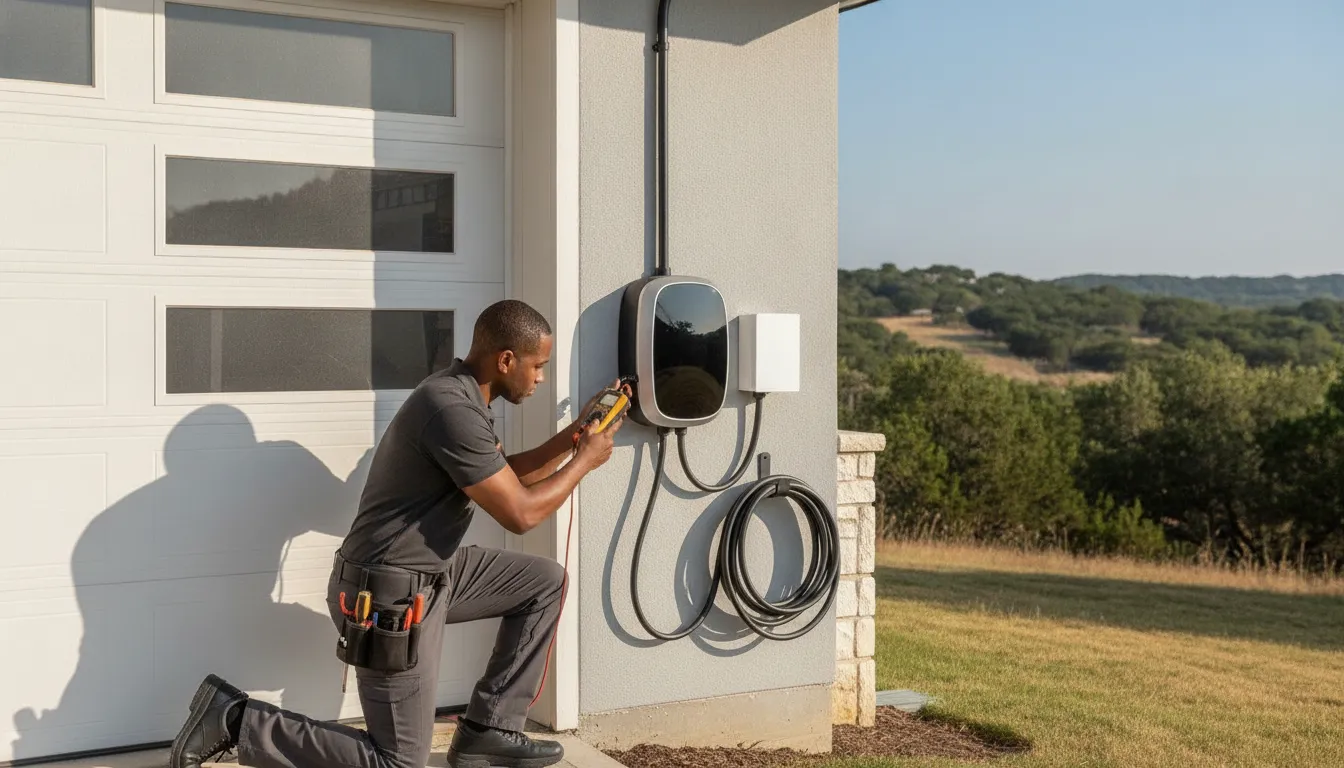
Mend’s electrical team includes EV charging among its installation services. Before scheduling, gather the charger model, vehicle information, approximate panel location, and parking preferences. That gives the electrician useful context without asking you to open the panel or troubleshoot energized equipment. For more planning guidance, see the EV charger installation requirements.
How to Choose a Local Electrical Service Provider
Choosing an electrician in Dripping Springs TX is about more than finding an available appointment. Electrical work affects fire safety, equipment performance, and the long-term condition of your home. Take a few minutes to compare qualifications, communication, and the company’s approach before authorizing work.
Verify the license and insurance
Start by asking for the company’s electrical contractor license information and verifying that it applies to the work you need. Mend Services holds Texas Electrical Contractor License TECL #35517. If you want to understand what that credential means and why it matters, review this guide to verify a Texas electrician license.
Qualification is broader than a license number alone. The Electrical Safety Foundation International says a qualified electrician is trained and up to date on the state’s electrical code. And is licensed, insured, and bonded in the state. You can review those qualification points directly in ESFI’s qualified electrician guidance. Ask whether the provider carries current insurance and bonding, and request clear answers rather than accepting vague assurances.
Ask who will perform and supervise the work
Find out whether the company relies on its own trained employees or regularly sends subcontractors to your home. An employee-based model can make accountability and communication clearer, especially when a project involves multiple stages or trades. Also ask who supervises the electrical work and how the technician’s qualifications match the job.
Mend’s service model uses licensed master professionals, background-checked technicians, and full-time W-2 employees rather than subcontractors. That does not mean every technician is a master electrician. It means the work is supported by licensed master-professional supervision and technicians with appropriate trade qualifications.
Request a written scope before work begins
A trustworthy provider should explain what the diagnosis found, what needs to be done, which materials or equipment are included, and what assumptions could change the scope. For an installation or upgrade, ask for the proposed work in writing before authorizing it. Confirm whether permits, inspections, cleanup, and follow-up testing are part of the plan when applicable to your project. Avoid choosing solely on a low initial number if the scope is unclear. An incomplete comparison can create surprises later.
Review the warranty and follow-up process
Ask what the warranty covers, how long it lasts, and how you request help if a problem returns. Mend states that its services include a one-year covered parts and labor warranty, with written warranty documentation provided. You should receive the terms in writing and keep them with your service records.
Finally, choose a provider that can support the full project, from safe diagnosis through completion. Mend serves Dripping Springs as part of its Greater Austin and Hill Country service territory. A clear scope, verifiable credentials, qualified supervision, and documented warranty give you a stronger basis for choosing electrical help than a quick quote or a polished advertisement.
How to Prepare for Electrical Service
A little preparation helps an electrical visit stay focused and gives the technician better information before testing begins. Start by observing the problem without taking anything apart. Note what happened, when it started, which rooms or outlets are affected, and whether the issue changes when a particular appliance is running. If a breaker trips, record which breaker it is and whether it trips once or repeatedly. These details can help the technician trace a pattern. They are more useful than a general description such as “the power is acting strange.”
Collect useful information safely
Write down the names and approximate ages of appliances connected to the affected circuit. Include details about recent remodeling, new equipment, storm activity, outages, or other changes in the home. If you know that a light, outlet, panel, generator, or charger is involved, identify its location. Do not open the electrical panel, remove outlet covers, handle exposed wiring, or attempt to test a live circuit. A safe observation from the floor or doorway is more useful than a risky guess.
Photos can also help, but take them only from a safe distance and only if you can do so without touching equipment or moving around a hazardous area. A clear photo of a discolored outlet, visible damage, or the outside of a panel may give the service team context. Never photograph smoke, active sparking, exposed conductors, or another dangerous condition if getting closer would put you at risk.
Make access straightforward
Clear a safe path to the panel, affected outlets, attic or crawl-space access, exterior equipment, and any appliance the technician may need to inspect. Move stored items away from the work area, secure pets, and make sure an adult who can answer questions is available. If the home has a gate, alarm, or parking instruction, share that information when scheduling. For larger projects, gather any equipment manuals, prior invoices, inspection notes, or electrical drawings you have. You do not need a complete technical history, but even a small amount of documentation can prevent avoidable delays.
It is also helpful to identify your preferred outcome. Are you trying to restore one outlet, understand repeated breaker trips, prepare for an installation, improve lighting, or plan for a future electrical load? A visit may uncover more than one possible solution. Knowing your priority helps the technician explain which work is urgent, which work is recommended, and which improvements can wait.
Ask about scope before work begins
Ask what the diagnostic process will include, what the recommended repair is intended to correct, and whether the proposal covers labor, materials, testing, cleanup, and any follow-up inspection. For an installation, ask what assumptions the quote depends on and whether site conditions could change the scope. Mend reports using upfront pricing for installation projects before work begins, so you can review the proposed work before authorizing it. Ask for the warranty terms in writing as well. Mend states that its services include a one-year covered parts and labor warranty, with written warranty documentation.
For homeowners looking for an electrician in Dripping Springs TX, Mend serves Dripping Springs from its Greater Austin and Hill Country service territory. When the issue is urgent, communicate that clearly while scheduling. If you smell burning, see smoke or sparks, feel a shock or tingling sensation, or notice an active electrical hazard. Keep people away, leave the area if needed, and contact emergency services when there is fire or immediate danger. Do not keep resetting a breaker or attempt a repair. Mend reports 24/7/365 emergency electrical availability for urgent service needs.
Frequently Asked Questions
What is the difference between a certified electrician and a licensed electrician?
Certification usually refers to training or an industry credential, while a license authorizes electrical work under applicable state requirements. When comparing providers, ask which license covers the work, who supervises the project, and whether the company is insured. Mend Services holds Texas Electrical Contractor License TECL #35517, which you can verify before scheduling service.
Can a handyman do electrical work in Texas?
Some limited tasks may be allowed, but the answer depends on the work, the person performing it, and applicable requirements. A homeowner should not assume that a general handyman is qualified for panel work, new circuits, troubleshooting, or other higher-risk jobs. Ask for the provider’s electrical credentials and use a qualified electrician for work involving energized systems, exposed wiring, burning odors, or repeated breaker trips. NFPA recommends having electrical work done by a qualified electrician: NFPA electrical safety guidance.
What does an electrician charge per hour in Texas?
Rates vary by the type of work, diagnostic time, materials, urgency, and project complexity. Rather than relying on a general hourly figure, ask what the service includes, whether diagnostic charges apply, and when you will receive the written scope and estimate. Mend does not publish a universal hourly rate, so the appropriate next step is to request project-specific details before approving work.
When should I call an electrician instead of troubleshooting myself?
Call when breakers trip repeatedly, outlets feel warm or look discolored, lights flicker, an outlet sparks, or an appliance produces a burning or rubbery smell. Stop using the affected equipment and do not open an electrical panel or handle exposed wiring. If there is smoke, fire, or an immediate danger, leave the area and contact emergency services first.
What should I ask before scheduling electrical service?
Ask who will perform and supervise the work, whether the company is licensed and insured. What the written scope covers, how permitting or inspection questions will be handled, and what warranty documentation you will receive. You can also ask whether the provider uses employees or subcontractors and what information to prepare. Such as photos taken from a safe distance and the symptoms you observed.
Schedule Electrical Service in Dripping Springs TX
Electrical concerns are easier to manage when you have a clear scope of work, a qualified professional, and a plan for what happens next. Mend Services helps homeowners in Dripping Springs and the surrounding Hill Country with electrical repairs, upgrades, installations, and emergency service. Share what you have noticed, what equipment is involved, and whether the issue is urgent so the team can guide the next step.
For planned work, ask about the written scope, upfront pricing, and warranty documentation before approving installation. If you see smoke, active sparking, or smell burning, move away from the hazard and seek immediate professional help rather than investigating the wiring yourself.
Schedule electrical service for your Dripping Springs home


