

An electric tankless water heater heats water as it flows through the unit instead of storing a tank of hot water. For an Austin homeowner, the central question is not simply whether a tankless model sounds convenient. It is whether the home’s electrical system and hot-water needs are a good match for the specific model. Before choosing an electric tankless water heater Austin homeowners rely on, compare household demand, electrical capacity, installation conditions, and the alternatives.
Schedule a conversation to review your home’s water-heating options and next steps.
How does an electric tankless water heater work?
A conventional storage heater keeps a reserve of hot water in an insulated tank. An electric tankless unit has no large storage tank. When a hot-water tap or appliance calls for water, flow passes through the heater and electric elements heat it on demand. When the demand stops, the unit stops heating water.
That difference changes the homeowner’s experience. A tankless heater does not run out of stored hot water in the same way a tank can, but it still has limits. A unit can heat only so much water at a time, and the temperature rise it can deliver depends on conditions such as incoming water temperature and the amount of water flowing through it. If several fixtures draw hot water at once, the heater’s capacity matters.
Electric models also have a different planning challenge: their electrical demand. The U.S. Department of Energy’s Green Home Technology Center notes that electric tankless heaters can have fairly large power requirements. That is why a product’s fit should be checked against the home’s electrical service and the manufacturer’s requirements, not guessed from the unit’s size. Read the Green Home Technology Center’s overview of water heating for additional context.
Is an electric tankless water heater a good fit for your Austin home?
It may be worth considering if you want to replace an existing water heater, have a suitable place for a compact unit, and can meet the electrical and hot-water demands of the model. The right answer is specific to the home. Two houses with the same number of bathrooms may have different wiring, equipment locations, incoming water conditions, and household routines.
Start with how hot water is actually used. Note whether showers overlap in the morning, whether a washing machine or dishwasher commonly runs during those showers, and whether more than one bathroom is used at once. A household with staggered use may have a different capacity need from one where several hot-water fixtures run together. Think about busy days rather than the quietest hour in the house.
Then consider the existing equipment and the space around it. For this example, the current heater is in the garage. Is that garage location accessible for future inspection and maintenance? Are there electrical components nearby that may affect how a new unit can be placed? The answers help a professional assess what work and preparation may be needed.
A tankless unit’s smaller footprint can be appealing, but the unit itself is only one part of the project. The installation has to comply with the manufacturer’s instructions and applicable local requirements. Depending on the home and chosen model, the work may involve electrical changes, plumbing adjustments, and preparation of the mounting location. An evaluation is the way to find out which items apply; they should not be assumed from a product description.
What should you check before choosing an electric model?
Use these questions to organize a useful conversation before settling on equipment. You do not need to diagnose the electrical or plumbing systems yourself. A few observations and clear questions can help the evaluation focus on your home.
- What is the home’s current electrical capacity? Ask whether the existing electrical service and panel can support the unit under consideration. A professional needs to assess the system and the model’s requirements; appearance alone does not show whether there is capacity.
- What hot-water flow do you need at busy times? List the fixtures and appliances likely to run at once. Ask how the selected unit’s capacity relates to that pattern and to the incoming water temperature.
- Does the planned location work? Confirm access, mounting needs, connections, and the manufacturer’s required clearances or conditions. Do not assume a tankless unit can go anywhere simply because it is compact.
- What changes are included in the proposed scope? Ask which electrical and plumbing work is needed, what is not included, and whether any existing conditions could affect the plan.
- How will the system be checked after the work? Ask how operation will be verified, what the homeowner should know about normal use, and what maintenance guidance applies to the selected equipment.
For broader context on the home’s wiring or panel, see Mend’s electrical services information. For the water connections and other plumbing needs, review the company’s plumbing services. These pages can help you identify the right trade conversation, but the exact scope still depends on an assessment of the property and equipment.
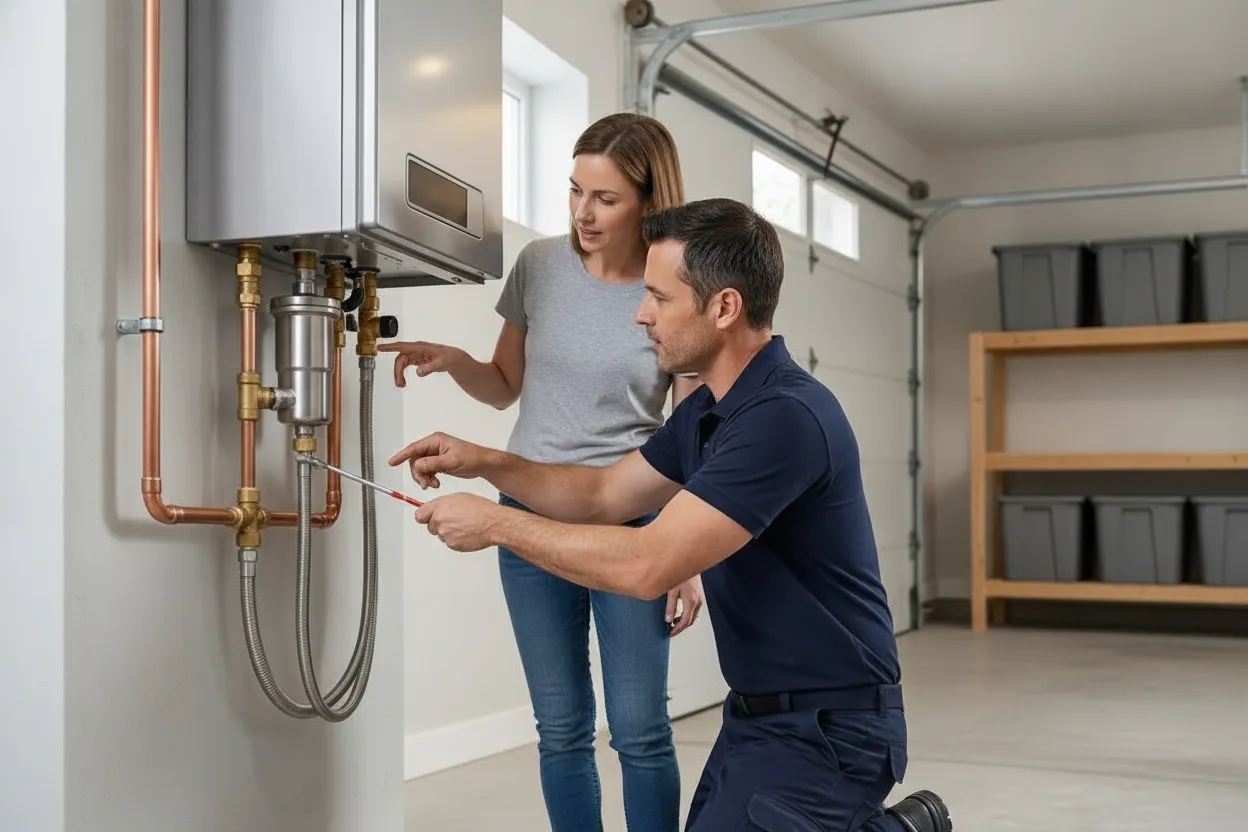
A practical note for a garage installation: write down the model number of your current heater, if it is easy to see, and take a photo of its rating label. Do not remove an access panel or touch wiring to find information. If the label is not visible without taking anything apart, leave it for the technician.
How can you map your household’s peak hot-water use?
A short demand worksheet can make the equipment conversation more concrete. You are not trying to calculate the heater size yourself. You are showing the evaluator when and where the household needs hot water, so the proposed model can be compared with a realistic pattern instead of a guess.
- Choose a typical busy period. Think about a weekday morning, an evening when everyone is home, or another time when hot-water use tends to overlap. Write down the fixtures and appliances that commonly run together. For example, you might note that one person showers while a sink is used and the dishwasher is started shortly afterward.
- Separate simultaneous use from back-to-back use. A shower followed by laundry is different from several draws happening at once. Note both patterns. If a hot-water problem occurs only when two fixtures run together, record which ones and what you notice.
- Describe the outcome you want. Is the goal to serve the same routine, accommodate a planned change, or make room for a future bathroom? The answer may affect how you compare capacities. Avoid choosing a larger unit based only on a hypothetical use pattern that the household does not expect to have.
- Bring the information to the equipment review. Ask how the model’s flow and temperature-rise specifications relate to the home’s likely peak demand. Ask what happens if more fixtures are used at once than the unit can support. The explanation should connect the model’s limits to the way your household actually uses hot water.
Incoming water temperature matters as well as flow. The unit must raise the water temperature to the desired level while supplying the demand. A model that seems adequate on a product page may perform differently under the home’s actual conditions. Have the professional explain which assumptions were used, including the fixtures considered and the conditions that may affect performance.
This worksheet also helps distinguish a capacity concern from a separate equipment problem. If hot water has recently become inconsistent, describe when it happens, how long it lasts, and whether it affects the whole home or one tap. Do not try to open or adjust the equipment as part of gathering information.
How do the main water-heater options compare?
There is no single best water heater for every home. Use the table as a starting point for discussion, not as a substitute for matching equipment to the house. Product capabilities and project requirements vary by model and site conditions.
| Option | How it supplies hot water | What to evaluate | Good questions to ask |
|---|---|---|---|
| Electric storage tank | Heats and stores a reserve of water in a tank. | Tank condition and size, available space, household demand, and the existing electrical setup. | Is the current tank near the end of its useful life? Would a replacement fit the space and the household’s usage? |
| Electric tankless | Heats water as it flows through the unit. | Electrical capacity, the model’s flow and temperature-rise capabilities, simultaneous use, and installation location. | Can the home support the proposed model, and will it meet demand at the times we use the most hot water? |
| Gas tankless | Heats water on demand using gas. | Whether the home has suitable gas service, venting and location requirements, and the model’s capacity. | What fuel, venting, and other site requirements apply to this model? |
When comparing the options, keep the same household routine in mind for each one. If one proposal assumes that showers and laundry overlap while another assumes they do not, their capacity recommendations are not directly comparable. Ask each evaluator to explain the conditions behind the recommendation and identify what could change the plan after inspection.
A smaller footprint can also change how a room feels or how equipment is accessed, but it is not the only space consideration. The current tank may occupy floor space, while a replacement unit may need a suitable mounting location and room for connections and maintenance access. Look at the whole installation area rather than comparing the outside dimensions of two products alone.
For a fair comparison, keep a simple record with the proposed model, the electrical and plumbing work listed, the stated capacity assumptions, and any exclusions. This makes it easier to spot whether one option solves a different problem or simply has a different description. If a detail is unclear, ask for the explanation in plain language before deciding.
Homeowners can review Mend’s plumbing installation information for context about plumbing work. If you are weighing whether to retain existing equipment or plan a replacement, discuss the condition and symptoms with a professional rather than assuming those choices are interchangeable.
What can affect the project and estimate?
The model price is only one part of the overall decision. The work needed to make a particular heater appropriate for a particular home can affect the project scope. A clear estimate should explain the selected equipment, planned work, and any assumptions or exclusions so that you can compare options accurately.
Ask whether the proposal covers the electrical work required for the chosen unit, plumbing connections, removal or handling of existing equipment, and any preparation tied to the installation location. Ask what would happen if inspection reveals that the home needs additional work. The answer should distinguish confirmed work from a possibility that depends on site conditions.
It is also reasonable to compare the proposed tankless system with a replacement storage heater. Consider more than the space the equipment occupies. Discuss how each option fits the family’s daily hot-water pattern, the home’s electrical setup, and the expected work. If a project is planned rather than urgent, Mend’s page on home service financing provides information to review; confirm current terms and availability directly.
For broader information on plumbing work, see Mend’s plumbing services page. You can also review home upgrade tax-credit information as general background, then check current program rules with the appropriate official source before making a financial decision. Eligibility and program details can change.
What should you expect during a home evaluation?
A useful evaluation starts with the existing equipment and your goals. Be ready to explain what prompted the research: an aging heater, inconsistent hot water, a space concern, or a planned home upgrade. Describe when the hot water runs short or whether the issue occurs only when multiple fixtures are in use. If the current heater is not causing a problem, say that too; it helps distinguish planning from an urgent repair.
The technician can review the heater’s location, plumbing connections, and relevant electrical conditions, then discuss which options appear workable. The assessment should clarify what the proposed unit can do, what changes are needed, and what remains uncertain until further inspection. If there are multiple workable choices, ask for the differences in scope and tradeoffs rather than choosing by product label alone.
Before approving work, make sure the proposed scope answers these practical points:
- Which model and fuel type are proposed, and why?
- How does the model address the home’s expected simultaneous hot-water use?
- What electrical and plumbing work is included?
- What assumptions, exclusions, or possible additional work should be understood?
- What operation and maintenance instructions will be provided after the work?
Mend lists both plumbing installation information and electrical information for homeowners reviewing work across these systems. The pages describe broad areas of work; an evaluation determines what your home actually needs. If you are in Greater Austin, check the service area information before reaching out.
What should you do if your current heater is acting up?
A heater that suddenly stops producing hot water, leaks, or behaves differently may need attention before you decide whether tankless equipment is right for a future replacement. Note what changed, when it started, and whether the issue affects every fixture or only one. Do not open the heater or handle electrical parts to investigate.
If there is active water leaking, keep clear of wet electrical equipment. If you can reach a nearby water shutoff safely without stepping into water or touching electrical equipment, shutting off the water may limit further leakage. If you cannot do so safely, leave it alone and request help. For other warning signs, stop using equipment that appears damaged or unsafe and get professional guidance rather than attempting a repair.
For a concern with plumbing in the home, Mend’s plumbing information is a place to start. A prompt assessment can help separate a repair concern from a decision about a different type of heater.
Request a home evaluation to compare water-heater choices for your household.
Frequently Asked Questions
Will an electric tankless heater provide unlimited hot water?
No heater can exceed its operating capacity. A tankless unit heats water as it flows, but how much it can heat at once depends on its specifications and conditions such as incoming water temperature and flow rate. Ask how the proposed model matches your home’s peak demand.
Does every Austin home have enough electrical capacity for one?
Do not assume that it does. Electric tankless models can have substantial power requirements, and capacity depends on the home’s electrical system and the model selected. Have the setup assessed before choosing equipment or assuming that an existing panel can support it.
Is electric tankless always a better choice than a tank heater?
No. The right choice depends on household demand, electrical capacity, available space, equipment requirements, and project scope. Compare a suitable tankless option with a suitable storage option for your home rather than relying on a general rule.
Can I choose a unit based only on the number of people in my household?
Household size can be a useful starting point, but it does not describe when hot water is used or how many fixtures run at once. Share your busiest routines and ask how the model’s capacity relates to those demands.
What should I have ready when I ask for an evaluation?
Share the current heater’s visible model information if available, its approximate age if known, what prompted the project, and the times hot water is used most heavily. Photos of the equipment and its location can help, but do not remove panels or touch wiring to take them.
Get a clear next step for your home
An electric tankless water heater may be a good fit when the selected model matches both the home’s electrical capacity and its real hot-water demand. For Austin homeowners, the best next step is a site-specific review of the existing equipment, installation conditions, and alternatives before settling on a system. A clear comparison helps you choose an option that suits the way your household uses hot water.


