

If your circuit breaker keeps tripping, it is shutting off power because the circuit may be overloaded or have an electrical fault. A one-time trip after plugging in several high-demand devices may have a simple explanation. Repeated trips, burning smells, heat, buzzing, or visible damage are reasons to stop using the circuit and get professional help. Do not keep resetting a breaker to force power back on.
Schedule Now with Mend Services if your circuit breaker keeps tripping
What does it mean when a circuit breaker trips?
A circuit breaker is a protective switch in your electrical panel. It is designed to shut off power to a circuit when it detects conditions such as excessive current. That interruption can help limit overheating in wiring and equipment. A trip is not just an inconvenience to bypass; it is information about a problem that needs attention.
Start by noticing what changed before the power went out. Did a heater, microwave, hair dryer, or other device turn on? Did the breaker trip when no one was using that room? Is the same breaker affected each time, or are several circuits involved? These observations can help an electrician narrow down the issue, but they do not make it safe to open the panel or investigate wiring yourself.
A breaker that trips once may have responded to a temporary overload. A breaker that trips repeatedly, trips immediately after being reset, or will not stay on deserves more caution. The Town of Mansfield’s electrical safety guidance identifies frequently blown fuses or a breaker that keeps tripping as an important warning sign.
When your circuit breaker keeps tripping: common causes
Several different issues can produce the same symptom. The cause might be how much equipment is running, a problem inside an appliance, or a fault in the circuit itself. A homeowner can safely observe patterns and unplug accessible devices, but diagnosing wiring or testing electrical components should be left to a licensed electrician.
An overloaded circuit
An overload happens when devices on one circuit collectively demand more current than the circuit is designed to carry. For example, a portable space heater and a hair dryer may draw substantial power. If other equipment is operating on the same circuit, the total demand can push it beyond its limit and the breaker may trip.
Overloads often have a recognizable pattern: the breaker trips when particular appliances run at the same time, then stays on after some load is removed. This pattern is useful information, not proof that the circuit is safe for continued use. Do not solve a recurring overload by using an extension cord to move a high-demand appliance to another room. That may create a different hazard, and outlets in nearby rooms can share the same circuit.
As a safe observation, turn off and unplug ordinary plug-in devices that are easy to reach, if there are no signs of heat, smoke, sparking, or damage. Avoid touching equipment that is hot, wet, damaged, or making unusual noises. If the breaker trips again under normal use, stop and call an electrician. A professional can assess the circuit and discuss appropriate options for the home’s electrical needs.
A short circuit
A short circuit occurs when electricity takes an unintended path, often because conductors contact where they should not. Damaged insulation, a pinched cord, a failed device, or a wiring problem can be involved. A short may cause a breaker to trip quickly, sometimes as soon as a device is switched on or plugged in.
Look only for obvious, accessible clues, such as a visibly frayed appliance cord or a plug that appears scorched. Do not remove outlet covers, open an appliance, pull a damaged cord from a hot or sparking outlet, or try to trace wiring inside a wall. If you see damage, smell burning, hear crackling, or notice smoke, keep away and seek urgent help. If there is active smoke or fire, leave the area and call emergency services.
A ground fault
A ground fault is an unintended path for current to reach ground. It can occur when electricity contacts a grounded surface or another path it should not take. Moisture or damaged equipment can contribute. Some circuits have protective devices designed to respond to certain fault conditions, including ground-fault circuit interrupters (GFCIs). A device may trip at an outlet or at the panel, depending on how the circuit is configured.
Do not assume that a GFCI or breaker that trips near a sink, laundry area, garage, or outdoors is defective. Do not bypass protection, replace a device with a different type, or repeatedly reset it without understanding why it tripped. If everything is dry and there are no warning signs, you may note which outlet or equipment was in use and stop using the affected item. If the protection trips again or you cannot identify a safe explanation, have an electrician investigate.
A faulty appliance or damaged cord
An appliance can develop an internal electrical problem even when its exterior looks normal. If a breaker trips only when one particular device runs, stop using that device. Unplug it only if the plug and outlet are cool, dry, intact, and safe to reach. Do not keep testing it on different outlets to see whether it will work elsewhere.
Pay attention to patterns: whether the trip happens at startup, during operation, or when the appliance heats or cycles. Tell the electrician what device was involved and whether anything else was running. An appliance repair professional may also be appropriate if the circuit itself is otherwise functioning, but an electrician should check recurring trips or any concern about the home’s wiring.
A worn breaker, loose connection, or wiring issue
Sometimes the source is not an overloaded circuit or a single appliance. A breaker or connection may be worn or damaged, or a problem may exist in wiring, an outlet, or a switch. These possibilities cannot be reliably ruled in or out by looking at the panel door. A breaker that feels loose, behaves inconsistently, or trips without an obvious change in use needs a professional assessment.
Do not remove the panel cover, tighten connections, replace a breaker, or use a tool to test electrical components. Parts of a panel can remain dangerous even when a breaker is off. The right next step is to describe the symptoms and let a qualified electrician perform the necessary checks.
What warning signs mean you should stop troubleshooting when a circuit breaker keeps tripping?
Some symptoms call for more than routine observation. Stop using the affected circuit and do not touch a suspect outlet, cord, appliance, or panel if you notice any of the following:
- A burning or hot-plastic smell, smoke, sparks, or visible scorching.
- An outlet, switch, cord, plug, or panel area that feels unusually warm or hot.
- Crackling, buzzing, or sizzling sounds from an outlet, switch, appliance, or panel.
- A breaker that trips immediately, repeatedly, or will not remain on.
- Visible damage, water near electrical equipment, or a shock or tingling sensation from an appliance.
- Several breakers tripping, unexplained power loss in multiple areas, or lights repeatedly dimming when equipment starts.
Do not put yourself at risk to turn off power or investigate. Keep people away from the affected area and contact an electrician. If you see flames or active smoke, leave the home and call emergency services first. A persistent problem affecting several areas may involve more than one circuit, so share the full pattern rather than focusing only on the breaker that moved.
What can you safely check before calling?
If there are no warning signs and you feel comfortable doing so, limit your checks to observation and ordinary plug-in devices. Keep your hands dry, stay on a dry floor, and do not remove covers or touch exposed wiring. If you are unsure, skip the checks and call for help.
- Note which area lost power. Identify the rooms, lights, or outlets affected. Avoid assuming one room equals one circuit.
- Record what was running. Write down which appliances were in use and whether the trip followed a particular device switching on.
- Unplug only safe-to-reach devices. If there is no heat, moisture, damage, or unusual sound, unplug ordinary appliances by holding the plug, not yanking the cord. Do not touch a questionable plug or outlet.
- Look for an obvious change. Note a recent appliance addition, a damaged cord you can see without handling it, or a trip that occurs regardless of what is plugged in.
- Stop if it happens again. Repeated trips are not a reason to keep experimenting. Do not reset the breaker over and over.
Only consider a single reset if the breaker is clearly identified, there are no warning signs, and you can operate it safely without removing the panel cover. Follow the panel or device manufacturer’s instructions. Do not force a switch or hold it in place. If it trips again, will not reset, or you have any doubt, leave it alone and contact an electrician. This is not a substitute for professional diagnosis.
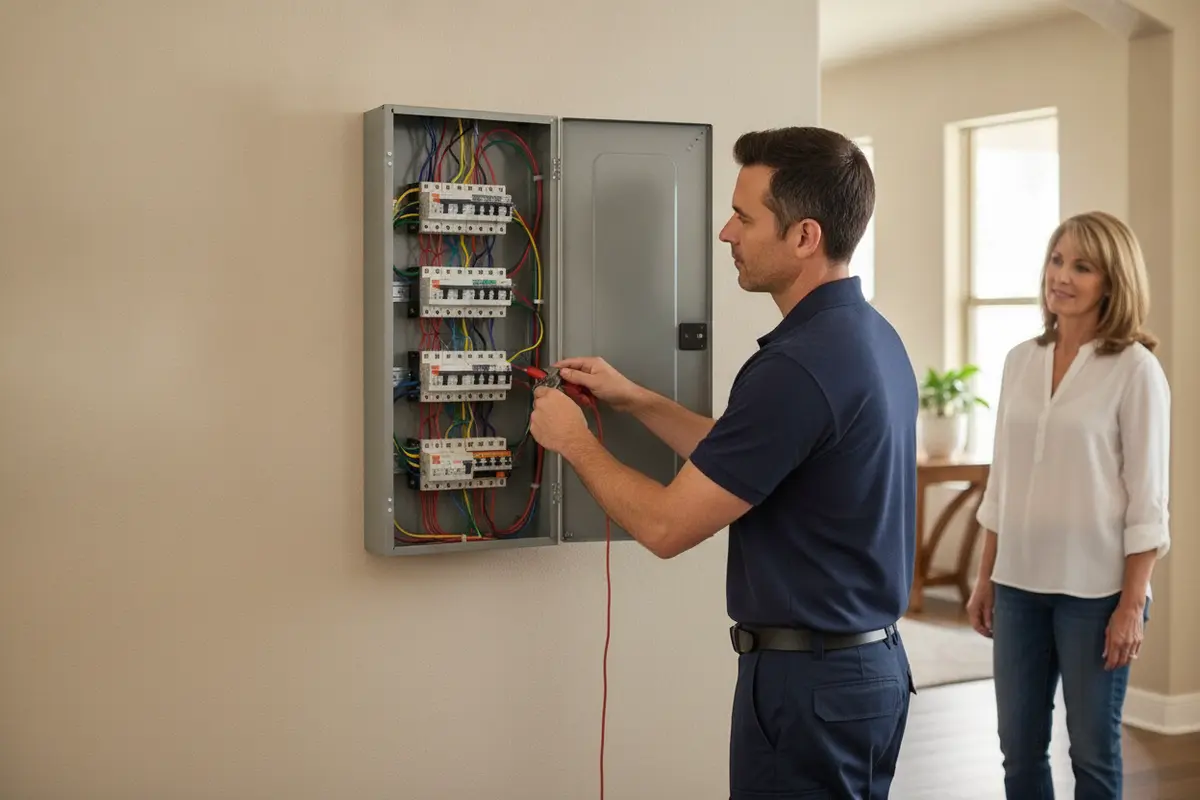
The image is a general example; panel designs and circuit layouts vary from home to home.
What should you avoid doing?
It is tempting to get the power back quickly, especially when a refrigerator, internet equipment, or an important room is affected. But some quick fixes can hide a dangerous condition or put you in contact with energized parts. Do not:
- Keep resetting a breaker that trips repeatedly or immediately.
- Hold a breaker in the on position, tape it, or bypass it.
- Replace it with a breaker of a different rating or type.
- Remove the electrical panel cover or touch wiring and terminals.
- Open an outlet, switch, junction box, or appliance to look for a loose wire.
- Use a damaged cord, ignore a hot outlet, or test a suspect appliance repeatedly.
- Use an extension cord or power strip as a permanent fix for an overloaded circuit.
These tasks require the right training and equipment. Even if you have turned off a breaker, do not assume that every part of a panel or nearby wiring is safe to touch.
Schedule Now for professional help with a circuit breaker that keeps tripping
How do the possible causes compare?
This table can help you organize what you have observed. Symptoms overlap, so it is not a diagnosis and should not be used to decide that a repeated trip is harmless.
| Possible cause | Pattern you might notice | Safe response |
|---|---|---|
| Overloaded circuit. | Trip follows simultaneous use of several devices. | Stop using the combination; note what was running and call if trips recur. |
| Appliance or cord problem. | Trip is associated with one device or its startup. | Stop using the device; do not keep testing it on other outlets. |
| Short circuit. | Fast trip, sometimes with a damaged cord, smell, or visible scorching. | Keep away from damage and arrange professional help; emergency services for fire or smoke. |
| Ground fault or moisture. | Protective device trips around wet or damp locations or equipment. | Do not touch wet electrical equipment or bypass protection; call an electrician. |
| Breaker, connection, or wiring issue. | Trip seems unrelated to appliance use or happens repeatedly. | Do not open the panel; have a licensed electrician inspect it. |
What happens when an electrician checks a tripping breaker?
A professional visit begins with your observations: which circuit or area is affected, how often the breaker trips, and what was running at the time. The electrician can then inspect the relevant equipment and circuit using appropriate procedures. The exact steps depend on the symptoms and the home; a single explanation does not fit every trip.
Before the visit, make a short list of what you noticed. Include when the problem started, whether it happens at a particular time or during certain appliance use, whether the breaker resets, and whether you noticed heat, noise, odor, moisture, or visible damage. If a specific appliance seems related, identify it and leave it off. Do not recreate a dangerous condition to demonstrate the issue.
Mend Services provides electrical services for customers in the Greater Austin area. If you need help identifying a fault, review the company’s electrical repair in Austin, TX information. You can also review information about whole-home surge protection and lighting work when considering other electrical needs. Those services are not a workaround for a breaker that keeps tripping; the underlying issue should be assessed first.
If you are comparing home electrical options, Mend’s generator installation information and overview of plumbing, electrical, and HVAC care provide more context about the company’s work. To see whether your community is within the service area, visit the Greater Austin service-area page.
How can you prepare for the appointment?
A few clear details can make it easier to explain the problem and discuss next steps. You do not need to diagnose the circuit yourself. If safe, note:
- The breaker or general area involved, without opening the panel.
- What was operating when the trip occurred and whether the same combination has caused it before.
- Whether the trip happened at startup, after the equipment ran for a while, or when nothing obvious was in use.
- Any odors, sounds, warmth, moisture, visible damage, or other warning signs.
- Recent changes, such as a new appliance or equipment being moved to the area.
Keep people away from equipment that seems damaged or unsafe. If the issue is urgent, tell the person you contact about any smoke, burning smell, hot surfaces, sparks, or shock. For other electrical questions, see Mend’s electrical service information or use the scheduling page to ask about the next step.
Schedule Now to find out why your circuit breaker keeps tripping
Frequently Asked Questions
Is it safe to reset a breaker that keeps tripping?
A single reset may be reasonable only when there are no warning signs, the breaker is clearly identified, and you can operate it safely according to its instructions. If it trips again, will not stay on, or there is heat, odor, noise, smoke, moisture, or visible damage, stop. Do not repeatedly reset it or force it to stay on.
Can one appliance make a breaker trip?
Yes. A device can contribute to an overloaded circuit or have its own electrical fault. If a trip consistently follows use of one appliance, stop using it and share that pattern with an electrician. Do not keep trying it in other outlets as a test.
Why does the breaker trip when nothing is plugged in?
Some equipment may be hardwired or out of sight, and a breaker or circuit problem can happen independently of a visible plug-in device. A trip with no obvious load is not proof that the breaker itself is bad. Do not open the panel or inspect wiring; have an electrician assess it.
Should I replace a breaker that keeps tripping?
No. A breaker may be responding to an overload or fault elsewhere, and replacing it without diagnosis can leave the underlying issue unresolved. Do not remove the panel cover or substitute another breaker. Ask a licensed electrician to determine what is causing the trip and what repair is appropriate.
A breaker that trips repeatedly is a signal to pause, not a switch to keep fighting. Note what you observed, avoid the affected equipment, and get qualified help before the issue becomes a bigger safety concern.


