

A burst pipe can release more water than a bucket or a few towels can manage, and the first few minutes matter. If you need burst pipe repair Austin homeowners can rely on, focus first on safety, stop the water only if you can do so safely, then call for help. You do not need to diagnose the pipe or open a wall before speaking with a plumber.
Request plumbing help and get a clear next step for your home.
What should you do first when a pipe bursts?
Use this order to limit additional water damage without taking risks. If anything about the situation feels unsafe, step away and call for professional help. Protecting people comes before protecting floors, furniture, or belongings.
- Keep clear of electrical hazards. If water is near outlets, cords, appliances, a breaker panel, or wiring, do not walk through it or touch electrical equipment. Move people and pets away. If you can reach the main breaker from a dry, safe location, follow the panel’s instructions; do not enter a wet area to reach it. Call emergency services if someone is in immediate danger.
- Stop the water if the shutoff is safely accessible. If you know where the home’s main water shutoff is and can reach it without crossing water or handling damaged equipment, turn it off. If the leak appears limited to a fixture and you can safely reach its shutoff, that may stop that fixture’s supply. Do not force a stuck valve or spend time searching in an unsafe area.
- Call a plumber. Explain where you see water, when you noticed it, whether it is still flowing, and whether you were able to turn off the water. Mend Services offers 24/7 emergency service. A clear description helps the team understand the immediate situation and discuss the next step.
- Move items only if it is safe. From a dry area, move small valuables and belongings out of the path of water. Do not lift heavy furniture, use an appliance in a wet area, or climb into an attic or crawlspace to investigate.
- Document what you can safely see. Take a few photos or a short video from a safe position. Note when you first saw the water and any steps you took to stop it. This record can help you explain the situation to the plumber and, if needed, your insurer.
If you cannot find or safely reach the main shutoff, say so when you call. Do not delay asking for help while trying to locate a valve or identify exactly which pipe failed.
How can you tell whether it is a burst pipe?
A burst pipe is a break or opening in a water pipe that lets water escape where it should not. Sometimes the damage is obvious: water sprays from a pipe or pours from a ceiling. In other cases, the leak is hidden behind a wall, under a floor, or in a utility space, and the first clues are damp materials or a sudden change in water flow.
Possible signs include water pooling without a clear spill, a ceiling or wall that becomes damp, a new stain, a dripping sound behind a surface, or water pressure that changes unexpectedly. These signs can have more than one cause. A stain alone does not confirm a burst pipe, and the exact source may not be visible from the room.
For safety, do not cut into drywall, remove flooring, or reach into a wet cabinet to trace a leak. Keep people clear of sagging or visibly damaged ceiling materials. A plumber can inspect the accessible area, look for the source, and explain what further access or repair may be needed. If the signs point to a water leak but you cannot see the pipe, Mend’s leak detection information may help you understand the next service conversation.
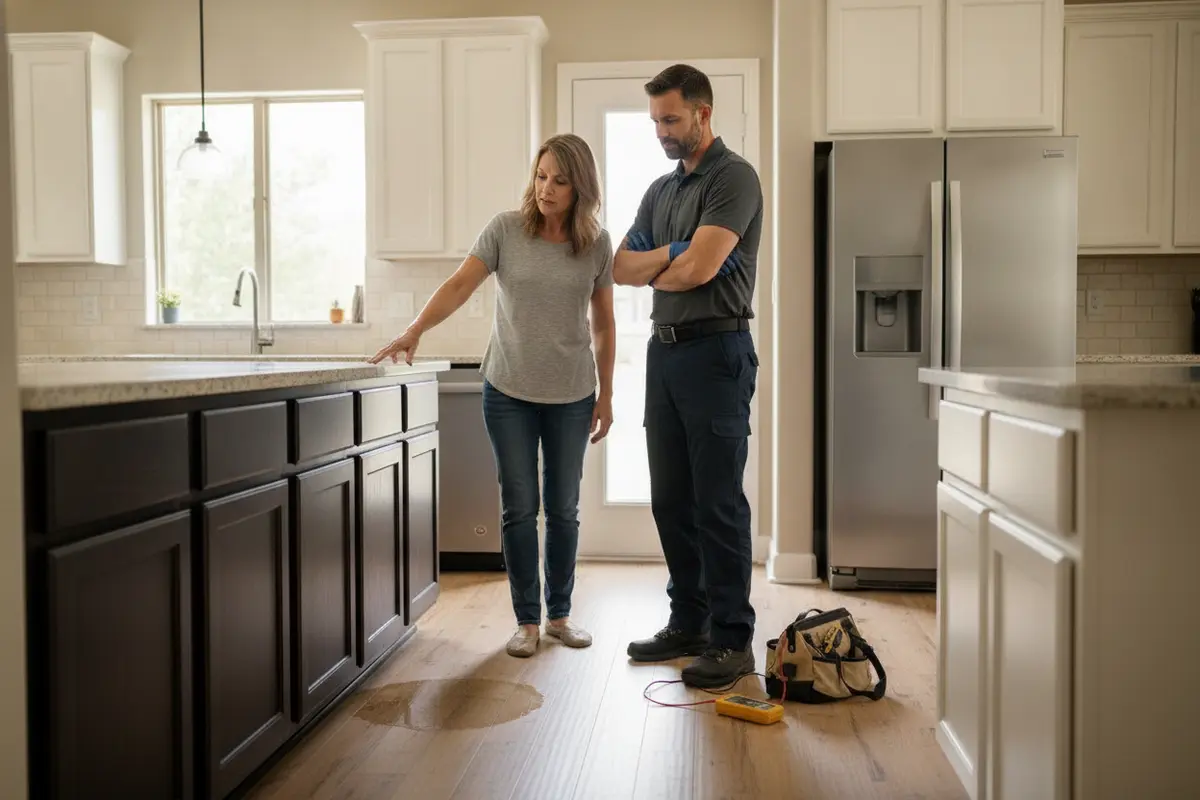
What should you avoid while waiting for help?
In a stressful moment, it is tempting to start taking things apart or to try the first repair advice you find. A few limits can help prevent a manageable leak from becoming a safety problem or a more complicated repair.
- Do not touch wet electrical equipment. Keep away from outlets, switches, cords, appliances, and electrical panels in or near water. Do not assume a small amount of water is harmless.
- Do not use an open flame or improvised heat source. If you suspect a pipe has frozen, do not use a torch, candle, or other flame to warm it. Tell the plumber what you observed and wait for safe guidance.
- Do not keep using water fixtures if the leak may be on that supply. Avoid running taps, a dishwasher, or a washing machine until you understand whether water use could worsen the leak. If you shut off the main, do not turn it back on just to test a fixture.
- Do not force valves or fittings. A stuck or damaged shutoff can break or leak when forced. Stop if a handle does not turn easily.
- Do not rely on tape or a patch as a permanent fix. A temporary measure may not hold against water pressure or address damage that is out of sight. Do not put your hands near a forceful spray or wrap material around a pipe in a cramped or wet location.
- Do not dismiss a hidden leak because the flow slows. Water can continue to escape behind a surface or from a different part of the system. Keep the water off if you have safely shut it off, and describe the change to the plumber.
When in doubt, pause and ask. You can also review Mend’s emergency plumbing service information while arranging help.
What information should you have ready when you call?
You do not need a technical description. Simple observations are useful. If you can, be ready to tell the person taking your call:
- Where you see water, such as a bathroom, kitchen, ceiling, garage, or outdoor area.
- Whether the water is actively flowing, dripping, or no longer visible.
- When you first noticed the problem and whether it changed over time.
- Whether the water supply is off, and which shutoff you used, if known.
- Whether water is close to electrical equipment or has reached more than one room.
- Whether anyone is at risk or unable to stay clear of the affected area.
Share what you know, and say plainly what you do not know. Avoid guessing about the pipe material or the location of a hidden break. If you are a renter rather than the homeowner, contact the property owner or manager promptly as well; Mend’s service is intended for homeowners or an authorized decision-maker.
How urgent is the problem, and what can wait?
An active leak, water affecting electrical areas, water entering living spaces, or a leak that you cannot stop should be treated as urgent. Keep people away from the affected area and call for help. If you have safely stopped the supply and the area is stable, still arrange an assessment rather than assuming the pipe has repaired itself.
A small damp mark with no active flow may not require the same immediate response as water spraying into a room, but it still deserves attention. Hidden leaks can continue to affect building materials. If you are unsure whether a leak is active, describe what you can see and ask the plumbing team how to proceed. Do not wait for a stain to grow before reporting a suspected pipe problem.
For a problem outside the home, such as water near a meter or a suspected issue on a utility’s side, do not operate equipment you do not own or control. Explain the location when you call so the appropriate next step can be discussed.
What happens during burst pipe repair?
The exact work depends on where the pipe is, what has failed, and whether the water can be isolated. In general, a plumbing visit begins with understanding the symptoms and inspecting the accessible area. The plumber may need to trace the water source before explaining the repair options. A hidden pipe can require a different approach from a visible, reachable connection.
Before work begins, ask what the inspection has found, what needs to be repaired, and whether any access work is part of the proposed plan. Mend’s service process includes a diagnostic or service visit where upfront pricing is presented. That gives you a chance to understand the proposed work and pricing before you approve it. Repair needs can vary, so an estimate cannot be responsibly set from a photo or a general article alone.
Depending on the circumstances, the visit may involve locating the damaged section, accessing it safely, repairing or replacing the affected pipe segment, and checking the work. Ask the plumber to explain what has been confirmed and what remains uncertain, especially if water has traveled beyond the visible area. The repair of the pipe and the drying or restoration of walls, flooring, cabinets, or other materials may be separate tasks; ask which work is included in the proposed plumbing scope.
Mend provides plumbing services across Greater Austin, including plumbing repair and other plumbing work. If you want to review its broader approach to connected home systems, see Mend’s plumbing, electrical, and HVAC services.
What can affect the repair plan?
There is no single repair approach for every burst pipe. The plumber needs to understand the location, access, condition, and extent of the issue. These practical factors can change what is needed:
| What the plumber assesses | Why it matters | What to ask |
|---|---|---|
| Where the leak is visible | A reachable pipe may be approached differently from a suspected leak behind a finished surface. | What has been confirmed, and what still needs investigation? |
| Whether water is still flowing | Ongoing flow can affect immediate steps and the order of work. | Should the water remain off while the repair is planned? |
| Pipe condition and affected area | The repair scope depends on what is damaged, not just where water first appeared. | Is the proposal for a localized repair or a larger section? |
| Access needed to reach the pipe | Walls, cabinets, floors, or other obstacles may affect how the pipe can be reached. | What access work is proposed, and who handles follow-up restoration? |
| Other signs of water damage | Water may have traveled away from the break and affected nearby materials. | What was observed, and what should I monitor after the repair? |
These are discussion points, not a checklist for diagnosing the pipe yourself. A plumber can explain which items apply after inspecting the situation. If your issue involves a damaged pipe, you can read about Mend’s pipe repair and replacement work as background, then ask how the proposed scope applies to your home.
How should you prepare the area without making it worse?
Once people are safe and water is controlled, keep the area as undisturbed as practical. Do not throw away damaged materials before documenting them if you may need to discuss the loss with an insurer. If water is near a ceiling, do not stand beneath a bulging area or try to drain it yourself. Keep children and pets away, and leave clear access for the technician from a dry route.
Have any photos, notes, and information about the shutoff ready. If you know where the home’s main shutoff is, point it out rather than reopening it to demonstrate the leak. Let the plumber know about prior repairs or recent work in the area only if you know those details; there is no need to speculate. If you already turned off water or power, mention that when the technician arrives.
After the pipe is repaired, ask what you should watch for and whether any additional plumbing work is recommended. Mend’s broader plumbing repair information can help you explore related repair needs. Homeowners in nearby communities can also check the Greater Austin service-area information to see the locations Mend serves. For general information about moisture and indoor environments, see the U.S. Environmental Protection Agency; if materials remain damp after the plumbing repair, ask what drying or restoration steps are appropriate.
How do you compare repair options and estimates?
If you receive more than one proposed option, compare the work described rather than looking only at the bottom line. A useful explanation identifies the problem found, the repair being proposed, any access work, and what is not included. It should also distinguish between a confirmed issue and an item that needs further investigation.
Ask these questions before approving work:
- What part of the pipe or plumbing system has been identified as the source?
- What work is included in this option, and what is not included?
- Will you need to open or remove a finished surface to reach the pipe?
- How will you check the repair, and what should I do if I notice water again?
- Are there other options, and what are the practical differences between them?
- What warranty applies to the work?
Mend presents upfront pricing before work begins, with good, better, and best options where applicable. Its work includes a one-year parts and labor warranty. Ask how the warranty applies to the specific repair and what conditions it covers. Clear answers help you compare plans on scope, access, and follow-up instead of feeling pressured to decide based on an unexplained number.
Talk with Mend about burst pipe repair and choose a next step for your Austin home.
Frequently Asked Questions
Should I turn off the water if a pipe bursts?
If you know where the appropriate shutoff is and can reach it safely, turning it off can stop or limit additional water flow. Do not enter standing water, handle wet equipment, force a stuck valve, or approach a shutoff near an electrical hazard. If you cannot reach it safely, tell the plumber when you call.
Can I patch a burst pipe until a plumber arrives?
A quick patch should not be treated as a lasting repair. A damaged pipe may still leak or fail elsewhere, and the break may be difficult to reach safely. Avoid putting yourself near a forceful leak or working in a wet, confined space. Focus on keeping people clear, shutting off the water if safe, and arranging an assessment.
How do I know whether a pipe is behind a wall?
Damp drywall, a new stain, or a dripping sound may suggest water is hidden, but those clues do not identify the exact source. Do not cut into the wall to investigate. Tell the plumber what you noticed and where; an inspection can help determine what needs to be accessed.
Does a burst pipe always mean the whole pipe needs replacement?
No single answer fits every situation. The right scope depends on the location and condition of the damaged area, what inspection confirms, and whether other sections show a problem. Ask the plumber to explain why a localized repair or a broader replacement is being proposed.
What should I do if the pipe stops leaking on its own?
Do not assume the issue is resolved. The flow may have changed, or water could still be escaping somewhere you cannot see. Keep the water off if you safely shut it off, avoid testing fixtures, and arrange professional guidance.
Plain-language note: This article offers general steps for staying safe and preparing for a plumbing visit. It cannot identify the source of a leak or replace an on-site assessment.
If you have an active leak or suspect a pipe has failed, keep clear of hazards, share what you can observe, and arrange help rather than trying to investigate behind walls yourself.


