

When your AC runs but the house stays warm, a refrigerant leak is one possible cause—not the only one. Common AC refrigerant leak signs Austin homeowners may notice include weak cooling, longer run times, ice on the indoor coil or refrigerant line, and a hissing or bubbling sound. These symptoms can also point to airflow or equipment problems, so a professional diagnosis is the way to confirm what is happening.
Request AC service from Mend Services
What Does Refrigerant Do in an Air Conditioner?
Refrigerant is the working fluid that moves heat through an air-conditioning system. In a typical split system, it circulates through connected indoor and outdoor components as the system transfers heat from inside the home to outdoors. It is not a fuel that an AC normally uses up during operation. The system is designed to keep the refrigerant contained.
If the charge is low, there may be a leak or another issue that needs investigation. Simply adding refrigerant without finding the cause may not solve the problem. A technician needs to determine whether the system is low, where the loss may be occurring, and whether a repair is appropriate for the equipment. This is why symptoms alone are not enough to decide that a system needs refrigerant. The diagnosis should account for the system’s condition and other factors that affect cooling, such as airflow and equipment operation. A homeowner cannot reliably measure the charge by looking at the outdoor unit or touching a line, and those actions can expose you to electrical or mechanical hazards. Keep the model and serial information handy if it is easy to access without removing a panel; otherwise, let the technician locate the equipment details.
Refrigerants and service practices are subject to environmental requirements. The U.S. Environmental Protection Agency provides federal information about environmental protection and refrigerants. Homeowners should leave refrigerant handling and system repair to qualified HVAC professionals rather than trying to release, collect, or add refrigerant themselves.
What Are the Common AC Refrigerant Leak Signs in Austin?
One sign by itself does not prove a leak. Pay attention to changes that persist, especially when several appear together or cooling performance has suddenly declined. Austin’s long, hot cooling season can make a struggling AC noticeable quickly, but the underlying cause still needs to be checked. A short observation log can make the service conversation more useful: note the day and approximate time, outdoor conditions if you know them, thermostat setting, rooms that feel warm, and whether the system cycled off or seemed to run continuously. Record whether the symptom is new or has happened before. You do not need to take measurements or open the equipment. A clear description of what changed is more useful than a guess about which part has failed.
For example, you might write: “The thermostat was set to 75, the system ran most of the afternoon, and the back bedrooms stayed warm. I noticed ice on the insulated line near the outdoor unit around 6 p.m.” That kind of neutral timeline helps distinguish a broad comfort problem from a symptom limited to one room. If you are unsure whether an object is ice or condensation, simply describe what you saw and where; do not touch it to check.
Cooling feels weak or uneven
The system may run while supply air feels less cool than usual, or some rooms may stay warm. A refrigerant problem can reduce the system’s ability to move heat. But a clogged filter, duct issue, blocked outdoor unit, or other mechanical fault can create similar comfort complaints. Compare the problem with the system’s normal performance; do not assume that warm air means refrigerant is low.
The AC runs for a long time or struggles to reach the thermostat setting
Long cycles can happen during very hot weather, especially if the home is gaining heat quickly. If the unit runs much longer than it used to and indoor temperatures keep rising, it deserves attention. Low refrigerant may be one explanation, but so can restricted airflow, thermostat issues, or equipment that is not operating correctly.
Ice forms on the indoor coil or refrigerant line
Ice can appear on the indoor coil, the larger insulated line near the outdoor unit, or both. A refrigerant issue can contribute, but airflow problems are another common possibility. Ice can restrict airflow further and put added strain on the system. Do not scrape it off, pour hot water on it, or keep running cooling in hopes that the ice will disappear.
You hear a hissing or bubbling sound
A persistent hiss near an AC component or a bubbling sound may be consistent with refrigerant escaping, but sounds can be difficult to locate and interpret. Normal airflow, vibration, or another mechanical issue can also make noise. Treat a new, persistent sound as a reason to arrange an inspection rather than trying to identify the leak by ear.
Electricity use or comfort changes without an obvious explanation
If cooling takes longer and the system runs more, energy use may also change. That is not a reliable leak test: weather, thermostat settings, occupancy, insulation, and equipment condition all affect run time. Look for a pattern alongside cooling or icing symptoms, and share what changed with the technician.
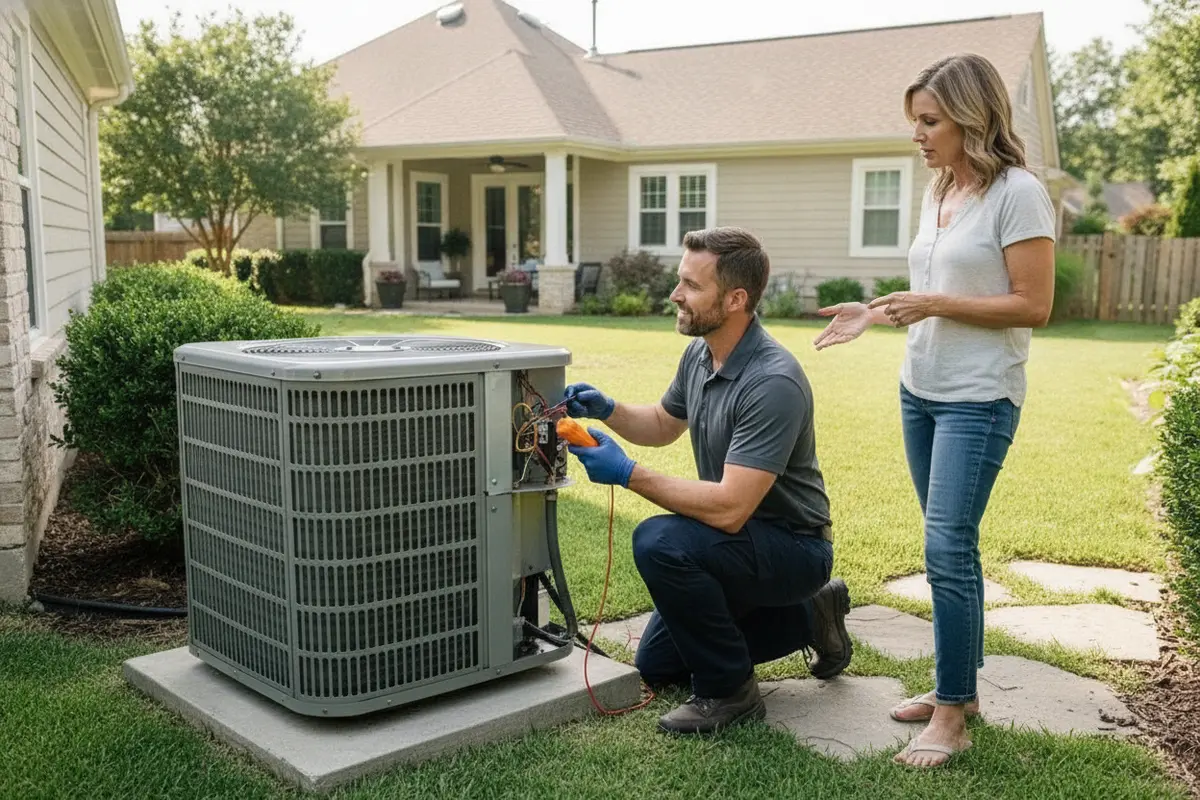
Could Something Other Than a Refrigerant Leak Cause These Symptoms?
Yes. Weak cooling, long run times, and ice are clues, not a diagnosis. A technician will consider the complete system rather than deciding from a single symptom. Common possibilities include a dirty or obstructed air filter, blocked return or supply vents, a dirty indoor coil, a problem with the blower, a thermostat setting or control issue, an outdoor unit with restricted airflow, or a component fault.
You can check a few simple things without opening equipment. Confirm the thermostat is set to cooling and the desired temperature. Check whether the air filter is visibly dirty and replace it with the correct size and type if needed. Make sure supply and return vents are not blocked by furniture. From a safe distance, check that plants or stored items are not crowding the outdoor unit. Do not remove equipment panels or handle wiring, coils, or refrigerant lines.
These checks are useful because they address basic conditions that can affect airflow, but they do not rule out a refrigerant problem. For instance, replacing an obviously dirty filter may improve air movement, while persistent poor cooling still warrants a system evaluation. Avoid changing several settings at once: if you alter the thermostat, replace the filter, and open windows all at the same time, it becomes harder to explain what changed. Make one simple, safe check, note the result, and stop if the symptom continues.
If those basic checks do not explain the issue, avoid repeated resets or attempts to force the AC to run. Mend’s Austin HVAC repair information explains the kind of broader system problem a service visit can address. If the system has stopped cooling altogether, you can also review the AC repair service options available from Mend.
What Should You Do If You Suspect a Refrigerant Leak?
- Turn cooling off if you see ice. Continuing to run a frozen system can worsen the immediate operating problem. Use the thermostat to stop cooling. If you are unsure how to adjust the system safely, contact an HVAC professional.
- Do not chip at ice or touch refrigerant components. Let a technician advise you on the next step. Avoid opening panels, disconnecting lines, or attempting a refrigerant recharge.
- Note what you observed. Write down when the trouble began, whether it affects the whole home or particular rooms, whether ice or an unusual sound appeared, and whether the system is still running.
- Arrange an evaluation. A technician can investigate the symptoms and explain the findings before work begins. Mend offers HVAC repair, installation, and maintenance in its service area.
- Ask what the diagnosis shows. If refrigerant loss is confirmed, ask where the leak is, what repair is recommended, and what options apply to your equipment. Do not assume that adding refrigerant alone is a lasting repair.
For a separate concern that the AC has stopped working during extreme heat, Mend also has an Austin HVAC repair page with service information. If your home is outside Austin proper, check Mend’s Greater Austin service-area list to see whether your community is covered.
While waiting for service, keep the path to the thermostat and equipment clear, and make a note of any new changes rather than repeatedly testing the system. If the outdoor unit is in a fenced area, make sure the technician can reach it when they arrive, but do not move equipment or remove access panels yourself. If the cooling problem affects someone who is especially sensitive to heat, prioritize a safe, cooler location while you arrange help. These practical steps do not diagnose the AC; they simply make the visit safer and the handoff clearer.
How Can You Tell the Difference Between a Leak and Other AC Problems?
There is no homeowner checklist that can confirm a refrigerant leak with certainty. A technician considers the symptoms, operating condition, and system measurements. The table below can help you describe what you notice; it is not a substitute for a diagnosis.
Some patterns can help you explain the issue without trying to label it. If only one room is uncomfortable while the rest of the home feels normal, mention that; a vent, duct, or room-specific heat gain may deserve attention along with the AC itself. If airflow from several vents seems weak, tell the technician and share whether you recently changed the filter. If the air seems to move normally but the whole home is not cooling as it used to, report that difference too. None of these observations confirms or rules out a leak. They simply help the technician start with the right questions and evaluate the system as a whole.
Also describe whether the trouble began suddenly or gradually. A sudden loss of cooling, a new sound, or ice is different information from a system that has performed less well over several weeks. Mention any recent work on the AC or changes in how rooms are used, if relevant. Avoid making repeated adjustments to the thermostat to test the system; write down its current setting and let the professional evaluate operation under appropriate conditions.
Use the comparison as a way to organize observations, not to make a parts diagnosis. A single symptom often fits several possibilities, and even multiple symptoms can overlap. For example, ice plus weak cooling may prompt a closer look at both airflow and refrigerant conditions. By contrast, long run times on a very hot afternoon without other changes may be less specific. The useful decision is not “Which component failed?” but “Is this change persistent enough to have the system checked, and what can I safely report?”
| What you notice | Could be consistent with | What to do |
|---|---|---|
| Weak cooling or a warm house | Refrigerant issue, airflow restriction, thermostat or equipment problem | Check thermostat and filter; request an evaluation if it continues. |
| Ice on a coil or refrigerant line | Possible refrigerant problem or restricted airflow | Turn cooling off; do not scrape ice or keep running the system. |
| Hissing or bubbling near equipment | Possible leak or another sound from system operation | Note where and when you hear it; arrange professional inspection. |
| Long run times without ice or unusual sounds | Hot weather, airflow, thermostat, duct, or equipment issue | Check simple settings and vents, then seek help if comfort does not recover. |
| Several symptoms together or worsening cooling | A fault that needs a system-level diagnosis | Stop relying on guesses and request HVAC service. |
The difference between a safe observation and an attempted diagnosis matters. It is reasonable to say that a filter looks dirty, a vent is blocked, or the insulated line appears icy. It is not necessary—or safe—to take apart the cabinet, attach gauges, or handle a refrigerant line to provide useful information. When in doubt, describe what you can see from an ordinary position and let the technician inspect anything that requires tools or access to internal components.
What Happens During an AC Refrigerant Leak Inspection?
The exact process depends on the equipment and what the technician finds. A service visit typically begins with your description of the problem and an inspection of system operation. The technician may check the air filter and airflow, inspect accessible components, and use appropriate diagnostic methods to assess whether the system has a refrigerant problem. If a leak is suspected, the technician can investigate its location and explain the available repair path. The visit is not simply a matter of looking for ice or listening for a hiss: those clues can be absent, and they are not conclusive when present. Expect the technician to ask when the trouble started, what you have already noticed, and whether the symptoms change during operation. The findings may point to something other than refrigerant, and a useful diagnosis should explain that distinction instead of treating every cooling complaint the same way.
It can help to prepare a short handoff before the appointment: the date the symptoms began, the thermostat setting you usually use, which rooms are affected, and whether the system is running now. Mention visible ice, unusual sounds, or a recently changed filter. If you have a photo of ice taken from a safe distance before it melted, you can show it, but do not delay service to take one. Keep pets and household items away from the equipment area so the technician has room to work. You do not need to know technical terms; a plain description is enough.
Ask for a clear explanation of the diagnosis before authorizing work. Useful questions include: What evidence points to a leak? Where is the suspected leak? Is there another issue affecting airflow or cooling? What are the repair options for this system? What happens after the repair, and how will operation be checked? Those questions help you understand the recommendation and make a decision based on the actual equipment condition.
Mend’s process is to dispatch a technician for a diagnostic or service visit and present upfront pricing before work. Depending on the job, planned work may involve an estimate. Mend serves residential and commercial customers across Greater Austin; the contact page is available if you need to discuss a service request. You can also read more about Mend Services in Austin.
When Should You Call for AC Service?
Arrange service if your AC repeatedly fails to cool, the home is getting warmer despite extended operation, ice returns after the system has thawed, or you hear a new persistent hissing or bubbling sound. You do not need to wait until every symptom appears. A professional can check whether the cause is refrigerant-related or something else.
If there is ice, turn off cooling and avoid operating the system until you have guidance. If there is no ice but the system is struggling, you can make the simple checks above while arranging an evaluation. Do not handle electrical components or refrigerant lines. If you are dealing with a different urgent cooling problem, see Mend’s HVAC repair information for Austin homeowners.
Request an HVAC evaluation with Mend Services
Frequently Asked Questions
Can an air conditioner use up its refrigerant?
A properly operating AC is designed to circulate refrigerant in a contained system, not consume it like fuel. If the refrigerant charge is low, a leak or another system issue may be involved. A technician can inspect the system and explain the cause.
Will adding refrigerant fix a leak?
Adding refrigerant without addressing the reason it is low may not resolve the underlying problem. Have a qualified HVAC professional diagnose the system, explain whether a leak is present, and discuss an appropriate repair before any work is approved.
Should I keep running my AC if I see ice?
No. Turn off cooling at the thermostat and do not scrape or melt the ice yourself. Ice can be associated with restricted airflow or another issue, and a technician can advise you after examining the system.
Can weak airflow mean a refrigerant leak?
It can occur alongside a refrigerant problem, but weak airflow may also result from a dirty filter, blocked vents, blower trouble, or other airflow restrictions. Check only simple, accessible items such as the filter and vents. A system evaluation is needed to identify the cause.
What information should I have ready when I call?
Share when the problem started, whether the AC still runs, what the thermostat is set to, whether you saw ice, and any sounds or room-by-room differences. Mentioning recent changes or basic checks can help the technician understand the situation.
Get a Clear Answer About Your AC
A refrigerant leak is one possible explanation for weak cooling, long run times, ice, or unusual sounds, but those signs can overlap with other AC problems. Make simple checks only, avoid handling refrigerant equipment, and ask a technician to identify the cause so you can choose the next step with confidence.


