

Calls for 24 hour ac repair austin often start with a warm house, a dark yard, and a short list of things you wish you had written down. The visit goes faster when the home is safer, the path to the equipment is open, and the technician hears the facts instead of a guess. This guide covers what to do before the truck arrives. It does not replace a decision about whether the problem can wait until morning.
If you still need to sort warning signs, arrival timing, or what the service call includes, start with Mend Services’ guide to emergency AC repair in Austin. Use the steps below once you have already decided to request after-hours help.
Schedule 24 hour AC repair in Austin once the house is safe and the equipment is easy to reach.
What to gather before 24 hour AC repair Austin
A prepared call is shorter and more useful than a panicked one. You do not need model numbers memorized. You do need a plain description of what changed, when it changed, and what you already tried. Write it on paper if your phone battery is low. After-hours dispatch uses those details to send the right technician and the right parts truck.
Cover these points before you call:
- When the cooling changed, and whether it failed all at once or faded over hours.
- What the vents are doing now: warm air, weak air, no air, or air only in some rooms.
- Any smell, water, noise, or breaker trip, described in everyday words.
- The thermostat mode and setpoint, plus the rough indoor temperature if you can read it.
- The outdoor unit brand and about how old the system is, if a sticker or old invoice shows it.
- Anyone in the home who is especially sensitive to heat, including infants, older adults, and pets.
- Gate codes, parking limits, and whether a dog is in the yard.
Skip guesses about refrigerant, capacitors, or “it just needs a recharge.” Those guesses send the visit in the wrong direction. A licensed technician has to test the system. Texas requires a license to install, repair, or maintain air conditioning and refrigeration equipment, and Mend’s HVAC work is performed under TDLR license TACLB29665E.
If the system is still running but the air feels warm, Mend’s guide to an AC that is running but not cooling can help you describe the symptom. Do not open panels or hose down electrical parts while you wait.
How should you make the Austin home safer until help arrives?
Austin heat is not a small inconvenience. Ready.gov defines extreme heat as temperatures above 90 degrees with high humidity for at least two or three days. It says older adults, children, and people with some illnesses face higher risk. A City of Austin summary of University of Texas research found a serious risk in a modeled heat wave above 110 degrees with the power out. In that model, 85 percent of Austin single-family homes would endanger an elderly person inside. An air conditioner that has quit is not the same as a blackout, but the indoor risk is the point. Do not wait indoors with no plan.
Use these steps while you wait. Stop if anything smells like burning, smoke, or gas, or if a breaker will not stay on. Those situations need the safety steps in the emergency guide, not a longer checklist.
- Set the thermostat to OFF if the system is making a burning smell, leaking near electrical parts, or tripping the breaker. Leave the breaker off if it trips a second time.
- Close blinds and curtains on sunlit windows. Ready.gov recommends shades or drapes so less heat enters the house.
- Move people and pets to the coolest room, usually a lower floor or a room that stayed shaded.
- Drink water, skip the oven, and wear light clothing. A hot kitchen adds heat you do not need.
- Do not use a fan as your only cooling plan. Ready.gov says fans move air but do not lower body temperature or prevent heat illness. The EPA gives the same warning once indoor air reaches the mid-90s.
- If anyone feels faint, confused, or stops sweating in the heat, treat that as a medical problem and call 911. An HVAC visit cannot treat heat stroke.
- If the house is getting dangerously hot, go to a cool public place. Austin lists cooling options through the city and local libraries when home cooling is not enough.
Pets need the same attention as people. Do not leave an animal in a closed car or a shut garage while you step out to watch for the truck. Put fresh water down and keep the pet out of the equipment area.
Which parts of the cooling system should stay reachable?
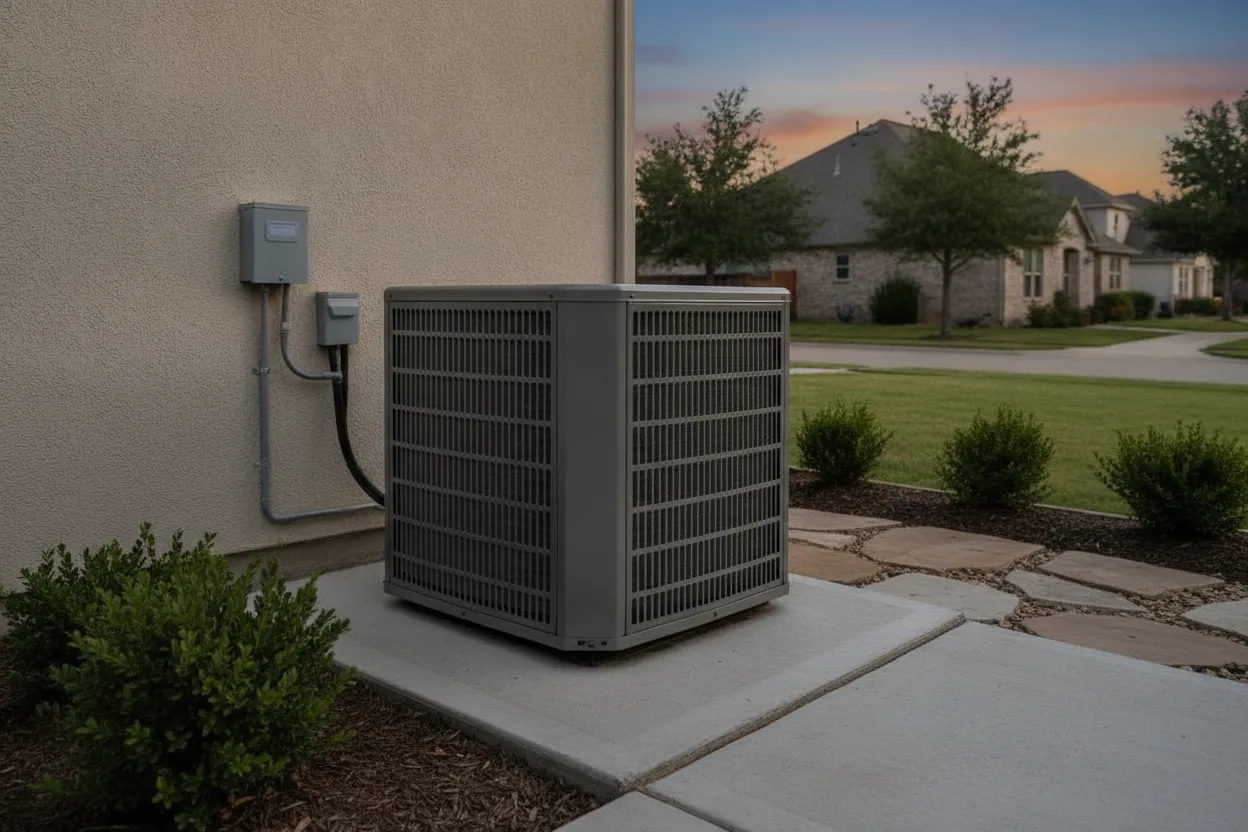
After-hours diagnosis stalls when the technician cannot see both halves of the system. Central air in most Austin homes has an indoor air handler or furnace cabinet and an outdoor condenser. The technician needs a clear walk to both, plus the thermostat and the electrical disconnect.
Clear these spots before the truck arrives:
- A path from the driveway or gate to the outdoor unit, including toys, bins, and coiled hoses.
- About two feet of open space around the condenser so air can move and panels can come off.
- The indoor closet, attic hatch, or garage corner where the air handler sits. Move storage boxes.
- The thermostat, so nobody changes the setpoint while testing is underway.
- The electrical panel, if you know which breaker feeds the air conditioner. Do not pull random breakers.
- Any water on the floor near the air handler. Point it out. Do not mop toward outlets.
Leave filter changes alone if the slot is awkward or the system is in a hot attic at night. A technician can check the filter during the visit. If you already know the filter is packed with dust, say so. Do not spray coil cleaner, pour water into a drain pan, or lean a ladder against the condenser in the dark.
Attic equipment needs extra care. Austin attics stay dangerously hot after sunset. Do not climb into the attic to “take a look” while you wait. Tell the technician the unit is overhead and whether the pull-down stairs are blocked. If the only light is a phone flashlight, say that too so the technician brings a work light.
What should you tell dispatch about an after-hours AC visit?
Dispatch is matching a technician, a time window, and a truck. Vague words like “it’s broken” do not help. Specific words do. Read from your notes so you do not leave out the breaker, the leak, or the pet in the yard.
| What you report | Why it changes the visit | What to skip |
|---|---|---|
| Cooling stopped suddenly versus slowly | A sudden stop often points to power, a safety switch, or a failed part. A slow fade can point to airflow or a dirty coil. | Do not name a part you have not seen tested. |
| Water near the indoor unit | A full drain or pan can shut a system off and can damage ceilings. The technician brings different tools for water than for a dead condenser. | Do not run a shop vac on a live cabinet. |
| A breaker that tripped once, or more than once | One trip may be safe to report. Repeat trips mean the technician should treat it as an electrical fault. | Do not keep resetting the breaker to “test it.” |
| Who is home and who is heat-sensitive | Dispatch can weigh urgency when an infant, older adult, or sick person is in a hot house. | Do not understate risk so the visit sounds cheaper. |
| Gate, parking, and pet details | Lost time at a locked side yard burns the arrival window. | Do not leave a dog loose as a surprise. |
| System age and any recent repair | A unit around 10 to 15 years old may need a repair-versus-replace talk after diagnosis, not before. | Do not approve a full replacement on the phone. |
Ask for a realistic window, not a promise to the minute. Traffic, call volume, and safety issues already in progress all move the schedule. Confirm the phone number that will reach you if you step outside. If you use Mend, request the visit on the emergency AC repair page after you have described the problem.
Price questions belong after diagnosis. Mend’s article on AC repair costs in Austin explains why a quote depends on the failed part and the age of the unit. This prep guide does not guess a dollar amount for an after-hours repair.
How do you get the house ready for the technician?
The last 20 minutes before arrival are about access, not more troubleshooting. A clean path and a working light save more time than another thermostat adjustment.
Walk the route the technician will walk. Turn on porch, garage, and side-yard lights. Unlock the gate and prop it if the wind blows it shut. Move cars so a van can park without blocking a neighbor. If the air handler is in a garage, clear a standing space in front of the cabinet and move paint or gasoline away from the work area.
Inside, pick one adult to meet the technician. Too many people changing the thermostat or opening the panel door slows the test. Keep children and pets in another room. Have your notes, any old invoice, and the filter size ready on the counter. If a previous company worked on the system, say what they replaced, even if you no longer trust that repair.
Protect the house from avoidable mess. Indoor coils and drain lines can drip when panels come off. Put a towel at the closet door if the air handler is indoors. Do not cover return grilles or supply vents to “force” air into one room. Blocked returns make the system harder to diagnose and can freeze a coil.
If you rent, text the landlord that a licensed company is coming, but do not wait on a reply when the house is unsafe. If you own the home and have an HOA gate, test your code before the window starts. A wrong code is one of the most common reasons an after-hours arrival slips.
What should you confirm before work begins?
A good after-hours visit starts with a conversation, not a silent repair. You should hear what will be tested, what is shut off for safety, and what will wait for a part. You should also hear the price before anyone replaces a major component.
Confirm these points in plain language:
- The technician is with the company you called, not a stranger who followed the van.
- The visit will diagnose first. Cleaning a coil or replacing a part comes after the cause is known.
- You will approve work before parts are installed, with the scope and price stated out loud.
- Refrigerant will not be added as a guess. A low charge means a leak that should be found.
- Electrical repairs stay with the licensed tech. You will not be asked to hold a wire or reset a breaker during the test.
- The system will be run long enough after the repair to show that the supply air is actually cooling.
Mend technicians are full-time W-2 employees, not subcontractors sent from another brand, and completed repairs include a one-year parts and labor warranty. Ask for that warranty in the notes you keep with the invoice. If the diagnosis points to replacement instead of repair, ask for the findings in writing. Mend offers free estimates on system replacements, so you can compare that late-night proposal with a daytime quote.
For a broader look at credentials, estimates, and what a normal visit includes, read how to choose licensed home services in Austin. City service pages such as HVAC repair in Austin cover the repair trade itself. This article stays on the prep work those pages do not spell out.
What belongs in your notes after the visit?
The visit is not finished when the house feels cool. The notes you keep decide the next repair, the warranty, and whether a maintenance plan is worth it before the next heat wave.
Write down:
- The arrival time, the departure time, and the technician’s name.
- The failed part or the test result, in the technician’s words.
- What was replaced, what was only cleaned, and what was left for a follow-up.
- The price you approved and any after-hours fee that was explained before work started.
- Filter size, thermostat settings, and anything you should not reset yourself.
- The warranty length and what would void it, such as another company opening the same repair.
If the repair was temporary, ask when the permanent part is expected and whether the system is safe to run until then. A system that cools for one night and then shuts off on a safety switch needs a return visit, not another round of breaker resets.
Use the calm after the visit to plan prevention. A seasonal check is cheaper than a repeat after-hours call. Mend’s AC maintenance service and Whole Home Wellness plan are the right next step when the emergency is over and you want fewer surprise failures. If the technician recommended replacement, compare that with Austin HVAC services instead of shopping from a single late-night quote.
Book the after-hours AC visit when your notes, access, and safety plan are ready.
Frequently asked questions
Should I keep resetting the breaker until the technician arrives?
No. Reset it once only if there is no burning smell, smoke, or water near the panel. If it trips again, leave it off and tell dispatch. Repeated resets can hide an electrical fault and can damage the equipment.
Can I pour water or coil cleaner on the outdoor unit at night?
No. Water on a live condenser and DIY coil chemicals can shock you or hide the real fault. Clear debris around the unit and stop there. The technician needs the system in the condition that failed.
What if the attic air handler is the only unit and the attic is still hot?
Stay out of the attic. Tell the technician where the stairs are and whether stored items block them. Night attic temperatures in Austin can be high enough to cause heat illness before you ever see the equipment.
Do I need the model number before I call?
It helps, but it is not required. A photo of the outdoor data plate, taken in daylight or with a steady light, is enough if you can get it safely. Age, symptoms, and access matter more than a perfect model string.
Who should I call if someone feels sick from the heat?
Call 911 for confusion, fainting, a seizure, or hot skin with a changed mental state. HVAC repair does not treat heat stroke. Move the person to a cooler place only if you can do that while waiting for medical help, and keep calling the emergency number first.